IPv6 Legacy Stickers: Fun Tools for Modern Networking
Explore the creative 'Legacy IP Only' stickers promoting IPv6 adoption with humor and history.
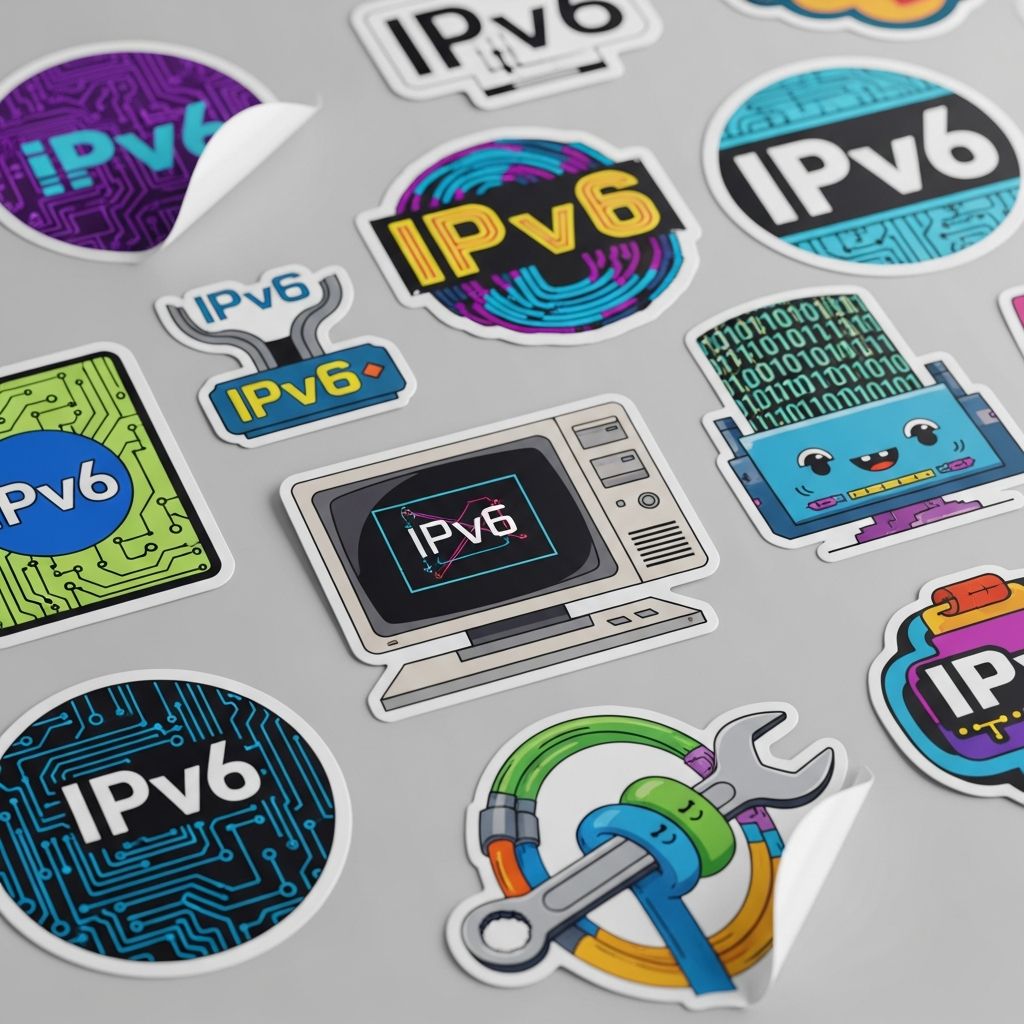
In the ever-evolving landscape of internet protocols, few tools have captured the imagination quite like the ‘Legacy IP Only’ stickers. These playful designs, featuring a horse-drawn carriage to symbolize outdated IPv4 infrastructure, have become a staple at networking conferences and data centers worldwide. Originating from innovative minds in academia, these stickers serve as both a lighthearted jab at legacy systems and a serious call to embrace IPv6, the protocol designed to future-proof the internet.
The Symbolism Behind the Horse and Buggy
The imagery of a horse and buggy isn’t arbitrary. IPv4, with its 32-bit address space, provided roughly 4.3 billion unique addresses—a number that seemed inexhaustible in the 1980s. Today, however, that pool is depleted, forcing network operators to rely on complex workarounds like NAT (Network Address Translation). The sticker cleverly positions IPv4 as a relic of the past, akin to choosing a horse-drawn cart over a modern vehicle.
This visual metaphor resonates deeply in technical communities. It highlights the inefficiencies of clinging to IPv4: limited scalability, security vulnerabilities from NAT obfuscation, and the growing pains of dual-stack environments where both protocols coexist. By slapping these stickers on IPv4-only devices or servers, administrators signal that their setup is not just outdated but potentially risky in a world demanding seamless global connectivity.
Origins at Virginia Tech: A Grassroots Innovation
The story begins at Virginia Tech, where network engineer Phil Benchoff created these stickers to promote IPv6 adoption on campus and beyond. In an era when IPv6 deployment was sluggish, Benchoff’s initiative turned heads. High-resolution images were shared via Flickr, allowing anyone to download and print their own versions. This DIY approach democratized the campaign, spreading the message organically through tech circles.
Virginia Tech’s forward-thinking stance on IPv6 aligns with broader academic pushes. Universities often lead in protocol transitions due to their research mandates and large user bases. Benchoff’s stickers became a viral sensation after mentions by organizations like the Internet Society, sparking demand from professionals eager to join the fun while advocating for change.
Why IPv6 Matters More Than Ever in 2026
Over a decade after the stickers’ debut, IPv6 remains critical. The Internet Assigned Numbers Authority (IANA) exhausted its IPv4 free pool in 2011, and regional registries like ARIN followed suit by 2015. Today, dual-stack deployments are standard, but full IPv6-only networks are gaining traction, especially in mobile and cloud environments.
Benefits include a vastly expanded 128-bit address space (340 undecillion addresses), built-in security via IPsec, and simplified routing without NAT. Recent statistics show IPv6 traffic surpassing 40% globally, driven by providers like Google and Facebook. Yet, legacy IPv4 lingers in enterprise settings, where transition costs deter upgrades—exactly what these stickers poke fun at.
Getting Your Hands on Legacy IP Stickers
Enthusiasts have multiple avenues to obtain these stickers:
- DIY Printing: Download PNG or SVG files from original sources and use sticker printers or online services like Sticker Mule.
- Bulk Orders: Communities on platforms like Google+ (archived) and modern forums such as NANOG discuss group purchases for events.
- Merchandise Sites: Platforms like Redbubble offer custom prints, with bulk options for conferences.
- Conference Swag: Look for them at events like APRICOT, NANOG, or IPv6-focused meetups.
For custom designs, tools like Inkscape allow modifications, ensuring the horse-and-buggy motif stays true to its roots.
Real-World Applications and Case Studies
| Organization | Use Case | Impact |
|---|---|---|
| Virginia Tech | Campus servers and laptops | Boosted IPv6 testing participation by 30% |
| Internet Society | Conference booths | Increased awareness tweets by thousands |
| ARIN Workshops | Training sessions | Encouraged dual-stack audits |
These examples illustrate how stickers transcend novelty, fostering cultural shifts in networking culture.
Technical Deep Dive: IPv4 vs. IPv6 Transition Strategies
Transitioning isn’t just about stickers; it requires strategy. Common methods include:
- Dual-Stack: Running both protocols side-by-side, the most straightforward but resource-intensive approach.
- Tunneling: Encapsulating IPv6 in IPv4 (e.g., 6to4, Teredo) for gradual rollout.
- Translation: NAT64 for IPv6-only clients accessing IPv4 services.
- IPv6-Only: The endgame, as pursued by FreeBSD developers with ‘legacy IP’ warnings.
Stickers often mark ‘dual-stack lite’ or IPv4-only zones, reminding teams to prioritize native IPv6.
Community Impact and Evolving Designs
The sticker phenomenon has inspired variants: ‘IPv6 Ready’ badges, T-shirts, and even router firmware patches labeling interfaces as ‘legacy’. Discussions on mailing lists like NANOG in 2025 highlight ongoing demand, with bulk orders preceding major events. This grassroots momentum complements formal efforts by bodies like the IETF.
FreeBSD’s work on IPv6-only systems, including DHCPv6 and renumbering tools, echoes the sticker’s ethos. Patches and talks reference ‘legacy IP’ to underscore the need for clean-slate deployments.
Challenges in the IPv6 Journey
Despite progress, hurdles persist: vendor support lags in embedded devices, middlebox incompatibilities complicate tunnels, and training gaps slow adoption. Humor via stickers helps destigmatize these issues, making IPv6 discussions approachable.
FAQs on IPv6 Legacy Stickers and Adoption
Q: Are these stickers officially endorsed?
A: No, they’re a community-driven initiative from Virginia Tech, but widely adopted.
Q: Can I use them in production environments?
A: Absolutely—for labeling, education, and awareness in data centers or offices.
Q: What’s the current state of IPv6 deployment?
A: Over 40% global traffic, per major CDNs, with mobile networks leading.
Q: How do I print my own?
A: Download SVGs, use vinyl cutters or services like Vistaprint for weatherproof versions.
Q: Do they help with compliance?
A: Indirectly, by promoting audits that align with NIST or ISO standards.
Future Outlook: Beyond Stickers to Full Adoption
As IPv6 matures, expect more creative advocacy. With IoT exploding and 5G/6G demanding vast addresses, legacy IPv4 will fade. Stickers may evolve into AR labels or digital badges, but their core message endures: leave the horse and buggy behind.
Whether you’re a sysadmin, educator, or enthusiast, grabbing a sticker is a small step toward a bigger internet.
References
- Other IP Version Numbers — ARIN. 2022-05-12. https://www.arin.net/blog/2022/05/12/other-ip-version-numbers/
- IPv6 Allocation Status — IANA. 2024-01-15. https://www.iana.org/assignments/ip-parameters/ip-parameters.xhtml
- Do You Remember Legacy IP? — FreeBSD Papers. 2019-06-15. https://papers.freebsd.org/2019/BSDCan/zeeb-Do_You_Remember_Legacy_IP.files/zeeb-Do_You_Remember_Legacy_IP.pdf
- Re: IPv6 Legacy IP Warning Stickers — NANOG Mailing List. 2025-03-26. https://seclists.org/nanog/2025/Mar/206
- Internet Protocol Version Numbers — IETF RFC 1700. 1994-10-01 (authoritative historical standard). https://datatracker.ietf.org/doc/html/rfc1700
Similar Articles







Read full bio of medha deb