IPv6 and IPv4 Speed Testing: Understanding Network Performance
Comparing modern internet protocol performance metrics and deployment strategies.
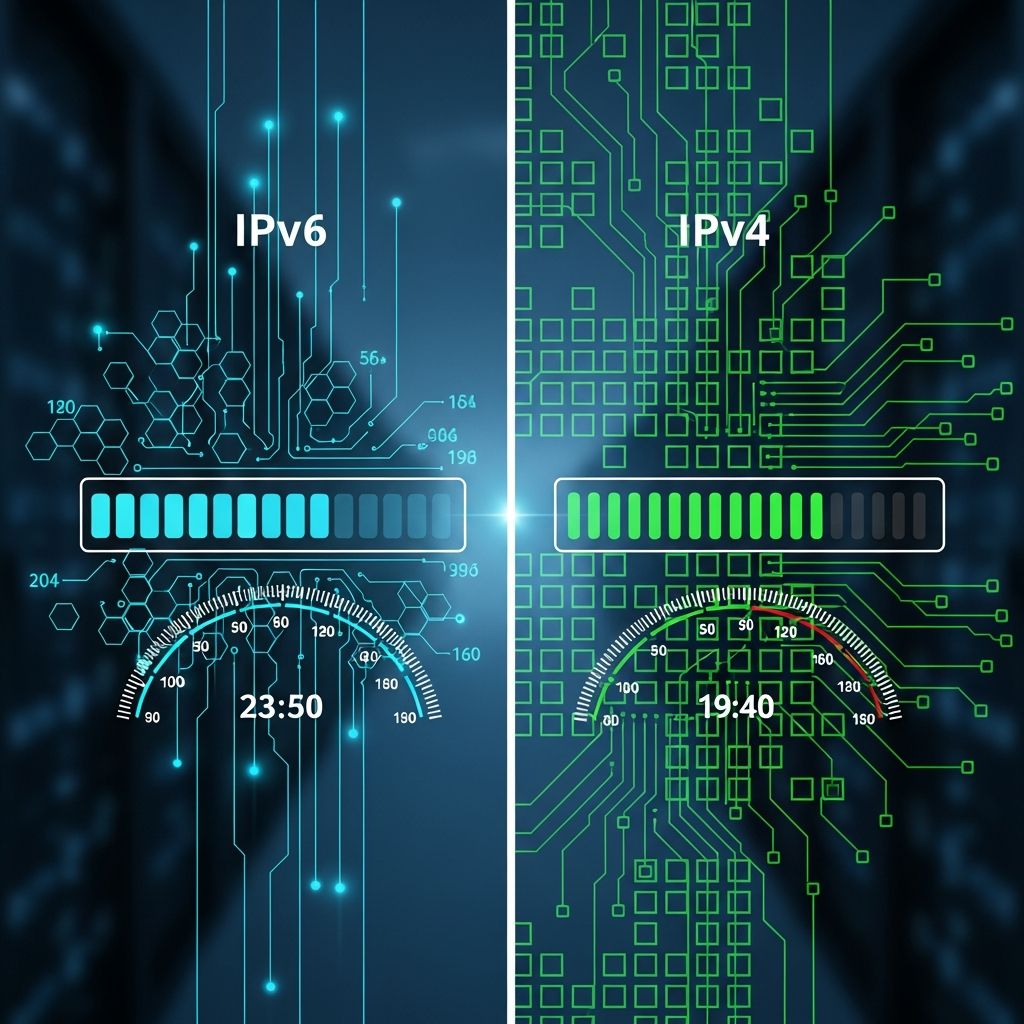
IPv6 and IPv4 Speed Testing: Understanding Network Performance Differences
The internet has undergone tremendous evolution since its inception, with one of the most significant transitions being the shift from Internet Protocol version 4 (IPv4) to version 6 (IPv6). As Internet Service Providers like Comcast have expanded their IPv6 infrastructure, understanding how these protocols perform differently has become increasingly important for both technical professionals and everyday users. This comprehensive guide explores the nuances of speed testing across these protocols and what modern deployments mean for network performance.
The Evolution of Internet Protocol Architecture
IPv4 has served as the backbone of internet communications for decades, providing a 32-bit address space that theoretically allows for approximately 4.3 billion unique addresses. However, as global internet adoption accelerated exponentially, the limitations of this address space became apparent. IPv6 was developed to address these constraints, offering a 128-bit address space with virtually unlimited scalability. This fundamental architectural difference extends beyond simple address capacity and influences how data packets traverse networks, how routing decisions are made, and ultimately, how quickly information travels from source to destination.
The transition from IPv4 to IPv6 represents one of the most complex infrastructure upgrades in modern computing history. Unlike typical software updates that can be deployed relatively quickly, transitioning an entire global network requires coordination among countless organizations, ISPs, equipment manufacturers, and content providers. Major providers like Comcast have invested significant resources in gradually deploying IPv6 capabilities while maintaining complete backward compatibility with existing IPv4 infrastructure.
Understanding Speed Testing Methodologies
Speed testing tools have become ubiquitous in modern internet usage, providing users with immediate feedback about their connection quality. However, the methodology behind these tests significantly affects the results obtained. Traditional speed tests measure several key metrics:
- Download Speed: The rate at which data can be retrieved from remote servers to a user’s device, typically measured in megabits per second (Mbps).
- Upload Speed: The rate at which data can be transmitted from a user’s device to remote servers, also measured in Mbps.
- Latency (Ping): The time delay between sending a request and receiving a response, measured in milliseconds.
- Jitter: The variation in latency measurements over time, indicating connection stability.
- Packet Loss: The percentage of data packets that fail to reach their destination during transmission.
When speed testing tools began to distinguish between IPv4 and IPv6 protocols, they revealed important insights about how these different protocols performed under identical network conditions. These comparative tests became valuable diagnostic tools for network engineers and ISPs working to understand the performance implications of their IPv6 deployments.
Protocol-Specific Performance Characteristics
IPv4 and IPv6 exhibit different performance characteristics due to their architectural differences. IPv4 packets have a minimum header size of 20 bytes, while IPv6 packets have a minimum header size of 40 bytes. This increased header size means that IPv6 packets consume slightly more bandwidth for the same payload data. Additionally, IPv6 routing tables and switching infrastructure have historically been less optimized than their IPv4 counterparts, as network hardware manufacturers and software developers have had less time to perfect these implementations.
However, IPv6 was designed with certain performance advantages in mind. The protocol streamlines several functions that IPv4 required special handling for, such as fragmentation and checksum calculation. Modern network equipment takes advantage of these efficiencies, potentially offsetting the overhead from larger packet headers. The actual performance difference experienced by end users depends heavily on the specific network infrastructure, content delivery networks (CDNs) being used, and the optimization efforts undertaken by ISPs.
Major ISP Deployment and Testing Infrastructure Changes
Large ISPs like Comcast have made substantial investments in IPv6 readiness. As these deployments reach maturity, ISPs have reassessed their speed testing tools and strategies. The decision to modify speed testing interfaces reflects a shift in priorities from comparing protocol performance to providing users with practical, actionable measurements of their actual connection quality.
When speed testing tools explicitly compared IPv4 and IPv6 performance, they served an important purpose during the transition phase. These comparisons helped network engineers identify bottlenecks, verify that IPv6 implementations were performing acceptably, and troubleshoot deployment issues. As IPv6 infrastructure has matured and become more widely adopted, the practical importance of such direct comparisons has diminished for most users.
Instead, modern speed testing approaches focus on delivering cleaner user interfaces that measure the actual performance users experience regardless of the underlying protocol version. This reflects a maturation of IPv6 deployment where the goal shifts from experimental comparison to seamless integration with existing IPv4 services.
Consumer-Focused Speed Testing Tools and Features
Modern speed testing interfaces have become increasingly consumer-friendly, prioritizing clarity and usability over technical minutiae. Contemporary tools typically emphasize results that matter most to everyday users: can I stream video smoothly? Will my video calls work without lag? How quickly will files download?
However, for users and professionals who need granular protocol-level performance data, specialized speed testing resources remain available. These alternative platforms allow users to select their preferred testing server, explicitly choose between IPv4 and IPv6 protocols, and access detailed performance metrics for diagnostic purposes. Such tools serve the technical community’s need for deep performance analysis while mainstream interfaces remain simplified for general audiences.
The availability of multiple testing approaches reflects the diverse needs within the internet user community. Some users need only basic confirmation that their service meets minimum standards, while others require detailed technical analysis for professional or troubleshooting purposes.
Factors Influencing Protocol Performance Variations
Several factors contribute to measurable differences in IPv4 versus IPv6 speed test results:
- Content Delivery Network Optimization: CDNs may have asymmetrical IPv4 and IPv6 deployments, with IPv4 having more edge locations and optimization.
- Peering Relationships: ISPs may have more mature peering arrangements for IPv4 traffic, affecting routing efficiency.
- Equipment Maturity: Network hardware manufacturers may have spent more development effort optimizing IPv4 processing.
- Geographic Distribution: IPv6 infrastructure deployment may be less complete in certain geographic regions.
- Application Support: Some applications and services may still be primarily optimized for IPv4 transmission.
Technical Implications of Protocol Transitions
The transition from IPv4 to IPv6 represents more than simply a numerical upgrade. It fundamentally changes how networks are addressed, routed, and managed. During transitional periods, networks must support both protocols simultaneously, creating additional complexity and potential performance implications. Dual-stack implementations, where systems support both IPv4 and IPv6, require careful optimization to ensure that neither protocol suffers performance degradation.
Network engineers working on major ISP deployments must balance multiple competing concerns: maintaining IPv4 performance for the vast majority of existing traffic, implementing robust IPv6 infrastructure for future growth, ensuring seamless interoperability between protocols, and managing the operational overhead of supporting dual systems. Speed testing serves as a crucial tool during this balancing act, providing objective measurements of whether these goals are being achieved.
Industry Standards and Measurement Best Practices
Organizations like the Internet Society and IETF (Internet Engineering Task Force) have established guidelines for conducting accurate network performance measurements. These standards emphasize the importance of controlled testing conditions, transparent methodology, and reproducibility. When comparing protocol performance, adherence to such standards ensures that observed differences represent genuine protocol or infrastructure variations rather than testing artifacts.
Professional network analysis often involves testing multiple times across different time periods, monitoring results from various geographic locations, and analyzing performance under different load conditions. Consumer-facing speed tests typically simplify this process, running standardized tests and presenting results in accessible formats.
Practical Implications for Internet Users
For most internet users, the IPv4 versus IPv6 distinction has become largely transparent. Content providers, CDNs, and ISPs have worked to ensure that users receive good performance regardless of which protocol carries their traffic. The infrastructure improvements that support IPv6 deployment often benefit both protocols through improved network architecture and optimization.
Users experiencing slow internet speeds will find that diagnosing the cause typically involves examining multiple factors beyond protocol choice: connection stability, latency, packet loss, and whether the issue stems from the user’s equipment, local network, ISP infrastructure, or distant servers. Protocol comparison represents only one small piece of this diagnostic puzzle.
Future Directions for Speed Testing and Protocol Development
As IPv6 adoption continues to increase globally, speed testing methodologies will likely continue evolving. The focus will remain on measuring what matters to users: reliable, fast connectivity for their intended applications. Protocol-level details will become increasingly relegated to specialized diagnostic tools used by professionals.
Emerging technologies like IPv6-only deployments in certain regions and content providers, improved hardware support for IPv6, and maturing CDN infrastructure will further reduce any meaningful performance differences between the protocols. Speed testing tools will adapt to reflect this reality, offering measurements that help users and ISPs ensure quality of service without necessarily distinguishing between underlying protocols.
Frequently Asked Questions About Protocol Speed Testing
Why did speed testing tools initially compare IPv4 and IPv6 performance?
During the early stages of IPv6 deployment, direct protocol comparisons helped ISPs and network engineers verify that IPv6 implementations performed acceptably and identify optimization opportunities. This diagnostic capability was particularly valuable during transitional periods.
Is IPv6 faster or slower than IPv4?
Protocol speed depends on numerous factors including network infrastructure, content delivery optimization, geographic location, and specific implementation. Neither protocol is inherently faster; observed differences reflect deployment maturity and infrastructure optimization rather than fundamental protocol limitations.
Should I be concerned about protocol differences affecting my internet speed?
For most users, no. Modern ISP implementations and CDN deployments ensure acceptable performance across both protocols. If you experience slow speeds, investigate other factors like connection stability, ISP service quality, and distance from content servers.
Where can I access detailed IPv4 and IPv6 speed comparisons?
Specialized speed testing platforms offering protocol-specific testing remain available for users requiring detailed technical analysis, while mainstream ISP tools typically present simplified results focused on overall performance metrics.
Conclusion
The evolution of speed testing tools reflects the maturation of IPv6 deployment across major internet infrastructure providers. As ISPs like Comcast have completed their IPv6deployments and optimized their networks for dual-protocol operation, the need for direct protocol comparison in consumer-facing tools has diminished. Modern speed testing interfaces prioritize usability and clarity for general audiences while specialized technical tools remain available for professional analysis.
Understanding the differences between IPv4 and IPv6 provides valuable context for appreciating the complexity of modern internet infrastructure, but for practical purposes, users should focus on overall connection quality metrics rather than protocol-level details. As the internet continues its transition toward IPv6 predominance, these distinctions will become increasingly academic, with network performance ultimately determined by infrastructure investment, optimization efforts, and service provider commitment to quality.
References
- Internet Society: IPv6 Status Report — Internet Society. 2024. https://www.internetsociety.org/deploy360/ipv6/
- RFC 8200: Internet Protocol, Version 6 (IPv6) Specification — Internet Engineering Task Force (IETF). 2017. https://tools.ietf.org/html/rfc8200
- RFC 791: Internet Protocol — Internet Engineering Task Force (IETF). 1981. https://tools.ietf.org/html/rfc791
- Content Delivery Networks and Performance Optimization — National Institute of Standards and Technology (NIST). 2023. https://www.nist.gov/
- ISP Network Performance Monitoring Best Practices — Comcast Technical Documentation. 2020. https://www.comcast.com/
Similar Articles








Read full bio of Sneha Tete