IPv6 Hits 50%: Reddit’s Vital Role
Explore how Reddit's IPv6 subreddit fueled the protocol's rise to over 50% global adoption in 2026.
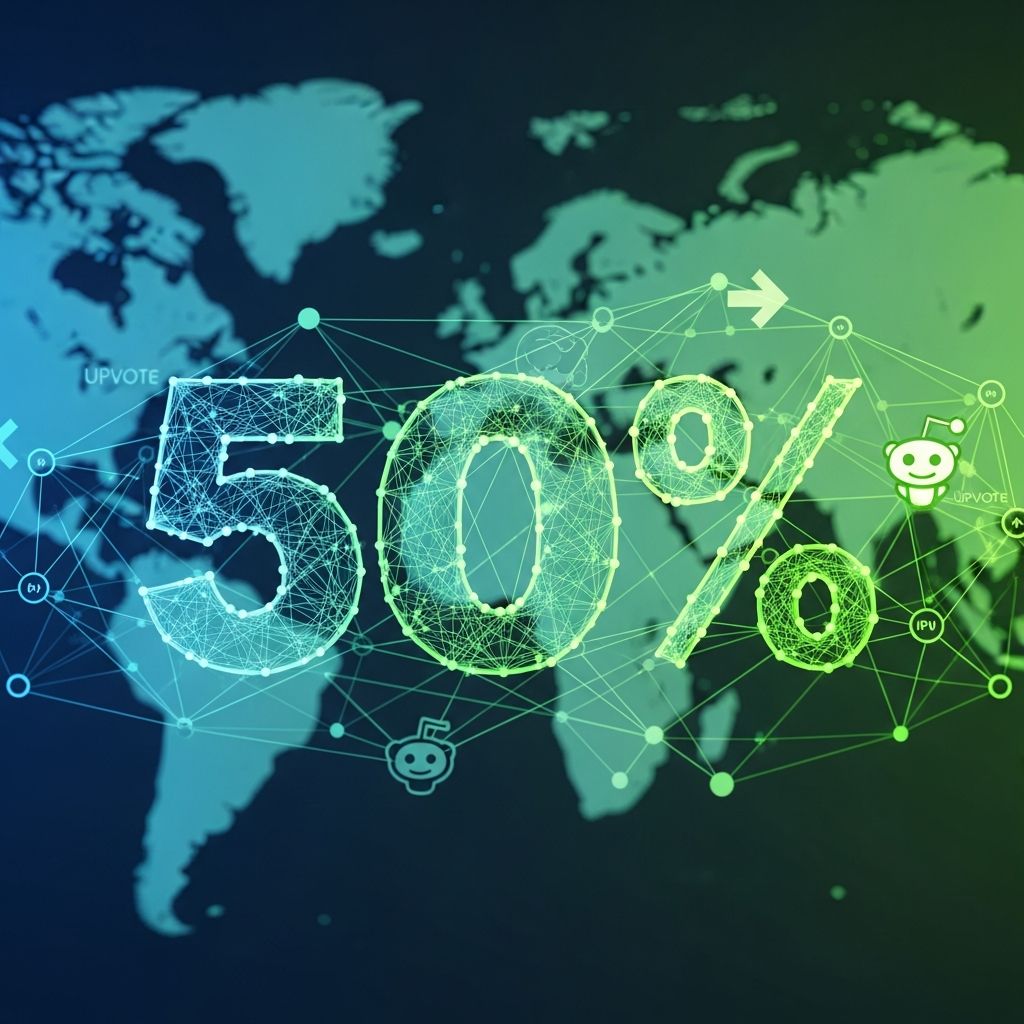
In a landmark achievement for modern networking, IPv6 has finally crossed the 50% adoption threshold worldwide. This milestone, confirmed by leading data trackers like Google, signals the end of an era dominated by the aging IPv4 protocol and the dawn of a more scalable internet infrastructure. At the heart of this transformation lies grassroots community engagement, particularly on platforms like Reddit, where dedicated subreddits have played a pivotal role in educating users, sharing deployment strategies, and troubleshooting real-world challenges.
The Journey to IPv6 Majority
The transition to IPv6 began over two decades ago, motivated by the impending exhaustion of IPv4 addresses. With only about 4.3 billion unique IPv4 addresses available, the explosive growth of internet-connected devices—from smartphones to IoT sensors—created an urgent need for expansion. IPv6, offering a staggering 340 undecillion addresses, promised relief. Yet, adoption was sluggish for years, hovering below 10% globally until the mid-2010s.
Fast-forward to 2026, and the landscape has dramatically shifted. On March 28, 2026, Google’s IPv6 adoption metrics peaked at 50.10% for native connections, a figure that has since stabilized around 46-50% depending on the source. Internet Society Pulse reports an average of 43% across multiple datasets, while other trackers like Facebook and Cisco show even higher rates in key markets, such as 60-67% in the US. This surge reflects not just technical upgrades but widespread network operator commitments, especially among mobile giants like T-Mobile (88.4% IPv6) and AT&T/Verizon (around 74%).
Why Reddit Became the IPv6 Hub
Online communities have been instrumental in demystifying IPv6. Reddit’s r/ipv6 subreddit stands out as a bustling forum where enthusiasts, engineers, and newcomers converge. Launched years ago, it has grown into a treasure trove of practical advice, from home router configurations to enterprise-scale rollouts. Users share success stories, like seamless transitions on Linux distributions with DHCP Option 108 enabled, and warn against common pitfalls in dual-stack setups.
What makes Reddit uniquely effective? Its format fosters quick, peer-reviewed responses. A post about CLAT implementation on Windows—now default in recent updates—can garner dozens of comments with scripts, benchmarks, and caveats within hours. This real-time knowledge exchange accelerates adoption, turning theoretical knowledge into actionable steps. Unlike formal documentation, Reddit threads capture the chaos of real deployments, including edge cases like legacy app compatibility.
Key Drivers Behind the 50% Milestone
- Mobile Network Leadership: Telecom providers have led the charge, embedding IPv6 in 5G infrastructures to handle massive device densities.
- Cloud Provider Momentum: AWS and others now prioritize native IPv6 resources, reducing reliance on translation layers.
- OS-Level Integration: Microsoft’s CLAT in Windows and enhanced Linux support have lowered barriers for end-users.
- Global Regional Variations: The US and parts of Europe hit 50%+ early, while Asia-Pacific follows closely per APNIC data.
These factors, amplified by community discussions on Reddit, have created a feedback loop: operators announce upgrades, Redditors test and refine, and adoption snowballs.
Real-World Impact of IPv6 Dominance
Surpassing 50% means IPv6 is no longer experimental—it’s the backbone of the internet. Benefits include simplified network management via ‘IPv6-mostly’ models, where IPv4 serves only as a legacy bridge. Corporate networks gain from reduced NAT complexities, enabling true end-to-end connectivity crucial for emerging tech like IoT and edge computing.
| Metric | 2020 | 2025 | 2026 (Current) |
|---|---|---|---|
| Global IPv6 Traffic (Google) | 30% | 49.56% | 50.10%+ |
| US IPv6 Traffic (Avg) | ~25% | 56.77% | 60-67% |
| Internet Society Pulse Avg | 25% | 45% | 43% |
This table highlights the rapid acceleration, with projections suggesting IPv6 could dominate 60%+ by 2027.
Community Spotlights: Reddit Threads That Shaped Adoption
Diving into r/ipv6 reveals game-changing discussions. One viral thread dissected T-Mobile’s 88% rollout, with users posting packet captures proving dual-stack efficiency. Another focused on AWS IPv6 endpoints, complete with Terraform scripts for cloud migrations. These aren’t abstract debates; they’re blueprints adopted by thousands.
For beginners, AMAs with IPv6 pioneers from LACNIC and APNIC provide insider tips. Veterans troubleshoot via shared configs, like enabling IPv6 on pfSense routers. The subreddit’s wiki compiles resources, from RFCs to deployment checklists, making it an indispensable starting point.
Challenges Persisting Despite the Milestone
Even at 50%, hurdles remain. Legacy systems in enterprise environments resist full transitions, and some regions lag due to infrastructure costs. Reddit users frequently debate ‘IPv4 hoarders’ and the ethics of address markets. Security concerns, like larger attack surfaces from more addresses, spark heated exchanges on best practices for firewalling.
Moreover, tunneling protocols like 6to4 have faded (now at 0%), emphasizing native deployment’s importance—a point hammered in subreddit guides.
Looking Ahead: IPv6 in 2026 and Beyond
Experts predict 2026 as the year of ‘IPv6-mostly’ consolidation. Cloud providers will race to offer 100% native support, while Linux distros standardize features like CLAT. Reddit will likely evolve, perhaps integrating with tools for live metrics sharing.
For the average user, this means faster, more reliable connections without configuration hassles. IoT explosions will thrive on IPv6’s address bounty, powering smart cities and autonomous systems.
Frequently Asked Questions (FAQs)
What is IPv6 and why does it matter now?
IPv6 is the successor to IPv4, providing vastly more addresses. Its 50%+ adoption in 2026 ensures the internet can scale with billions of devices.
How can I check my IPv6 status?
Use sites like test-ipv6.com or Google’s IPv6 page. Reddit’s r/ipv6 has pinned guides for routers and OS tweaks.
Is Reddit’s IPv6 subreddit still relevant?
Absolutely—it’s more active than ever, with daily posts on cutting-edge deployments and troubleshooting.
Will IPv4 disappear soon?
Not immediately; dual-stack and translations persist, but IPv6 will dominate new networks.
How do I contribute to IPv6 adoption?
Enable it on your devices, join r/ipv6, and advocate with your ISP. Small actions compound globally.
References
- 18 Years Later, IPv6 Reaches Majority — Internet Society Pulse. 2026-04. https://pulse.internetsociety.org/en/blog/2026/04/18-years-later-ipv6-reaches-majority/
- The Switch To Six, Part II: The IPv6 Tipping Point Is Here — SixMap. 2026. https://www.sixmap.io/blog/ipv6-tipping-point-is-here-part-two/
- What to Expect From IPv6 in 2026 — LACNIC Blog. 2026. https://blog.lacnic.net/en/ipv6-2026/
- IPv6 Adoption — Google. 2026-04-30. https://www.google.com/intl/en/ipv6/
- Google hits 50% IPv6 — APNIC Blog. 2026-04-28. https://blog.apnic.net/2026/04/28/google-hits-50-ipv6/
Similar Articles





Read full bio of Sneha Tete