IPv6 Glows at Keene Pumpkin Fest
How a tech-savvy jack-o'-lantern lit up New Hampshire's iconic pumpkin festival and championed internet evolution.
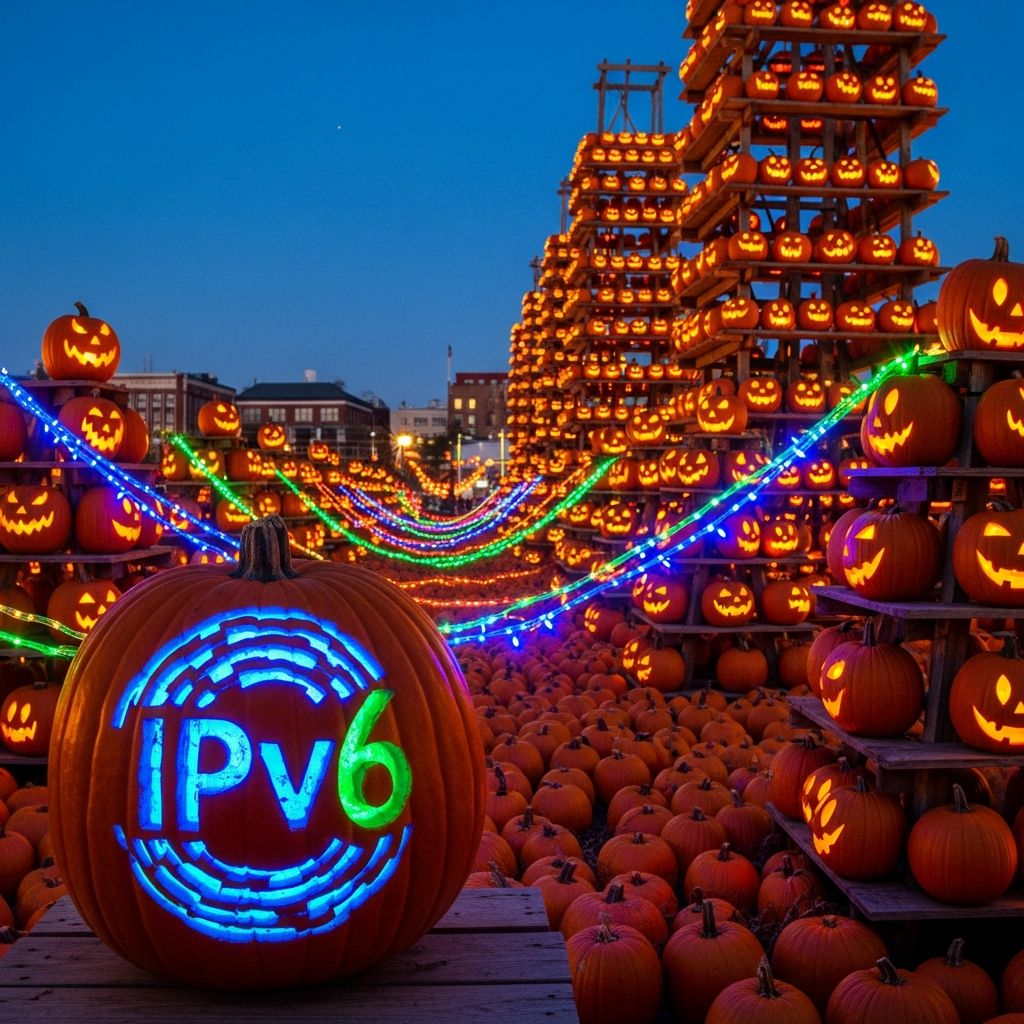
In the crisp autumn air of New Hampshire, where orange orbs transform streets into glowing wonderlands, technology enthusiasts found a playful way to celebrate both Halloween and the future of the internet. The 2013 Keene Pumpkin Festival wasn’t just about stacking pumpkins for a world record; it became a stage for promoting IPv6, the next-generation internet protocol. Amid thousands of carved gourds, one special pumpkin bore the bold inscription “IPv6,” symbolizing the shift from outdated addressing systems to a more expansive digital infrastructure.
The Magic of Keene’s Annual Pumpkin Extravaganza
Every year, the small college town of Keene draws crowds from across the region for its legendary Pumpkin Festival. What started as a modest community event in the 1990s evolved into a Guinness World Record contender. In 2013, volunteers carved and illuminated an astonishing 30,581 jack-o’-lanterns, surpassing the previous mark set by Boston in 2006 with 30,128 lanterns. This achievement reclaimed Keene’s title as the home of the largest gathering of lit pumpkins in one location.
The festival’s main street becomes a canvas of flickering lights, with pumpkins stacked into towering pyramids, creative displays, and artistic arrangements. Families, students from nearby Keene State College, and visitors wander through the spectacle, enjoying live music, food vendors, and parades. The event’s scale requires meticulous planning: sourcing tens of thousands of pumpkins, coordinating carvers, and ensuring safety amid massive crowds. By sunset, as tealights are lit in unison, the town glows like a living lantern, creating an unforgettable atmosphere.
- Record-Breaking Scale: 30,581 pumpkins lit simultaneously.
- Community Involvement: Thousands of volunteers carve and stack.
- Atmospheric Highlights: Nighttime lighting ceremony captivates attendees.
Why IPv6 Deserves a Pumpkin Spotlight
IPv6, or Internet Protocol version 6, addresses the looming exhaustion of IPv4 addresses. IPv4, with its 32-bit system, provides about 4.3 billion unique IP addresses—insufficient for today’s billions of devices, from smartphones to smart refrigerators. IPv6 expands this to 128 bits, offering roughly 340 undecillion addresses, enough for every grain of sand on Earth multiple times over.
The transition to IPv6 has been gradual but critical. Major ISPs, governments, and tech giants like Google and Facebook have prioritized adoption. By 2013, awareness campaigns were ramping up, with organizations like the Internet Society leading educational efforts. Carving “IPv6” into a pumpkin was a whimsical yet effective way to spark curiosity about this essential upgrade, especially in a tech-friendly community like Keene, home to networking professionals.
| Feature | IPv4 | IPv6 |
|---|---|---|
| Address Space | 4.3 billion | 340 undecillion |
| Address Length | 32 bits | 128 bits |
| Security | Optional IPsec | Mandatory IPsec |
| Configuration | Manual/DHCP | Stateless autoconfig |
This table highlights key differences, underscoring why IPv6 is pivotal for future-proofing the internet.
Internet Society’s Role in Fun Tech Advocacy
The Internet Society (ISOC), a global nonprofit dedicated to an open, evolving internet, championed the IPv6 pumpkin. Local chapters often blend education with community events to demystify complex topics. In Keene, a resident and ISOC supporter carved the pumpkin, placing it prominently among the displays. Though most festival-goers might have overlooked it, tech enthusiasts snapped photos, shared on social media, and discussed its significance.
ISOC’s strategy exemplifies “edutainment”—using festivals, art, and humor to promote standards like IPv6. Similar initiatives have included IPv6 Day events, where websites temporarily support the protocol to test readiness. The pumpkin served as a tangible reminder that internet evolution can be accessible and fun.
Behind the Scenes: Crafting the Tech Pumpkin
Creating a festival-worthy jack-o’-lantern involves skill and tools. For the IPv6 gourd, the carver selected a large, sturdy pumpkin, sketched the letters with a marker, and used specialized tools to etch precise lines. Rather than hollowing it out completely, the design relied on thin cuts to allow light to shine through, forming glowing characters. A tealight inside provided the illumination, ensuring visibility amid the sea of lanterns.
- Select a fresh, symmetrical pumpkin.
- Design the carving pattern (e.g., “IPv6” in block letters).
- Use serrated tools for clean cuts.
- Insert battery-operated LED for safety and longevity.
- Position for maximum visibility.
This approach not only highlighted the message but also demonstrated creative tech integration.
Blending Tradition with Innovation
Halloween traditions like jack-o’-lanterns trace back to Irish folklore, where turnips warded off spirits. Pumpkins, native to the Americas, became the staple in the U.S. The Keene Festival modernizes this by incorporating themes—from pop culture to technology. The IPv6 pumpkin bridged ancient customs with 21st-century needs, showing how festivals evolve while preserving community spirit.
In 2013, the event drew over 30,000 attendees despite capacity concerns, leading to heightened security in later years. The tech twist added a layer of intellectual engagement, encouraging discussions on digital infrastructure amid the festivities.
Lasting Impact of the IPv6 Display
Though a one-night wonder, the IPv6 pumpkin rippled through online communities. Blog posts, tweets, and forums buzzed about the clever nod to networking. It humanized IPv6, making it relatable beyond conference halls. By 2026, IPv6 adoption exceeds 40% globally, per official stats, validating early promotional efforts like this.
Events like Keene’s prove that grassroots initiatives can amplify important messages. The festival continues annually, though scaled back post-2013 due to crowds, but its legacy endures.
Modern Relevance: IPv6 in Today’s World
Over a decade later, IPv6 powers IoT devices, 5G networks, and cloud services. Challenges like dual-stack compatibility persist, but adoption accelerates. Festivals today might feature QR codes linking to IPv6 resources or AR filters simulating address spaces—evolutions of the 2013 pumpkin idea.
Communities worldwide host similar tech-meets-tradition events, from Maker Faires to holiday hacks, fostering innovation.
Frequently Asked Questions
What was special about the 2013 Keene Pumpkin Festival?
It set a Guinness World Record with 30,581 lit jack-o’-lanterns, reclaiming the title from Boston.
Why promote IPv6 at a pumpkin festival?
To make complex tech approachable through fun, community events, raising awareness creatively.
Is the Keene Festival still held?
Yes, but with reduced scale and enhanced safety measures since 2013.
How does IPv6 improve the internet?
It provides vastly more addresses, better security, and simplified configuration for endless devices.
Can anyone carve an IPv6 pumpkin?
Absolutely—use stencils and LEDs for your own tech-themed Halloween decor!
References
- Keene’s 30,581 Lit Jack-O-Lanterns Marks New Guinness World Record — New Hampshire Public Radio. 2013-10-21. https://www.nhpr.org/nh-news/2013-10-21/keenes-30-581-lit-jack-o-lanterns-marks-new-guinness-world-record
- I Am the Pumpkin Keene: 2013 Keene Pumpkin Festival — Odd Things I’ve Seen (personal blog reporting AP correction). 2013-10. https://www.oddthingsiveseen.com/2013/10/i-am-pumpkin-keene-2013-keene-pumpkin.html
- IPv6 Adoption Statistics — Google IPv6 Statistics (official tracker). Accessed 2026. https://www.google.com/intl/en/ipv6/statistics.html
Similar Articles



Read full bio of Sneha Tete