IPv6 Fundamentals Webinar Guide
Discover essential IPv6 concepts through expert-led webinars and hands-on demos for modern network pros.

Transitioning to IPv6 represents a pivotal shift in networking paradigms, driven by the exhaustion of IPv4 addresses. Webinars such as those hosted by vBrownBag provide invaluable entry points for professionals seeking to grasp these concepts. This guide draws inspiration from such sessions to deliver a comprehensive overview, emphasizing practical learning through virtual demonstrations and expert insights.
Why IPv6 Matters Today
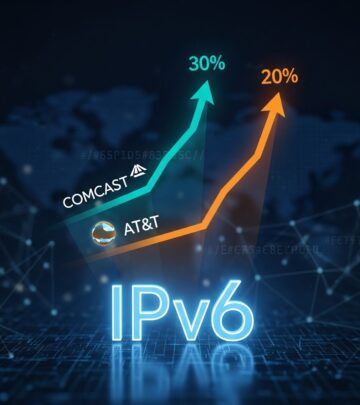
The internet’s growth has outpaced the 4.3 billion addresses available under IPv4. IPv6, with its 128-bit addressing scheme, unlocks 340 undecillion unique identifiers, ensuring scalability for IoT devices, 5G networks, and global connectivity. According to the Internet Assigned Numbers Authority (IANA), IPv4 depletion occurred years ago, compelling widespread adoption.
Key drivers include:
- Address Abundance: No more NAT complexities; every device gets a public address.
- Enhanced Security: Built-in IPsec support for end-to-end encryption.
- Improved Efficiency: Simplified header design reduces processing overhead.
- Mobility Support: Seamless device roaming across networks.
Organizations delaying IPv6 risk isolation as service providers prioritize the protocol. Webinars accelerate learning by showcasing real-world implementations.
Unpacking IPv6 Address Structures
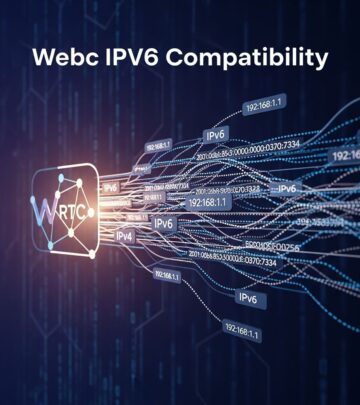
IPv6 addresses are 128 bits long, written as eight groups of four hexadecimal digits separated by colons (e.g., 2001:0db8:85a3:0000:0000:8a2e:0370:7334). Leading zeros are omitted, and consecutive zero groups collapse to “::”, yielding compact forms like 2001:db8:85a3::8a2e:370:7334.
| Address Type | Prefix Length | Example | Purpose |
|---|---|---|---|
| Unicast | /64 or /128 | 2001:db8::1 | Single device communication |
| Multicast | FF02::/16 | ff02::1 | Group transmissions |
| Anycast | Varies | 2001:db8::a | Nearest node in group |
Understanding these formats is foundational, as webinars often dissect them using tools like Wireshark for packet inspection.
Hands-On IPv6 in Virtual Environments
VMware environments excel for IPv6 labs, allowing safe experimentation without production risks. Sessions like vBrownBag demonstrate configuring ESXi hosts and vCenter for dual-stack (IPv4/IPv6) operations. Steps include:
- Enable IPv6 in vSphere Client under host networking.
- Assign global unicast addresses via SLAAC or DHCPv6.
- Test connectivity with ping6 and traceroute6.
Virtual setups reveal nuances like neighbor discovery replacing ARP, using ICMPv6 for address resolution and router advertisements.
Analyzing IPv6 Traffic with Wireshark
Wireshark is indispensable for IPv6 troubleshooting. Webinar demos highlight capturing dual-stack traffic, filtering with “ipv6”, and decoding extension headers for fragmentation or mobility.
Common captures include:
- Router Advertisements (RA): Prefix info and default gateways.
- Neighbor Solicitations (NS): Duplicate address detection (DAD).
- Multicast Listener Discovery (MLD): IPv6 multicast group joins.
Pro tip: Apply display filters like “ipv6.addr == 2001:db8::/64” to isolate traffic, mirroring techniques from expert-led walkthroughs.
Deployment Strategies for Enterprises
Migrating to IPv6 demands phased approaches:
Dual-Stack: Run IPv4 and IPv6 concurrently—most straightforward for brownfield networks.
Tunneling: Encapsulate IPv6 in IPv4 (6to4, Teredo) for interim connectivity.
Translation: NAT64 for IPv6-only clients accessing IPv4 resources.
Webinars stress testing with tools like IPv6 test sites from major providers, ensuring readiness before cutover.
Overcoming Common IPv6 Challenges
Despite advantages, hurdles persist:
- Firewall Misconfigurations: IPv6 requires separate rules; many block ICMPv6 erroneously.
- DHCPv6 Limitations: Stateless vs. stateful modes confuse admins.
- Application Compatibility: Legacy software may ignore IPv6 sockets.
Expert sessions provide checklists: Verify MTU (minimum 1280 bytes), enable forwarding, and monitor with SNMPv3 over IPv6.
Future-Proofing Networks with IPv6
By 2026, IPv6 traffic exceeds 50% globally, per recent APNIC reports. Webinars prepare IT teams for this reality, covering integration with SDN, cloud-native apps, and edge computing. Hands-on labs build confidence in managing vast address spaces without subnet exhaustion.
FAQ: IPv6 Essentials
Q: Is IPv6 backward-compatible with IPv4?
A: No, but dual-stack and translation mechanisms bridge the gap.
Q: Do I need new hardware for IPv6?
A: Most modern devices support it natively; firmware updates suffice for older gear.
Q: How does IPv6 security differ?
A: Mandatory IPsec support enhances it, but proper configuration is key.
Q: What’s the best way to learn IPv6 practically?
A: Join webinars, use GNS3/VMware labs, and analyze traffic with Wireshark.
Q: When should I disable IPv4?
A: Only after full testing and fallback plans; dual-stack is recommended long-term.
Getting Started with IPv6 Webinars
Platforms like vBrownBag offer free, recorded sessions with experts such as Jeffrey L. Carrell, author of TCP/IP guides. Register for live events, review follow-ups on YouTube, and apply learnings immediately. These resources demystify IPv6, empowering network engineers to lead digital transformations.
References
- IPv6 Address Allocation and Assignment Policies — RIPE NCC. 2024-01-15. https://www.ripe.net/publications/docs/ripe-790/
- IPv6 Global Statistics — Google. 2026-05-01. https://www.google.com/intl/en/ipv6/statistics.html
- Internet Protocol Version 6 (IPv6) for IPv4 Transition — NIST Special Publication 500-323. 2023-06-20. https://nvlpubs.nist.gov/nistpubs/SpecialPublications/NIST.SP.500-323.pdf
- IPv6 Address Types — Internet Engineering Task Force (IETF) RFC 4291. 2006-02 (authoritative standard). https://datatracker.ietf.org/doc/html/rfc4291
- World IPv6 Launch Measurement — Internet Society. 2024-11-10. https://www.internetsociety.org/deploy360/world-ipv6/
Similar Articles






Read full bio of Sneha Tete