IPv6 Fridays: Igniting the Next-Gen Internet Shift
Transform every Friday into IPv6 Friday to accelerate the global transition to the future of internet connectivity and innovation.
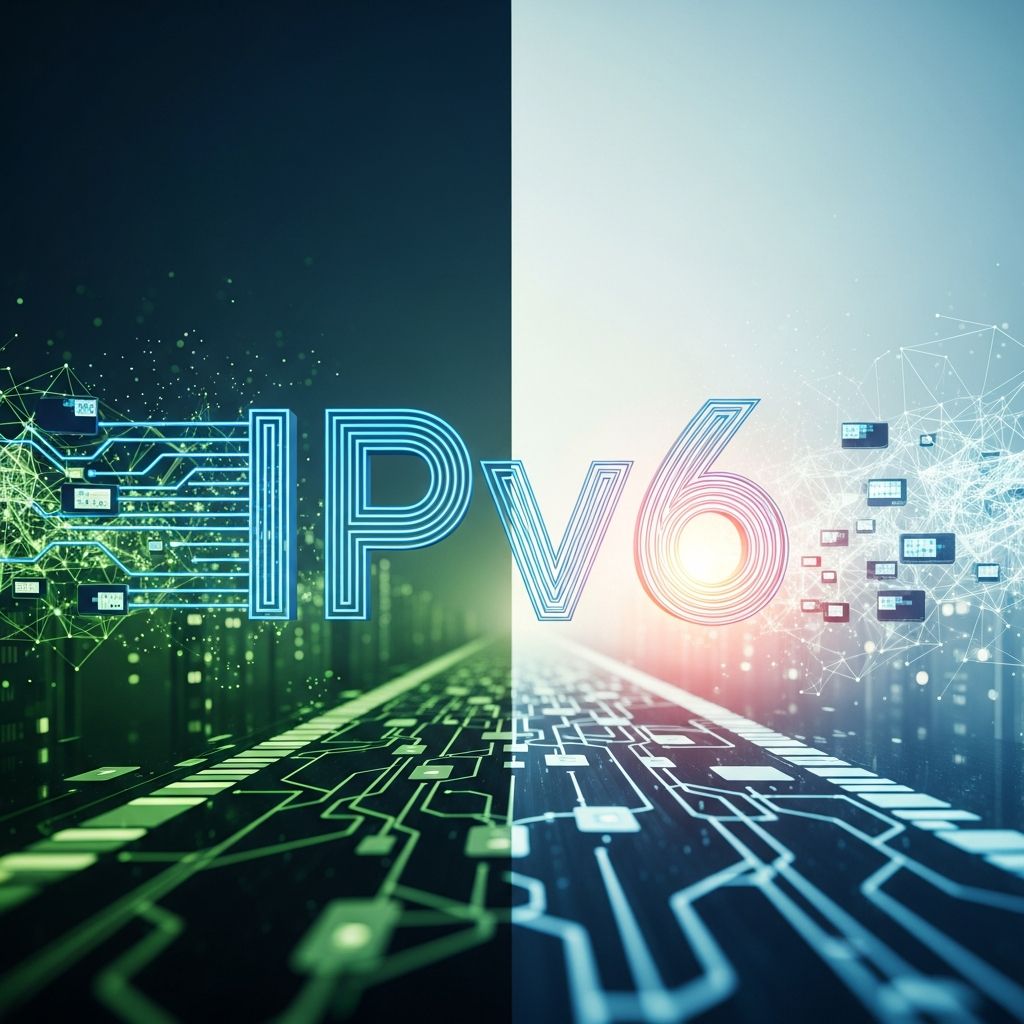
The internet has transformed society, powering everything from remote work to smart cities. Yet, its foundational technology, IPv4, is running out of addresses. Enter IPv6, the long-awaited upgrade designed to handle exponential growth. To speed up this essential transition, communities worldwide are embracing ‘IPv6 Fridays’—a fun, weekly ritual encouraging individuals, businesses, and organizations to experiment with IPv6. This movement isn’t just a gimmick; it’s a strategic push toward a more scalable, secure web.
The IPv4 Crisis and Why IPv6 Matters Now
IPv4, with its 32-bit addressing, offers about 4.3 billion unique IP addresses. In the early internet days, that seemed ample. But with billions of devices online—from smartphones to IoT sensors—exhaustion hit. Regional Internet Registries have allocated nearly all IPv4 blocks, forcing reliance on workarounds like NAT, which complicates networks and hinders peer-to-peer apps.
IPv6 solves this with 128-bit addresses, providing roughly 340 undecillion possibilities (3.4 × 10^38). Beyond capacity, it brings built-in IPsec for security, simplified packet headers for efficiency, and auto-configuration for easier deployment. Despite these advantages, adoption lags. As of 2026, global IPv6 traffic hovers at 45-50% for major services like Google, with leaders like France and India exceeding 50% while others trail below 5%.
IPv6 Fridays counter this inertia by making adoption approachable. Picture dedicating one day a week to tweak your router, test tunnels, or share progress online. This grassroots effort builds momentum, much like past tech holidays that popularized open-source tools.
Getting Started: Simple Steps for Your First IPv6 Friday
Ready to join? No need for enterprise-grade setups. Home users can dive in today. Here’s a beginner-friendly roadmap:
- Verify ISP Support: Check if your provider offers native IPv6 via their portal or app. Many now do, especially in high-adoption regions.
- Set Up a Tunnel: If native isn’t available, use free brokers like Hurricane Electric or SixXS. These encapsulate IPv6 over IPv4, delivering full functionality.
- Configure Devices: Enable IPv6 on your router (e.g., via DHCPv6 or SLAAC). Test with sites like test-ipv6.com.
- Monitor and Share: Track your dual-stack performance and post results on social media with #IPv6Friday.
These steps take under an hour. For businesses, start with lab environments before production rollout, ensuring firewalls and apps are IPv6-ready.
Real-World Wins: Success Stories Fueling Momentum
IPv6 Fridays have sparked tangible change. In Kentucky’s ‘Get 6’d’ initiative, critical infrastructure sectors achieved full implementations, enhancing resilience. Federally, the U.S. OMB’s M-21-07 memo mandates 80% IPv6-only assets by FY2025, tying it to Zero Trust and cloud strategies—yet progress varies, underscoring the need for cultural shifts like weekly experiments.
Globally, the IPv6 Forum drives education through webinars and logos like IPsec Ready, certifying secure deployments. Events like World IPv6 Launch (2012) proved stability, with zero major outages during trials. Today, weekend spikes in adoption (up to 50%) show user readiness when ISPs prioritize it.
| Country | IPv6 Traffic % | Key Driver |
|---|---|---|
| France | >50% | ISP Mandates |
| India | >50% | Mobile Boom |
| USA | ~50% | Cloud Providers |
| China | <5% | IPv4 Reliance |
This table highlights disparities, but IPv6 Fridays can bridge them through peer learning.
Overcoming Hurdles: Addressing Common IPv6 Fears
Skepticism persists: ‘Will it break my apps?’ ‘Is it secure?’ Most software supports dual-stack, running IPv4 and IPv6 side-by-side. Security improves with mandatory IPsec support, though enable it explicitly. Cost? Minimal—routers under $100 handle it.
For enterprises, legacy systems pose challenges. Solution: Phased migration with translation tools like NAT64. Training via free resources from the IPv6 Forum demystifies it.
Future-Proofing: IPv6’s Role in Emerging Tech
IPv6 isn’t optional for tomorrow’s internet. 5G networks demand it for massive device density. IoT ecosystems thrive on end-to-end connectivity, sans NAT. Edge computing and AI-driven services rely on abundant addresses for granular tracking.
IPv6 Fridays extend to enterprises by challenging teams to deploy weekly: containerize apps with IPv6-only pods or audit supply chains. Governments can mandate it in RFPs, accelerating compliance.
Fun Ways to Celebrate IPv6 Fridays
Make it engaging:
- Create memes: ‘IPv6 on All the Things!’
- Host virtual meetups or webinars.
- Run contests for best home lab setups.
- Share dashboards tracking your prefix usage.
These tactics build community, turning tech upgrades into cultural phenomena.
FAQ: Your IPv6 Friday Questions Answered
Q: Do I need new hardware for IPv6?
A: Rarely—most modern routers and devices support it out-of-the-box.
Q: What’s the performance difference?
A: IPv6 often edges out IPv4 due to efficient headers and no NAT overhead.
Q: How do I convince my boss?
A: Cite federal mandates and stats showing 50%+ adoption correlating with innovation hubs.
Q: Are there risks in tunneling?
A: Minimal if using reputable brokers; monitor for MTU issues.
Q: When will IPv4 die?
A: Gradual sunset—expect dual-stack for decades, but IPv6 dominance by 2030.
Call to Action: Make This Friday Your IPv6 Friday
Don’t wait for ISPs or mandates. Log in, enable IPv6, and tweet your win. Join forums, follow #IPv6Friday, and watch the internet evolve. The future is address-rich and ready—start today.
References
- IPv6 deployment — Wikipedia (informed by Google stats). 2026-04. https://en.wikipedia.org/wiki/IPv6_deployment
- “If Not Now, When?”: The Federal IPv6-Only Mandate After Five Years — Homeland Security Today. 2024. https://www.hstoday.us/subject-matter-areas/cybersecurity/perspective-the-unfinished-mission-of-federal-ipv6-only-adoption-five-years-later/
- World IPv6 Launch — Internet Society (archived experiences). 2012-06-08. https://www.youtube.com/watch?v=lV8UmTW8HOQ
- IPv6 Forum — IPv6 Forum. 2023-05-05. https://www.ipv6forum.com
- M-21-07: Completing the Transition to Internet Protocol Version 6 (IPv6) — Office of Management and Budget (official .gov). 2020-11. https://www.whitehouse.gov/wp-content/uploads/2020/11/M-21-07-Completing-the-Transition-to-IPv6.pdf
Similar Articles






Read full bio of medha deb