IPv6 for IPv4 Experts Ebook Guide
Master IPv6 essentials with this free ebook tailored for IPv4 network professionals, now in English and Russian editions.
Unlocking IPv6: The Essential Guide for IPv4 Network Pros
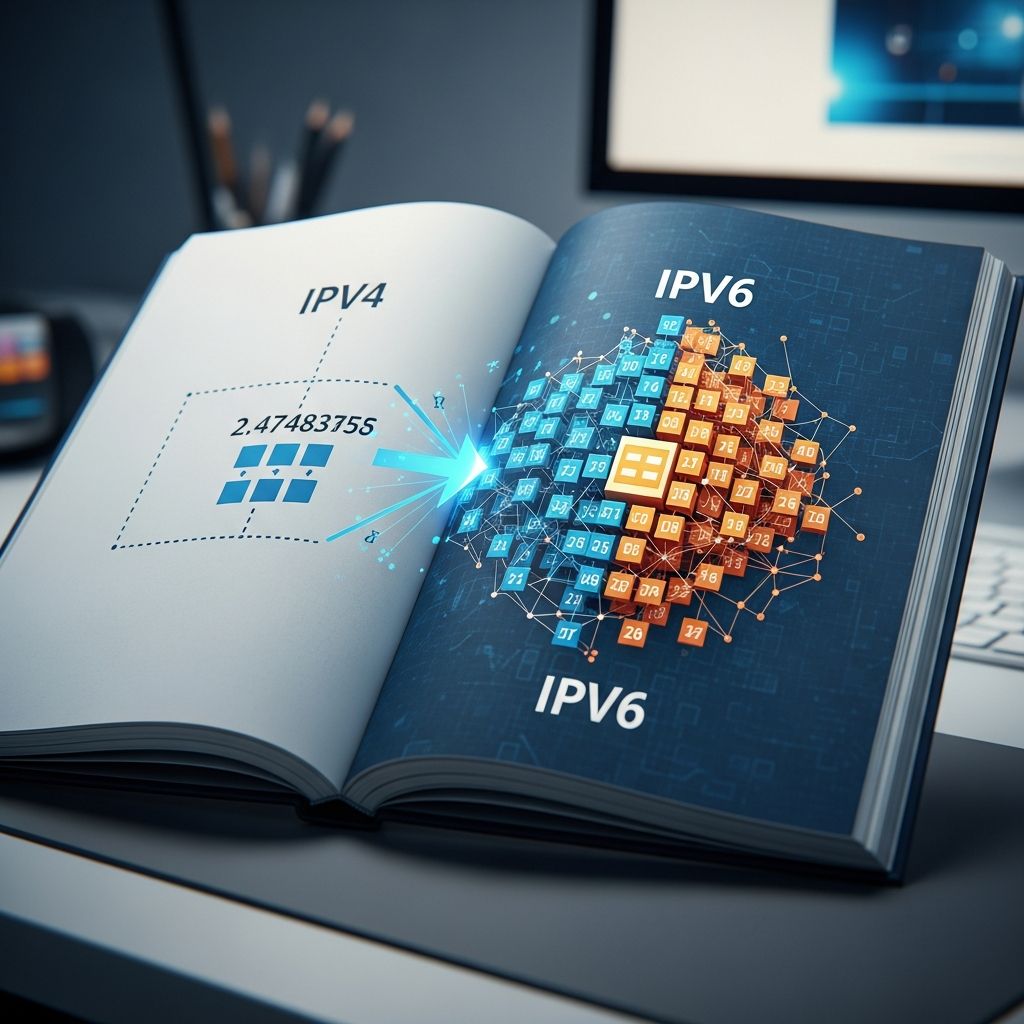
Transitioning from IPv4 to IPv6 represents one of the most significant evolutions in internet infrastructure. As IPv4 address exhaustion continues to pressure global networks, IPv6 offers a scalable solution with its vast address space and enhanced features. For seasoned IPv4 administrators and engineers, grasping IPv6 isn’t just beneficial—it’s essential. A standout resource in this space is the free ebook IPv6 for IPv4 Experts by Yar Tikhiy, a comprehensive 402-page draft that demystifies IPv6 through the lens of IPv4 knowledge.
Why IPv6 Matters in Today’s Network Landscape
IPv4, with its 32-bit addressing, provided roughly 4.3 billion unique addresses—a number now fully depleted in many regions. IPv6 expands this to 128 bits, enabling approximately 3.4 × 1038 addresses, enough for every device on Earth to have a globally routable IP without NAT complexities. This shift isn’t merely about quantity; IPv6 introduces streamlined headers, mandatory IPsec support, and elimination of broadcasts, improving efficiency and security.
Key drivers for adoption include IoT proliferation, 5G networks, and cloud computing, where end-to-end connectivity is paramount. According to the RIPE NCC, IPv6 deployment has surged past 40% globally as of 2026, underscoring the urgency for IPv4 experts to upskill.
Discovering the IPv6 for IPv4 Experts Ebook
Released in 2013 by Yar Tikhiy, this ebook targets IPv4 veterans, leveraging their existing TCP/IP foundation to accelerate IPv6 mastery. Available at no cost from the author’s site, it comes in multiple formats: English PDFs (various sizes), and Russian versions in PDF, HTML, and EPUB. At 402 A4-sized pages, it’s a thorough draft with noted errata, ideal for self-paced learning.
- English Options: Compact and full-size PDFs for print or digital reading.
- Russian Options: PDF for printing, HTML for browsers, EPUB for e-readers.
- Access Point: Direct download page.
This multilingual approach broadens its reach, particularly in Russian-speaking tech communities active in networking.
Core Concepts: From IPv4 Limitations to IPv6 Solutions
The ebook opens by dissecting the IPv4 address crisis, explaining exhaustion via CIDR, NAT, and reclamation efforts. It positions IPv6 as the long-term fix, detailing its hierarchical addressing to simplify routing tables and enable global anycast.
| Feature | IPv4 | IPv6 |
|---|---|---|
| Address Size | 32 bits (4.3B addresses) | 128 bits (3.4×1038 addresses) |
| Header Length | Variable (20-60 bytes) | Fixed 40 bytes + extensions |
| Fragmentation | Router-allowed | Source-only with PMTUD |
| Security | IPsec optional | IPsec mandatory |
| Broadcasts | Supported | Replaced by multicast |
This comparison highlights IPv6’s design for speed and scalability.
Mastering IPv6 Addressing Fundamentals
IPv6 addresses are 128-bit hexadecimal strings, often shortened with :: for zeros. The ebook emphasizes types like global unicast (2000::/3), unique local (fc00::/7), and link-local (fe80::/10). It teaches subnetting with /64 prefixes standard for LANs, contrasting IPv4’s variable masks.
- Interface Identifiers: EUI-64 derives from MAC, or SLAAC for privacy.
- Anycast Addresses: Shared by multiple interfaces for load balancing.
- Multicast: Scoped groups replace broadcasts, e.g., ff02::1 for all nodes.
Practical examples guide readers in assigning addresses, avoiding common pitfalls like overlapping ranges.
Dissecting the IPv6 Packet Structure
IPv6 packets feature a clean 40-byte header: Version, Traffic Class, Flow Label, Payload Length, Next Header, Hop Limit, Source, and Destination. Extension headers (e.g., Hop-by-Hop, Routing, Fragment) chain flexibly, unlike IPv4 options. No checksum reduces processing overhead, trusting lower layers.
The ebook illustrates packet flow, stressing Path MTU Discovery to prevent fragmentation blackholes—a nod to IPv4 pains.
IPv6 Within the Protocol Stack
Integration with TCP, UDP, and ICMPv6 is seamless, but nuances arise. ICMPv6 is vital for PMTUD and error reporting, with types like Packet Too Big (Type 2). The book covers dual-stack operations, where IPv4 and IPv6 coexist, and transition mechanisms like 6to4 tunneling (2002::/16 prefix over IPv4).
- 6in4 Tunnels: Static endpoints encapsulate IPv6 in IPv4.
- Teredo: NAT traversal for consumer setups.
- ISATAP: Intra-site automatic tunnels.
Neighbor Discovery Protocol: IPv6’s Link-Layer Magic
Replacing ARP, NDP uses ICMPv6 for address resolution, router discovery, and duplicate detection. Key messages include:
- Router Advertisement (RA): Prefixes, MTU, lifetimes.
- Neighbor Solicitation (NS): ARP-like resolution.
- Secure NDP: SEND with CGA and IPsec.
Diagrams clarify stateless autoconfiguration (SLAAC), blending RA with EUI-64 for plug-and-play.
Advanced IPv6: Beyond the Basics
Deeper dives cover Mobile IPv6 for seamless roaming, multicast listener discovery (MLD), and provider-independent addressing. Security chapters mandate IPsec AH/ESP, contrasting IPv4’s add-ons. The ebook addresses enterprise deployments, including BGP for IPv6 and DNS AAAA records.
Benefits and Deployment Strategies
IPv6 enables peer-to-peer apps, simplifies firewalls (stateful by default), and future-proofs networks. Phased rollouts—dual-stack first, then tunneling—minimize disruption. Real-world stats from APNIC show Asia leading adoption at over 60%.
FAQs: IPv6 Transition Essentials
Q: Is IPv6 compatible with IPv4 tools?
A: Many are, but update to IPv6-aware versions; dual-stack mitigates issues.
Q: How long until IPv6 dominates?
A: With exhaustion complete, expect majority by 2030 per IANA.
Q: What’s the best format for the ebook?
A: PDF for reference, EPUB for mobile.
Q: Does it cover certification prep?
A: Aligns with CCNA/CCNP IPv6 topics.
Q: Are updates planned?
A: As a draft, check for errata; supplements with RFCs.
Getting Started with Your IPv6 Journey
Download the ebook today and pair it with labs using GNS3 or live networks like Hurricane Electric’s tunnelbroker. IPv4 expertise accelerates mastery—embrace the future now.
References
- IPv6 Address Allocation and Assignment Policies for the RIPE NCC Service Region — RIPE NCC. 2023-09-01. https://www.ripe.net/publications/docs/ripe-759
- IPv4 Special-Purpose Address Registry — IANA. 2024-01-15. https://www.iana.org/assignments/iana-ipv4-special-registry/iana-ipv4-special-registry.xhtml
- IPv6 Address Space Overview — APNIC. 2025-03-20. https://www.apnic.net/specs/resc/apnic221/
- IPv6 Addressing Architecture — IETF (RFC 4291). 2006-02. https://datatracker.ietf.org/doc/html/rfc4291 (Foundational standard, remains authoritative).
- Neighbor Discovery for IP version 6 (IPv6) — IETF (RFC 4861). 2007-09. https://datatracker.ietf.org/doc/html/rfc4861 (Core protocol spec, unchanged).
Similar Articles








Read full bio of medha deb