IPv6, DNS Privacy, and IoT Security Essentials
Explore how IPv6 adoption, encrypted DNS protocols, and robust IoT defenses are shaping a secure connected future for networks worldwide.
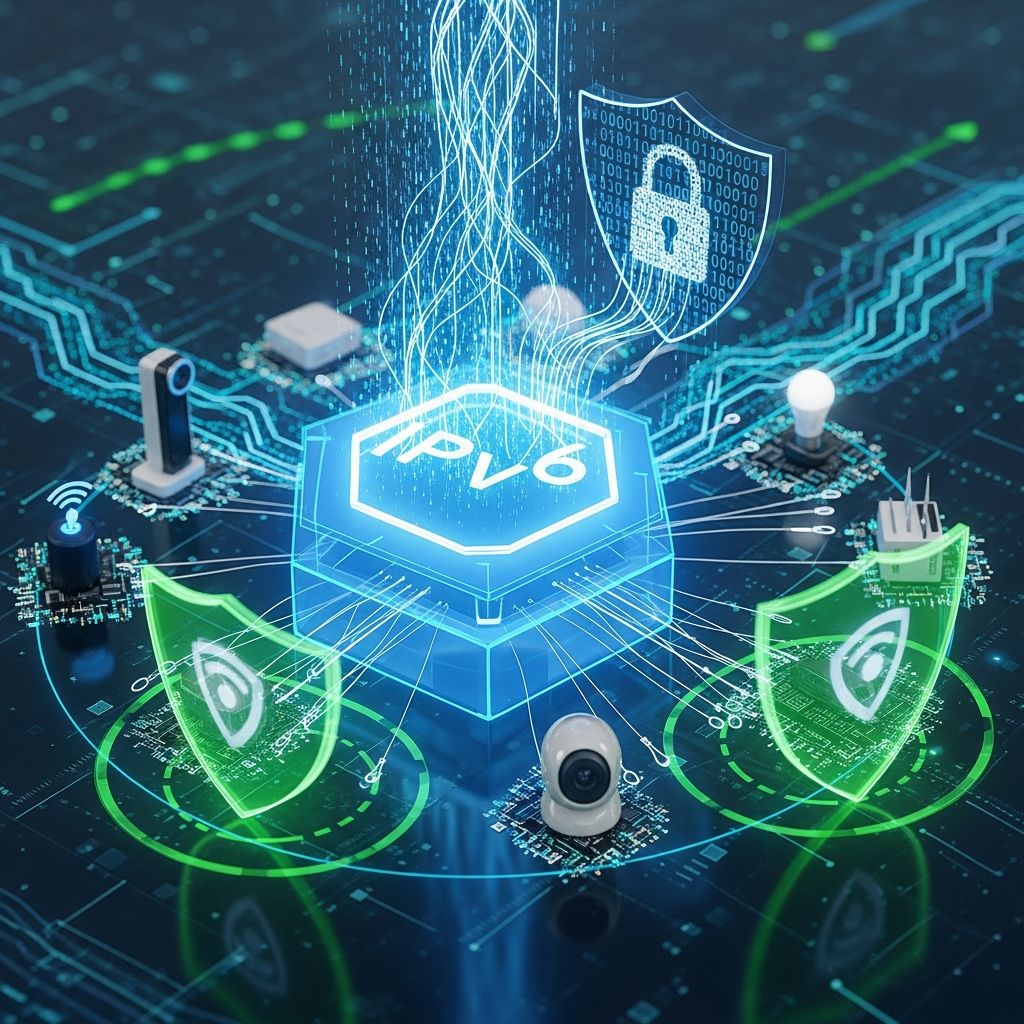
In the rapidly evolving landscape of internet infrastructure, the transition to IPv6, the push for DNS privacy, and the surge in IoT devices present both opportunities and challenges for network operators. As global internet usage expands, understanding these interconnected elements is vital for building resilient systems. This article examines their technical foundations, deployment hurdles, and protective strategies, drawing on established standards and real-world insights.
The Imperative for IPv6 in Modern Networks
IPv6 was designed to overcome the address exhaustion of IPv4, offering a vast pool of 128-bit addresses. This expansion is particularly crucial for the Internet of Things (IoT), where billions of devices require unique identifiers without relying on Network Address Translation (NAT).
- IPv6 enables end-to-end connectivity, simplifying peer-to-peer communications essential for IoT applications.
- Features like Stateless Address Autoconfiguration (SLAAC) allow devices to self-configure, reducing administrative overhead.
- Despite these benefits, adoption lags due to compatibility issues and the inertia of IPv4-dominant infrastructures.
Network operators must prioritize dual-stack implementations, supporting both protocols during transition. Tools for testing IPv6 readiness, such as those evaluating NAT64 transitions, help identify performance gaps across connection types.
Advancing DNS Privacy in an Era of Surveillance
The Domain Name System (DNS) translates human-readable names into IP addresses but has long been vulnerable to eavesdropping. Traditional DNS queries travel unencrypted, exposing user activities to ISPs, governments, or attackers.
Emerging protocols address this:
- DNS over HTTPS (DoH): Encapsulates queries in HTTPS, blending them with regular web traffic for opacity.
- DNS over TLS (DoT): Secures queries over TLS on port 853, providing server authentication.
These methods mitigate risks like query logging and man-in-the-middle attacks. However, they introduce challenges for network management, such as reduced visibility into traffic patterns for threat detection.
| Protocol | Port | Key Benefit | Operator Challenge |
|---|---|---|---|
| DoH | 443 | Blends with HTTPS | Firewall circumvention |
| DoT | 853 | Clear separation | Blocking feasibility |
Operators can balance privacy and security by deploying recursive resolvers with these protocols while implementing logging policies compliant with privacy regulations.
Securing the IoT Ecosystem Against Evolving Threats
IoT devices, from smart thermostats to industrial sensors, proliferate across homes and enterprises. Their connectivity amplifies risks: weak authentication, unpatched firmware, and massive botnets like Mirai demonstrate the stakes.
Key vulnerabilities include:
- Default credentials that attackers exploit en masse.
- Exposure to DDoS amplification via protocols like NTP or SSDP.
- Lack of encryption in device-to-cloud communications.
IPv6 exacerbates these if devices use predictable interface identifiers, enabling scanning despite the address space’s scale. Privacy extensions randomize addresses, but inconsistent implementation leaves gaps.
Intersections: IPv6 Meets IoT and DNS
IPv6’s role in IoT demands careful DNS integration. Devices often rely on DNS for service discovery, making encrypted DNS essential to prevent profiling based on query patterns.
Consider a smart home: cameras and sensors query domains for updates. Unencrypted DNS reveals device types and behaviors, aiding targeted attacks. DoH/DoT shields this, but IoT firmware must support it—a current rarity.
IPv6 configuration methods intersect here too. SLAAC provides addresses but requires supplemental DNS via Router Advertisements (RAs) or DHCPv6. Rogue RAs pose risks, underscoring the need for Secure Neighbor Discovery (SEND).
- SLAAC + Stateless DHCPv6: Efficient for DNS provisioning.
- Full DHCPv6: Comprehensive but resource-intensive for constrained IoT.
Operators should enforce validated configurations to thwart spoofing.
Practical Strategies for Network Operators
To operationalize these technologies:
- Assess IPv6 Maturity: Use benchmarks to measure prefix delegation, connectivity success rates, and NAT64 performance.
- Deploy Encrypted DNS Selectively: Offer DoT/DoH at the edge while retaining plaintext for internal monitoring.
- Segment IoT Traffic: Isolate devices in VLANs or with IPv6 Unique Local Addresses (ULAs) to limit breach scope.
- Implement DNSSEC: Validate responses to prevent cache poisoning, critical for IoT firmware updates.
Events like regional network operator gatherings foster knowledge sharing on these topics, highlighting tools and case studies from deployments.
Future Directions and Challenges
Looking ahead, 5G and edge computing will amplify IoT scale, necessitating DNS scalability and IPv6 ubiquity. Challenges persist: balancing privacy encryption with malware detection, standardizing IoT security baselines, and educating manufacturers on best practices.
Collaboration among operators, standards bodies like IETF, and vendors is key. Initiatives measuring IoT query volumes via anonymized aggregates can inform policy without compromising privacy.
Frequently Asked Questions
What is the main advantage of IPv6 for IoT?
IPv6 provides abundant unique addresses, eliminating NAT complexities and enabling direct device connectivity essential for low-latency IoT applications.
How does DoH improve DNS privacy?
DoH tunnels DNS queries through HTTPS, masking them from network observers and integrating seamlessly with standard web encryption.
Why are IoT devices particularly vulnerable?
Many IoT devices ship with insecure defaults, limited processing power for updates, and operate in unsecured environments like homes.
Can IPv6 hide devices from attackers?
No, while the address space is vast, leaks via DNS or applications make robust per-device security mandatory regardless of protocol.
What role does DNSSEC play in IoT security?
DNSSEC ensures response authenticity, preventing redirection of devices to malicious firmware servers.
Conclusion
The convergence of IPv6, DNS privacy innovations, and IoT security forms the backbone of tomorrow’s internet. By proactively addressing these areas, operators can foster a safer, more private ecosystem. Stay informed through standards updates and community forums to navigate this dynamic field effectively.
References
- IPv6 Addressing Architecture — IETF. 2020-06-17. https://datatracker.ietf.org/doc/html/rfc8200
- DNS Privacy Considerations — IETF. 2020-05-28. https://datatracker.ietf.org/doc/html/rfc9073
- DNS for IoT: A Survey — National Center for Biotechnology Information (PMC). 2023-05-01. https://pmc.ncbi.nlm.nih.gov/articles/PMC10181686/
- IPv6 and the Internet of Things — APNIC. 2016-04-13. https://blog.apnic.net/2016/04/13/ipv6-internet-things/
- The DNS & the Internet of Things: Opportunities, Risks & Challenges — SIDN Labs. 2021-06-22. https://www.sidnlabs.nl/downloads/14jjHrEFZnJYmExS4bNgEa/da1e783dc64bc7406967aa74adcdab8b/DNS_and_IoT_ICANN_68_4x3_June_22_v2.pdf
- One bad apple can spoil your IPv6 privacy — ACM Digital Library. 2022-10-25. https://dl.acm.org/doi/10.1145/3544912.3544915
Similar Articles








Read full bio of medha deb