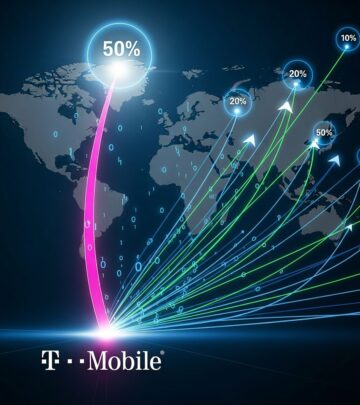
IPv6 Adoption Reaches Critical Mass in US Mobile Networks
How America's mobile carriers crossed the 50% IPv6 threshold and transformed internet connectivity

The Turning Point in Internet Protocol Evolution
The telecommunications landscape experienced a watershed moment when the major mobile network operators in the United States achieved a significant transition in their core infrastructure. This development marked the culmination of years of planning, investment, and coordinated effort across multiple stakeholders in the internet ecosystem. The event represented far more than a technical milestone—it symbolized the maturation of internet technology and the industry’s commitment to supporting the next generation of connected devices and services.
For decades, the internet operated primarily on Internet Protocol version 4 (IPv4), an addressing scheme developed in the 1980s that was revolutionary for its time. However, the explosive growth of internet-connected devices, from smartphones to smart home systems to Internet of Things sensors, created an urgent need for a vastly expanded address space. This scarcity of available addresses prompted the development and eventual adoption of IPv6, which offers an astronomical increase in the number of unique addresses available for networked devices.
Understanding the Technical Foundation
The transition from IPv4 to IPv6 represents one of the most complex infrastructure shifts in computing history. IPv4 provides approximately 4.3 billion unique addresses, a number that seemed virtually limitless when the protocol was designed. In contrast, IPv6 supplies approximately 340 undecillion addresses—a number so vast that virtually every conceivable device and use case could receive multiple permanent, globally unique addresses.
The migration process required careful coordination because IPv4 and IPv6 are not inherently compatible with one another. Network operators had to implement dual-stack configurations, where both protocols operate simultaneously on the same network infrastructure. This approach allowed for a gradual transition rather than a disruptive cutover, enabling users with both IPv4 and IPv6 capabilities to access services while older systems continued to function on legacy protocols.
Key Technical Considerations in the Transition
- Address space expansion enabling trillions of new device connections
- Enhanced security protocols built into the IPv6 specification
- Improved routing efficiency and network performance optimization
- Better support for mobile devices and wireless connectivity
- Streamlined packet processing reducing computational overhead
The Major Network Operators and Their Progress
The United States telecommunications industry includes several dominant mobile network operators who collectively serve the vast majority of the nation’s wireless subscribers. Each of these carriers recognized the strategic importance of IPv6 adoption and invested heavily in modernizing their network infrastructure to support the new protocol.
Verizon Wireless, as the largest mobile network operator by subscriber count, took aggressive steps to deploy IPv6 across its infrastructure. The company recognized early on that IPv6 deployment would become a competitive advantage, enabling them to offer superior service quality and support for emerging technologies. AT&T, another major player, similarly committed substantial resources to the transition, understanding that network modernization would be essential for maintaining competitive positioning in an increasingly digital marketplace.
T-Mobile USA and Sprint Wireless, while smaller than Verizon and AT&T, also made significant commitments to IPv6 deployment. These carriers understood that a modern, future-proof network would be critical to attracting and retaining customers as wireless technology continued to evolve at a rapid pace.
Deployment Rates Across Major Carriers
| Network Operator | IPv6 Deployment Status | Notable Achievement |
|---|---|---|
| Verizon Wireless | Leading deployment efforts | Pioneered dual-stack implementation |
| T-Mobile USA | Aggressive modernization | Extended IPv6 to legacy devices |
| AT&T | Substantial infrastructure investment | Wide geographic coverage deployment |
| Sprint Wireless | Coordinated network upgrades | Regional deployment initiatives |
The Catalyst for Accelerated Adoption
Several factors converged to accelerate the pace of IPv6 adoption across US mobile networks. The depletion of available IPv4 addresses in North America created an immediate business imperative. Network operators could no longer rely on obtaining new IPv4 address blocks from regional internet registries, forcing them to migrate to IPv6 as the only viable path forward for supporting new subscribers and devices.
Content providers played a crucial role in this acceleration. Major technology companies, recognizing that their users increasingly connected through mobile devices, invested in making their services accessible via IPv6. When popular platforms like Facebook, Google, and others began directing significant portions of their traffic through IPv6, it created powerful economic incentives for network operators to complete their deployments quickly.
Industry organizations such as the Internet Society and regional internet governance bodies provided technical guidance, best practices, and encouragement for rapid deployment. The World IPv6 Launch initiative, in particular, helped coordinate international efforts to promote adoption and provided neutral measurement data that allowed stakeholders to track progress objectively.
Measuring Success and Assessing Impact
Determining the actual rate of IPv6 adoption requires sophisticated measurement infrastructure. Multiple organizations track IPv6usage through different methodologies, each providing valuable insights into the transition’s progress. Content delivery networks monitor requests to their servers, identifying which protocol version clients use to connect. Search engines analyze the protocols used by visitors accessing their services. Network operators themselves collect detailed traffic statistics on their infrastructure.
When these various measurement approaches converged on a consistent finding—that IPv6 requests had surpassed 50% of total traffic from major US mobile networks—it confirmed that a genuine structural shift had occurred in the internet infrastructure. This was not a temporary spike or artifact of measurement methodology but rather a fundamental change in how mobile users connected to internet services.
The breakthrough proved particularly significant in the Android ecosystem, where IPv6 adoption rates exceeded 70% of requests. This reflected Google’s aggressive push to ensure that the Android operating system fully supported IPv6 and that device manufacturers incorporated IPv6 capabilities into their handsets. Apple’s iOS platform showed a lower adoption rate initially, around 30%, but was steadily increasing as updated versions of the operating system became more widespread and as carriers expanded IPv6 support to iPhone users.
Economic and Strategic Implications
The achievement of 50% IPv6 adoption held significant implications for the future of internet commerce, innovation, and service delivery. Companies developing new internet-based services no longer needed to worry about IPv4 address scarcity limiting the number of users they could serve. The vast address space provided by IPv6 enabled new business models and applications that would have been impossible under the constraints of IPv4’s limited addressing capacity.
Network operators who had completed their IPv6 deployments positioned themselves to capture market share from competitors who lagged in modernizing their infrastructure. Early adopters could market superior network performance, lower latency, and better support for emerging technologies as competitive advantages. This competitive dynamic encouraged rapid progression from early deployments to network-wide implementations.
For consumers, the transition was largely transparent. Users continued to access their favorite services seamlessly whether those connections occurred via IPv4 or IPv6. However, behind the scenes, the shift enabled telecom operators to support more devices per customer, offer new services, and prepare their infrastructure for the massive growth in internet-connected devices anticipated over subsequent decades.
Global Context and International Significance
While this milestone focused specifically on US mobile networks, it reflected global trends in IPv6 adoption. Developing nations often leapfrogged directly to IPv6 infrastructure, avoiding the complexity of maintaining legacy IPv4 systems. European operators pursued aggressive deployment strategies, while Asia-Pacific networks recognized IPv6’s importance for supporting rapidly expanding user bases.
The US achievement demonstrated that even in developed economies with mature telecommunications infrastructure, a successful transition to new protocols was possible. This encouraged international policymakers and industry leaders to accelerate their own deployment efforts, knowing that the technical and operational challenges had been successfully overcome.
Remaining Challenges and Future Outlook
Reaching 50% adoption represented significant progress, but substantial work remained to achieve complete IPv6 deployment. Some user devices, particularly older smartphones and legacy equipment, continued to rely exclusively on IPv4. Enterprise networks, particularly in sectors like finance and healthcare, proceeded more cautiously with IPv6 adoption due to security and compatibility concerns. Fixed-line broadband networks operated by cable companies and traditional internet service providers showed varied adoption rates depending on their specific circumstances and customer bases.
The path forward involved continued investment in network infrastructure, education of IT professionals about IPv6 best practices, and development of tools and applications that fully leveraged IPv6’s capabilities. As the installed base of IPv6-capable devices continued to grow, adoption rates would naturally accelerate through simple replacement cycles as users upgraded their smartphones and connected devices.
Frequently Asked Questions
What prompted the rapid IPv6 adoption in US mobile networks?
The exhaustion of available IPv4 addresses created an urgent business necessity for network operators. Without IPv6, they could not accommodate new subscribers or devices. Simultaneously, major content providers like Facebook and Google invested in IPv6 support, making the protocol increasingly relevant for serving mobile users effectively.
Why did Android devices show higher IPv6 adoption than iOS devices?
Android devices demonstrated faster IPv6 adoption partly due to Google’s vertical integration and ability to push operating system updates to supporting carriers and manufacturers. Apple’s iOS ecosystem involved more complex coordination between the company, carriers, and device manufacturers, resulting in a more gradual rollout of comprehensive IPv6 support.
Does IPv6 adoption affect internet security?
IPv6 incorporates enhanced security features, including mandatory support for encryption and authentication protocols. However, the transition period requires careful security planning to ensure that both IPv4 and IPv6 traffic receive equivalent protection. Properly implemented dual-stack networks actually improve overall security posture compared to IPv4-only deployments.
What happens to devices that only support IPv4?
Devices limited to IPv4 continue to function through translation mechanisms and dual-stack network configurations that maintain backward compatibility. Network operators supporting both protocols can serve all users regardless of their device capabilities, though users with IPv6-capable devices benefit from enhanced performance and future-readiness.
References
- Facebook, Akamai Pass Major Milestone: Over 50% IPv6 from US mobile networks — Internet Society. 2016-08-17. https://www.internetsociety.org/blog/2016/08/facebook-akamai-pass-major-milestone-over-50-ipv6-from-us-mobile-networks/
- How IPv6 deployment is growing in U.S. and other countries — Facebook Engineering. 2018-06-06. https://engineering.fb.com/2018/06/06/connectivity/how-ipv6-deployment-is-growing-in-u-s-and-other-countries/
- Major Mobile US Networks Pass 50% IPv6 Threshold — World IPv6 Launch. 2016. https://www.worldipv6launch.org/major-mobile-us-networks-pass-50-ipv6-threshold/
- Mobile IPv6 Milestone: More Than Half of Mobile Requests Now IPv6 — TeleCompetitor. 2016. https://www.telecompetitor.com/mobile-ipv6-milestone-more-than-half-of-mobile-requests-now-ipv6/
- Understanding the Role of ISPs in IPv6 Deployment — Internet Engineering Task Force (IETF). Standards Track. https://tools.ietf.org/
Similar Articles






Read full bio of medha deb