IPv4 Exhaustion Milestone
Explore the pivotal moment when IANA began distributing the last IPv4 addresses, marking the definitive shift toward IPv6 adoption worldwide.

IPv4 Exhaustion Milestone: The End of an Era Begins
The internet’s foundational addressing system, IPv4, reached a defining turning point in 2014 when the Internet Assigned Numbers Authority (IANA) initiated the distribution of its very last reserves of addresses. This development was not merely administrative; it symbolized the culmination of years of anticipation surrounding the finite nature of IPv4’s 4.3 billion unique addresses. As connected devices proliferated—from smartphones and smart home gadgets to industrial sensors—the pressure on this limited pool became unsustainable.
Understanding this milestone requires grasping the architecture of IP address management. IPv4 addresses, structured as 32-bit numbers (e.g., 192.168.1.1), offer approximately 4.29 billion possibilities. While sufficient for the internet’s nascent days in the 1980s and 1990s, explosive growth in the 21st century rendered them inadequate. Techniques like Network Address Translation (NAT) provided temporary relief by allowing multiple devices to share a single public IP, but they introduced complexities in routing, security, and peer-to-peer communications.
The Global Framework of IP Address Distribution
IP addresses are stewarded through a hierarchical system designed for efficiency and fairness. At the apex sits IANA, operated by the Internet Corporation for Assigned Names and Numbers (ICANN), which delegates large blocks to five Regional Internet Registries (RIRs): ARIN (North America), RIPE NCC (Europe, Middle East, Central Asia), APNIC (Asia-Pacific), LACNIC (Latin America and Caribbean), and AFRINIC (Africa).
Each RIR manages allocations within its region, adhering to policies that ensure judicious use. For instance, RIRs typically require justification for requests, such as projected needs over 12-24 months, promoting conservation. This structure, formalized over decades, prevented chaotic free-for-alls and supported the internet’s orderly expansion.
| RIR | Region Covered | Establishment Year |
|---|---|---|
| ARIN | North America | 1997 |
| RIPE NCC | Europe, Middle East, Central Asia | 1992 |
| APNIC | Asia-Pacific | 1993 |
| LACNIC | Latin America, Caribbean | 2002 |
| AFRINIC | Africa | 2005 |
This table illustrates the geographic scope, highlighting how LACNIC, as the most recent RIR, was the first to deplete its primary reserves, triggering the final IANA phase.
Triggering the Final Allocation Phase
The catalyst was LACNIC’s inventory falling below a critical threshold—specifically, its last /9 block, equivalent to about 8.3 million addresses. Per the Global Policy for Post-Exhaustion IPv4 Allocation Mechanisms, this event prompted IANA to tap into a ‘recovered’ pool. This pool comprised addresses reclaimed from legacy holders, unused allocations, and returns from defunct entities.
Prior to this, in 2011, IANA had exhausted its ‘free pool’ of pristine /8 blocks (each containing 16.8 million addresses). The recovery effort, coordinated with RIRs, amassed a modest reserve—roughly five /8 equivalents—for emergency distribution. Allocations from this pool occur in /8 units, with each RIR eligible based on demonstrated need, ensuring at least 18 months of supply.
- Policy Key Points: IANA supplies /8 blocks to sustain RIRs for 18+ months.
- RIRs maintain autonomy in sub-allocations to local providers.
- Post-recovery, no further central reserves exist; markets and transfers take precedence.
Technical Realities of IPv4 Limitations
IPv4’s constraints extend beyond sheer numbers. The address space includes reserved segments: 224.0.0.0/4 for multicast, 240.0.0.0/4 held for future use, and special blocks like 127.0.0.0/8 for loopback. Documentation from IANA lists these meticulously, with statuses like ‘ALLOCATED,’ ‘RESERVED,’ or ‘LEGACY.’
For example, the 198.51.100.0/24 block serves as TEST-NET-2 for documentation, preventing real-world conflicts. Such reservations safeguard protocol integrity but further diminish the usable pool. By 2014, over 90% of the space was allocated, with exhaustion cascading regionally: APNIC in 2011, RIPE NCC in 2012, and ARIN soon after.
IPv6: The Inevitable Successor
IPv6, with 128-bit addresses, provides 340 undecillion possibilities—enough for every atom on Earth to have trillions of IPs. Its adoption, however, has been gradual due to compatibility hurdles, upgrade costs, and inertia. Yet, the IPv4 crunch accelerated momentum.
Benefits include simplified routing (no NAT), built-in security (IPsec), and auto-configuration. Major players like Google, Facebook, and cloud providers achieved over 90% IPv6 traffic by the mid-2020s. Governments, including the U.S. federal mandate for IPv6 by 2008 (updated ongoing), and ISPs worldwide now prioritize dual-stack implementations.

Economic and Market Dynamics Post-Exhaustion
With central pools dry, IPv4 addresses evolved into a tradable commodity. RIRs facilitate transfers between organizations, with prices soaring from $5 per address in 2014 to over $50 by 2023 in some markets. ARIN reports thousands of such transactions, injecting liquidity while curbing hoarding.
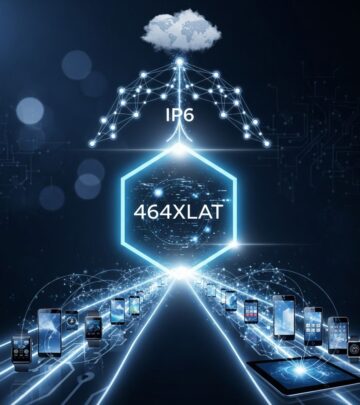
This market underscores IPv6’s urgency: businesses face rising costs for IPv4 augmentation via NAT or leasing, diverting funds from innovation. Overlay technologies like 464XLAT bridge gaps, but long-term, native IPv6 is optimal.
Challenges and Strategies for Transition
Migrating isn’t seamless. Legacy systems, embedded devices, and VPNs demand dual-stack or tunneling (e.g., 6to4, Teredo). Content Delivery Networks (CDNs) like Cloudflare mitigate by serving IPv6 to dual-stack clients.
- Incentivize Adoption: Tax breaks for IPv6-compliant hardware.
- Education: Training for network engineers on IPv6 best practices.
- Policy: RIRs reserving IPv6 blocks proportionally larger than IPv4.
By 2026, IPv6 accounts for ~40% of global traffic, per recent metrics, but full parity requires sustained effort.
Future Outlook: A Dual-Stack World Persists
IPv4 won’t vanish overnight; NAT and markets ensure functionality. However, the 2014 milestone closed the door on expansion, compelling IPv6 dominance. Innovations like Segment Routing and EVPN enhance IPv6 scalability for 5G, IoT, and edge computing.
Stakeholders must collaborate: ISPs deploy prefix delegation, developers prioritize IPv6 APIs, and users demand compatibility. This transition fortifies the internet against quadrillions of future devices.
Frequently Asked Questions (FAQs)
What triggered IANA’s final IPv4 allocations?
LACNIC’s depletion of its last /9 block activated the global post-exhaustion policy.
Are there truly no more IPv4 addresses?
IANA’s central pool is exhausted; existing addresses circulate via transfers and recycling.
Why has IPv6 adoption been slow?
High upgrade costs, compatibility issues, and sufficient NAT workarounds delayed urgency.
How many IPv4 addresses exist?
About 4.3 billion, structured in 256 /8 blocks of 16.8 million each.
Is IPv6 backward-compatible?
Not natively; dual-stack, tunneling, and translation enable coexistence.
References
- IPv4 Address Space Registry — Internet Assigned Numbers Authority (IANA). 2023-05-01. https://www.iana.org/assignments/ipv4-address-space/ipv4-address-space.xhtml
- IANA Policy for Allocation of IPv4 Address Space to RIRs — ICANN. 2012-02-25. https://www.icann.org/resources/pages/allocation-ipv4-rirs-2012-02-25-en
- IPv4 Special-Purpose Address Space — Internet Assigned Numbers Authority (IANA). 2024-01-15. https://www.iana.org/assignments/iana-ipv4-special-registry/iana-ipv4-special-registry.xhtml
- IP Address Blocks ARIN Issues From — American Registry for Internet Numbers (ARIN). 2025-03-10. https://www.arin.net/reference/research/statistics/ip_blocks/
- Number Resources — Internet Assigned Numbers Authority (IANA). 2024-11-20. https://www.iana.org/numbers
Similar Articles








Read full bio of Sneha Tete