IPv4 Exhaustion: IANA’s Final Allocations
Explore the pivotal moment when IANA began distributing the last IPv4 address blocks, marking the end of an era and accelerating the shift to IPv6.
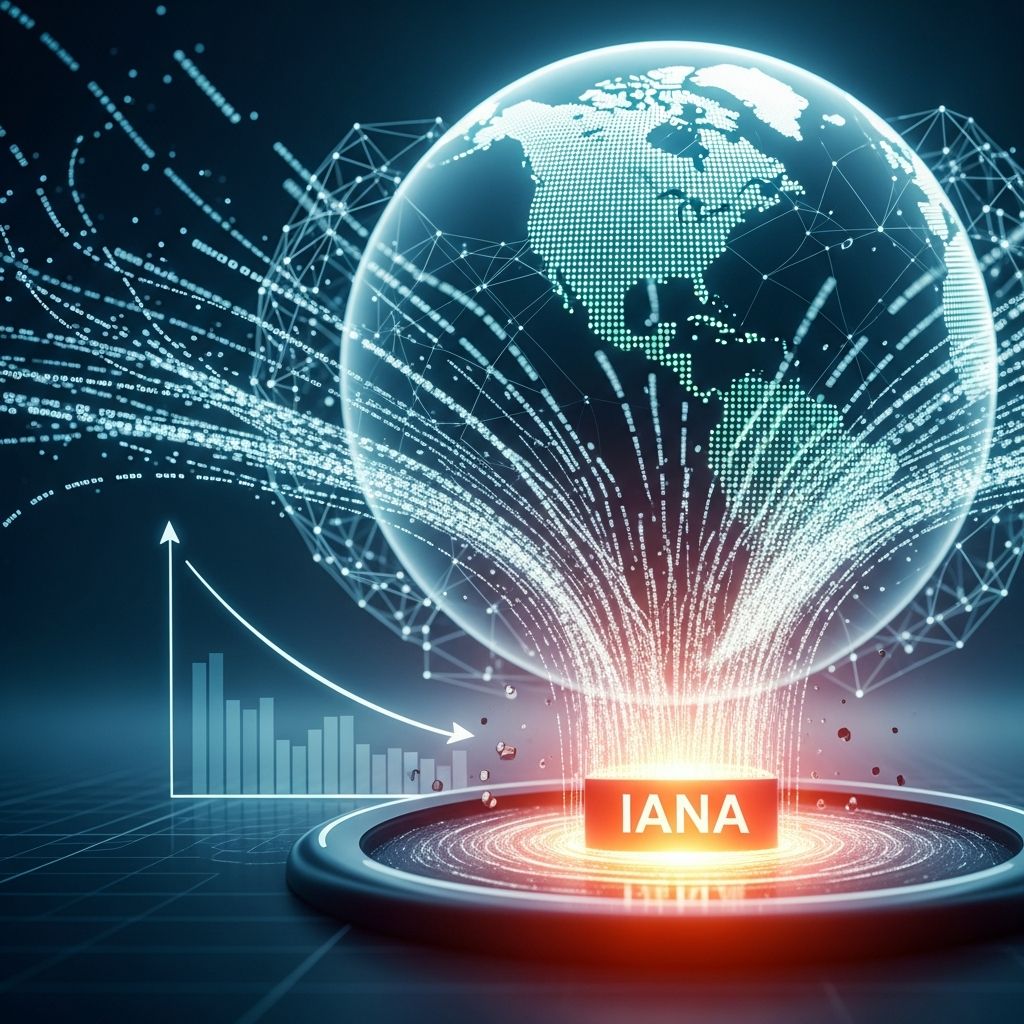
The Internet’s foundational addressing system, IPv4, reached a historic turning point in 2014 when the Internet Assigned Numbers Authority (IANA) initiated the distribution of its very last reserves. This event, prompted by dwindling supplies at one of the regional registries, underscored the urgent need for the global network to evolve toward IPv6. As billions of devices connected online, the limitations of IPv4’s 4.3 billion unique addresses became starkly evident, pushing operators worldwide to rethink their strategies.
The Mechanics of IP Address Distribution
Understanding IP address allocation requires grasping the roles of key organizations. IANA, operated by ICANN, acts as the central coordinator, managing the global pool and delegating blocks to five Regional Internet Registries (RIRs): ARIN for North America, RIPE NCC for Europe, APNIC for Asia-Pacific, LACNIC for Latin America and the Caribbean, and AFRINIC for Africa. These RIRs then assign addresses to local internet registries and end users based on demonstrated need.
By early 2011, IANA had exhausted its primary free pool, shifting to a ‘recovered’ pool of returned or unused addresses. The policy dictated that this pool would only be tapped once any RIR hit its final major block—a /9, equating to about 8 million addresses. LACNIC crossed this threshold in 2014, activating the global post-exhaustion policy and prompting IANA to release the remaining blocks incrementally over months.
- Key Players: IANA (global coordinator), RIRs (regional distributors), LIRs (local assigners).
- Trigger Mechanism: First RIR reaching last /9 activates final allocations.
- Pool Source: Recovered addresses from returns and reallocations.
Timeline of IPv4 Depletion Milestones
The journey to exhaustion spanned over a decade, marked by predictions, policy adjustments, and ceremonial handovers. In 2011, IANA’s last /8 blocks (16 million addresses each) went to RIRs amid fanfare, including a symbolic ‘exhaustion ceremony.’ RIRs began dipping into their final reserves soon after, with APNIC leading in 2011, followed by RIPE NCC in 2012, and others trailing.
| Milestone | Date | Details |
|---|---|---|
| IANA Free Pool Exhaustion | Feb 2011 | Last /8s allocated to RIRs |
| RIPE NCC Last /8 Depleted | Sep 2012 | 185/8 fully assigned |
| LACNIC Triggers Final Pool | 2014 | Drops below 8M, prompts IANA action |
| Global Recovered Pool Allocation | 2014 onward | Final blocks to all RIRs |
This phased depletion ensured no abrupt cutoff, allowing time for preparation while highlighting the finite nature of IPv4.
Why IPv4 Couldn’t Keep Pace
Designed in the 1980s for a nascent Internet, IPv4 uses 32-bit addresses, yielding roughly 4.29 billion unique identifiers. Explosive growth—from desktops to smartphones, IoT sensors, and cloud servers—shattered this limit. Private address schemes like NAT (Network Address Translation) and CGNAT extended usability by multiplexing, but they introduce complexities in routing, security, and peer-to-peer applications.
Moreover, vast swaths were inefficiently allocated early on: Class A blocks to single organizations, legacy reservations. Recovery efforts reclaimed some, but demand outstripped supply. By 2014, central pools were dry, shifting markets to secondary trading, where addresses fetch premium prices.
The Dawn of IPv6: A Vast New Frontier
IPv6, with 128-bit addresses, offers 340 undecillion possibilities—enough for every atom on Earth to have billions of IPs. Beyond capacity, it simplifies headers, mandates IPsec for security, and eliminates NAT needs, enabling seamless end-to-end connectivity. Deployment began in the late 1990s, but inertia, compatibility concerns, and upgrade costs slowed adoption.
Post-2014, IPv6 traffic surged. Major ISPs like Comcast and mobile carriers rolled out dual-stack (IPv4+IPv6) networks. Google reports over 40% global IPv6 usage today, with regions like the US and Europe leading. Yet challenges persist: legacy hardware, enterprise silos, and developing-world infrastructure lags.
- IPv6 Advantages: Massive address space, auto-configuration, better mobility support.
- Deployment Strategies: Dual-stack, tunneling (6to4, Teredo), translation (NAT64).
Real-World Impacts on Networks and Businesses
For network operators, final allocations meant scarcity. New customers strained existing pools, spurring transfers and leases. Prices soared: a /24 block (256 addresses) hit $10+ per IP by mid-decade. Enterprises faced audits to reclaim internal waste, while cloud providers optimized multi-tenancy.
Consumers noticed little directly, thanks to carrier-grade NAT, but services like gaming and video calls suffered latency from address sharing. IoT explosion amplified pressures, as smart devices demand public IPs for remote access. Regions with late RIR exhaustion, like AFRINIC, faced acute shortages, fostering black markets.
Positive shifts emerged: IPv6 enabled true peer-to-peer, reducing server loads and enhancing privacy via temporary addresses.
Strategies for Navigating Post-Exhaustion Realities
Organizations adapted through:
- Conservation: Subnet optimization, reclaiming dark address space.
- Migration: Phased IPv6 rollout, starting with new services.
- Markets: Buying/selling via brokers like IPv4.Global.
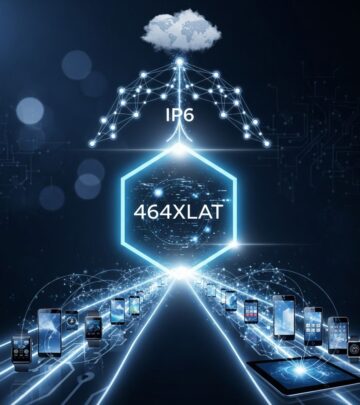
- Alternatives: CGNAT for IPv4 extension, 464XLAT for hybrid.
Policies evolved too. RIPE NCC’s ‘last /8’ rule gave each LIR a final /22 (1,024 addresses) to ease transition. Global standards from IETF emphasized dual-stack over IPv4-only crutches.
Current Landscape: IPv6 Dominance on the Horizon
A decade post-final allocations, IPv6 adoption nears critical mass. World IPv6 Launch in 2012 jumpstarted momentum, with Google, Facebook, and Netflix fully native. Mobile networks exceed 50% in many countries, leveraging IPv6’s efficiency for 5G.
Yet IPv4 lingers: 60% of traffic still dual-stack. Full exhaustion at RIRs varies—ARIN holds reserves into 2020s via transfers. The lesson? Proactive planning averts crises.
Future-Proofing the Internet
Beyond IPv6, emerging tech like IPv6-only clouds and 5G/6G mandates pure IPv6. Standards bodies eye further evolutions, but scarcity’s shadow forged resilience. The 2014 milestone wasn’t an end, but a catalyst for a boundless Internet.
Frequently Asked Questions
What triggered IANA’s final IPv4 allocations?
LACNIC’s available addresses fell below 8 million (/9 equivalent), per global policy.
Is IPv4 completely gone?
No, existing allocations persist; new ones rely on transfers or IPv6.
How many IPv6 addresses are available?
Approximately 3.4 × 10^38, vastly exceeding needs.
Why the slow IPv6 rollout?
Compatibility, costs, and lack of immediate crisis pre-2011.
Can I still get IPv4 addresses?
Via RIR transfers if policies allow, at market rates.
References
- IANA Allocates Final IPv4 Blocks — ICANN. 2014-05-06. https://www.icann.org/en/blogs/details/more-ipv4-used-but-unallocated-30-7-2009-en
- Phases of IPv4 Exhaustion — LACNIC. 2020-08-19. https://www.lacnic.net/1039/2/lacnic/phases-of-ipv4-exhaustion
- So Long Last /8 and Thanks For All the Allocations — RIPE NCC. 2018-04-17. https://labs.ripe.net/author/wilhelm/so-long-last-8-and-thanks-for-all-the-allocations/
- IPv4 Address Allocation Status — Number Resource Organization (NRO). 2014. http://www.nro.net/news/iana-allocates-recovered-ipv4-addresses-to-rirs
- Global Policy for Post Exhaustion IPv4 Allocation — ICANN. 2011-02-03. https://www.icann.org/en/blogs/details/more-ipv4-used-but-unallocated-30-7-2009-en
Similar Articles







Read full bio of medha deb