IoT Security: Industry Action or Regulation?
Exploring whether self-regulation by tech firms or government mandates will secure the exploding Internet of Things ecosystem.
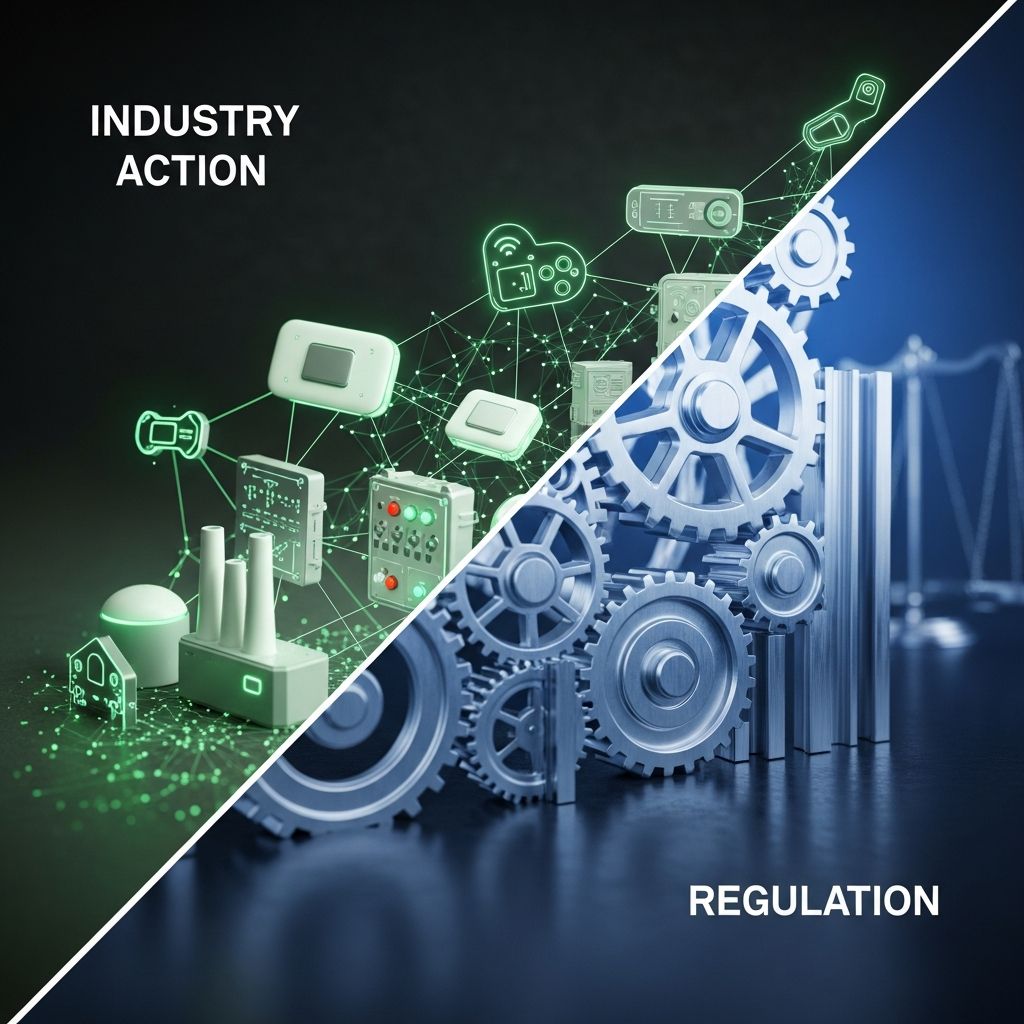
The rapid expansion of connected devices has transformed daily life, from smart thermostats controlling home temperatures to wearable health monitors tracking vital signs. However, this proliferation brings significant cybersecurity risks. Billions of Internet of Things (IoT) devices now form vast networks, often with weak protections that cybercriminals exploit for massive attacks. This raises a critical question: Can the private sector address these vulnerabilities through innovation and voluntary standards, or must governments impose binding regulations to enforce safety?
The Growing Threat Landscape in Connected Devices
IoT ecosystems are inherently diverse, encompassing everything from industrial sensors to consumer gadgets. Many lack basic security features like strong encryption or regular software updates, making them easy targets. Attackers can hijack these devices to create botnets—zombie armies used for overwhelming websites or disrupting critical infrastructure.
Recent data underscores the scale of the problem. According to the U.S. Government Accountability Office (GAO), federal agencies have struggled with cybersecurity compliance, with over 150 unmet recommendations since 2010. This mirrors private sector challenges, where even regulated industries like healthcare saw a 71% rise in successful cyberattacks since 2019.
- Weak default passwords on devices enable quick compromises.
- Supply chain vulnerabilities allow malware injection during manufacturing.
- Inadequate firmware updates leave old exploits unpatched indefinitely.
These issues amplify when devices interconnect, creating cascading failures. A single insecure smart camera can compromise an entire home network, extending to neighbors via mesh systems.
Industry-Led Solutions: Innovation and Market Forces
Tech companies argue that self-regulation fosters faster, more adaptive security measures. Firms like those in the Consumer Technology Association develop voluntary guidelines, emphasizing design principles such as data minimization and secure boot processes.
Market incentives play a key role here. Consumers increasingly demand privacy-focused products, pressuring manufacturers to prioritize security. Independent testing labs could rate devices on cybersecurity merits, similar to energy efficiency labels, guiding purchases toward robust options.
| Approach | Pros | Cons |
|---|---|---|
| Voluntary Standards | Flexible, innovation-friendly | Lacks enforcement, uneven adoption |
| Market-Driven Ratings | Empowers consumers | Slow behavior change, greenwashing risks |
| Industry Consortia | Shared best practices | Potential for lowest-common-denominator compromises |
Collaborative efforts, like those from the Internet Engineering Task Force (IETF), promote interoperable security protocols. These bottom-up initiatives align with the Internet’s decentralized architecture, avoiding one-size-fits-all mandates that stifle creativity.
The Case for Regulatory Intervention
Despite industry promises, critics point to persistent failures. Heavily regulated sectors like finance and healthcare often underperform unregulated ones in cybersecurity metrics, per independent studies. This suggests voluntary measures alone fall short against profit-driven shortcuts.
Governments worldwide are responding. The European Union’s Cyber Resilience Act proposes mandatory vulnerability disclosures and penalties for non-compliance. In the U.S., the Federal Trade Commission (FTC) enforces data protection under Section 5, targeting deceptive security claims.
- Minimum Security Baselines: Require unique default credentials, automatic updates, and network segmentation.
- Liability Assignment: Hold manufacturers accountable for foreseeable harms, incentivizing upfront investments.
- Certification Schemes: Mandate third-party audits for high-risk devices like medical implants or smart grids.
Such rules create a level playing field, preventing race-to-the-bottom pricing on insecure imports. However, overregulation risks innovation suppression, especially for startups navigating complex compliance.
Balancing Act: A Collaborative Security Model
The most effective path forward combines industry agility with regulatory guardrails. This “collaborative security” distributes responsibility: manufacturers secure products, consumers update devices, and governments set boundaries.
Key elements include:
- Transparency Mandates: Public vulnerability reporting to build trust and accelerate fixes.
- Incentive Structures: Tax breaks for certified secure devices alongside fines for breaches.
- Global Harmonization: Align standards via bodies like the OECD to ease cross-border trade.
Policymakers must prioritize future-proof rules, focusing on outcomes over prescriptive tech specs. Regular impact assessments ensure regulations evolve with threats.
Real-World Examples and Lessons Learned
California’s 2018 IoT law requires “reasonable” security features, a flexible standard influencing national debates. Early compliance shows minimal burden, with most devices already meeting basics.
Contrast this with the Mirai botnet outbreak, where unsecured cameras fueled massive DDoS attacks. Post-incident, some manufacturers improved, but widespread change required public shaming and lawsuits.
Internationally, Japan’s METI guidelines emphasize supply chain security, reducing risks in automotive IoT. These models demonstrate regulation’s role in catalyzing industry action without micromanagement.
Challenges in Implementation
Enforcement remains tricky amid global supply chains. A device assembled in China, sold in Europe, and used in the U.S. faces fragmented rules. Jurisdictional gaps allow bad actors to evade accountability.
Legacy devices pose another hurdle—billions online lack update mechanisms. “Responsible end-of-life” policies could phase them out gracefully, perhaps via carrier network blocks.
Consumer education is vital. Many ignore updates, treating devices as disposable. Campaigns highlighting breach costs (e.g., identity theft) can shift behaviors.
Future Outlook: Toward Resilient Networks
By 2030, IoT connections may exceed 50 billion, per Statista projections. Securing this scale demands proactive strategies. Emerging tech like blockchain for device authentication and AI-driven anomaly detection offers promise.
Stakeholders must convene—technologists sharing threat intel, civil society advocating user rights, and regulators providing oversight. No single entity holds the solution; collective effort defines success.
In conclusion, neither industry nor regulation alone suffices. A symbiotic approach, rooted in accountability and collaboration, will fortify the IoT against insecurity.
Frequently Asked Questions (FAQs)
What are the main IoT security risks?
Common risks include weak authentication, unpatched software, and insecure communications, enabling botnets and data breaches.
Has regulation improved cybersecurity in other sectors?
Mixed results: Finance invests heavily but still faces attacks; unregulated tech often leads in resilience metrics.
Can consumers protect their IoT devices?
Yes—change default passwords, enable updates, segment networks, and buy from reputable vendors with strong privacy policies.
What’s next for global IoT standards?
Expect harmonized frameworks from UN and ISO, emphasizing liability and certification for critical infrastructure.
Will AI solve IoT security woes?
AI aids threat detection but can’t replace foundational security like encryption; it’s a tool, not a panacea.
References
- U.S. Government Accountability Office (GAO) High-Risk Series: Cybersecurity Has Become a Top Priority — U.S. GAO. 2023-03-09. https://www.gao.gov/products/gao-23-106293
- Cybersecurity and Infrastructure Security Agency (CISA) Lessons Learned from Recent Attacks — CISA. 2024-01-15. https://www.cisa.gov/news-events/analysis/lessons-learned-recent-attacks
- FTC Enforcement Actions on IoT Security Claims — Federal Trade Commission. 2023-11-20. https://www.ftc.gov/business-guidance/privacy-security/data-security
- European Commission Cyber Resilience Act Proposal — European Commission. 2022-09-23. https://digital-strategy.ec.europa.eu/en/policies/cyber-resilience-act
- Internet Engineering Task Force (IETF) IoT Security Best Practices — IETF. 2024-05-01. https://datatracker.ietf.org/wg/lwig/about/
Similar Articles








Read full bio of medha deb