IoT Deployment Essentials
Master the critical steps and overcome hurdles in rolling out Internet of Things solutions for business success.
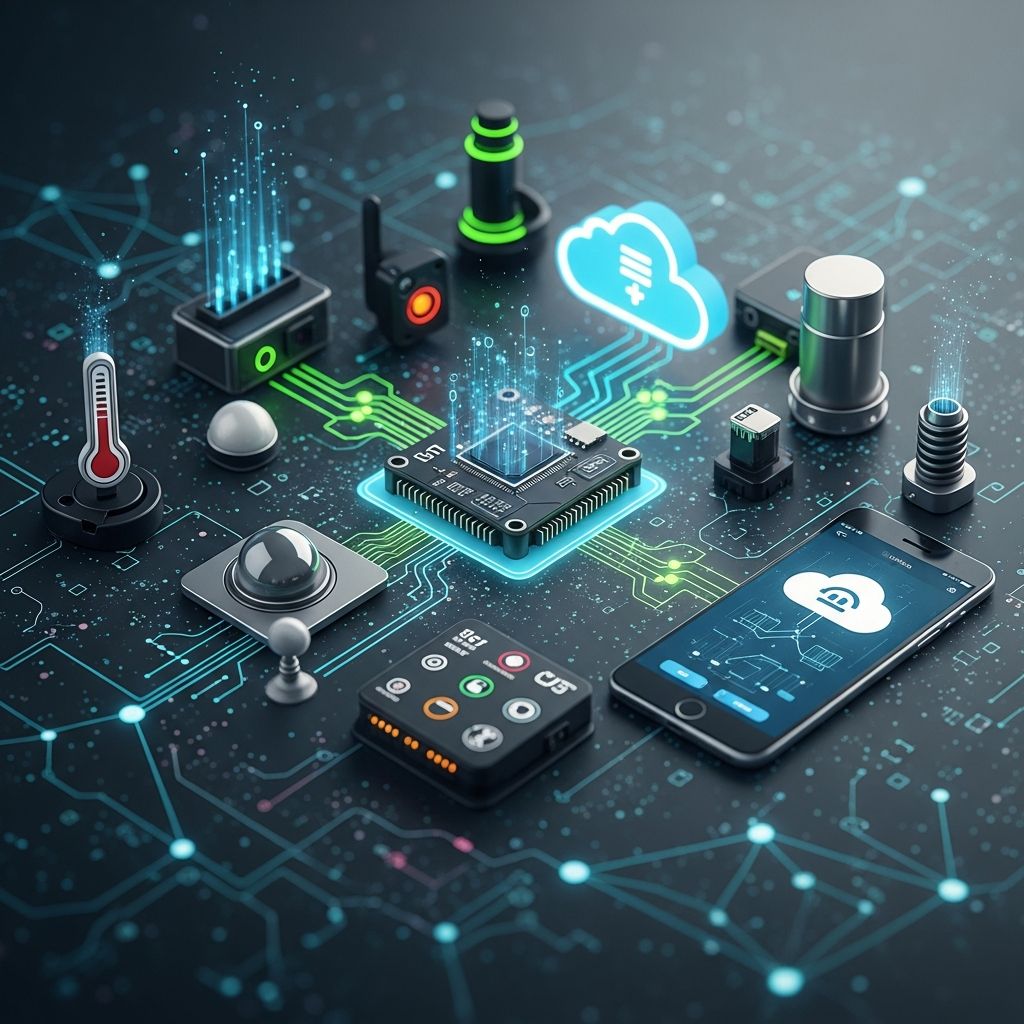
The Internet of Things (IoT) has transformed how organizations operate, enabling real-time data collection from connected devices to drive smarter decisions. From manufacturing floors to urban infrastructure, IoT promises efficiency gains and innovation. However, deploying these systems involves navigating complex technical and operational landscapes. This article delves into the core elements of IoT deployment, highlighting strategies to address common pitfalls and maximize value.
Understanding the IoT Ecosystem
At its heart, IoT connects physical devices—sensors, machines, vehicles—to the internet, allowing them to send and receive data. This ecosystem spans edge devices, gateways, cloud platforms, and analytics tools. Successful deployment starts with mapping these components to specific business needs, such as predictive maintenance in factories or fleet tracking in logistics.
Organizations must assess their current infrastructure. Legacy systems often lack the protocols needed for seamless IoT integration, requiring upgrades or middleware solutions. For instance, adopting standards like MQTT or CoAP ensures interoperability across diverse devices.
- Device Layer: Sensors and actuators that capture environmental data.
- Network Layer: Connectivity options like Wi-Fi, cellular, or LPWAN.
- Platform Layer: Cloud services for data processing and storage.
- Application Layer: User interfaces for insights and control.
Planning Your IoT Strategy
Effective planning mitigates risks and aligns IoT with organizational goals. Begin with a clear use case definition: What problem does IoT solve? Define KPIs like reduced downtime or cost savings to measure success.
Conduct a pilot project to test feasibility. Scale gradually, starting with 10-50 devices before full rollout. Budget for hardware, software, and ongoing maintenance—IoT deployments can cost 20-30% more than anticipated due to unforeseen integration needs.
| Phase | Key Activities | Expected Outcomes |
|---|---|---|
| Discovery | Needs assessment, stakeholder interviews | Defined use cases and ROI projections |
| Design | Architecture blueprint, vendor selection | Detailed deployment plan |
| Pilot | Small-scale implementation, testing | Validated proof-of-concept |
| Scale | Full rollout, monitoring | Operational IoT network |
Security: The Top Priority in IoT
Security breaches in IoT can expose sensitive data or disrupt operations. With billions of devices online, vulnerabilities multiply. Common threats include unauthorized access via weak default credentials and DDoS attacks exploiting botnets.
Implement a zero-trust model: Verify every device and user. Use encryption for data in transit (TLS 1.3) and at rest. Regular firmware updates patch known exploits. Multi-factor authentication and role-based access control limit exposure.
According to NIST guidelines, segment networks to isolate IoT devices from critical systems.1 Edge computing processes data locally, reducing transmission risks.
Ensuring Reliable Connectivity
IoT devices often operate in remote or harsh environments, demanding robust connectivity. Challenges include signal interference, power constraints, and bandwidth limitations. Cellular networks like 5G offer low latency but high costs; LPWAN technologies such as LoRaWAN provide long-range, low-power alternatives ideal for asset tracking.
Hybrid approaches combine multiple protocols: Wi-Fi for high-data indoor sensors, satellite for oceanic deployments. Power management is crucial—battery-powered nodes use sleep modes to extend life up to years.
- Evaluate coverage: Use site surveys and simulators.
- Prioritize low-latency for real-time apps like autonomous vehicles.
- Plan for failover: Redundant paths prevent single-point failures.
Seamless Device Integration
Integrating heterogeneous devices from various vendors is a major hurdle. Proprietary protocols lead to silos, inflating costs. Open standards and APIs bridge gaps, enabling plug-and-play functionality.
IoT platforms like AWS IoT or Azure IoT Hub centralize management, supporting thousands of devices. Device twins—digital replicas—facilitate simulation and updates without physical access.
Scalability testing ensures systems handle growth. Start with containerization (Docker, Kubernetes) for flexible orchestration.
Managing Data Deluge
IoT generates petabytes of data daily. Raw streams overwhelm storage; analytics unlock value. Edge analytics filter noise onsite, sending only insights to the cloud—cutting bandwidth by 90%.
Machine learning models predict anomalies, like equipment failure. Ensure data governance: Anonymize personal info per GDPR, retain only necessary records.
Overcoming Power and Scalability Barriers
Power-hungry devices limit deployments. Energy harvesting from solar or vibrations sustains remote sensors. Scalability demands modular architectures; microservices allow independent scaling of components.
Monitor with dashboards tracking uptime, throughput, and errors. AI-driven automation handles provisioning and healing.
Real-World Success Stories
In manufacturing, John Deere uses IoT for precision agriculture, optimizing yields via soil sensors—boosting output 15%.2 Smart cities like Singapore deploy IoT for traffic management, reducing congestion 20%.
Healthcare leverages wearables for remote monitoring, alerting on vital sign irregularities.
Future-Proofing IoT Deployments
Edge AI, 5G, and blockchain will shape IoT’s evolution. Prepare by adopting future-ready stacks: Quantum-resistant encryption anticipates threats.
Invest in talent—certifications like CIoTP build expertise. Foster vendor ecosystems for ongoing support.
Common Pitfalls and How to Avoid Them
- Underestimating Costs: Factor in 5-year TCO.
- Poor Vendor Choice: Vet for security track records.
- Ignoring Change Management: Train staff for adoption.
FAQs
What is the biggest challenge in IoT deployment?
Security tops the list, as interconnected devices amplify attack surfaces. Robust protocols and monitoring are essential.
How much does IoT deployment cost?
Varies widely: $50K for pilots, millions for enterprise-scale. Focus on ROI through efficiency gains.
Is 5G necessary for IoT?
Not always—LPWAN suffices for many low-data uses. 5G excels in high-bandwidth scenarios.
How to ensure IoT data privacy?
Anonymize data, comply with regulations like GDPR, and use federated learning.
Conclusion
IoT deployment demands strategic foresight, blending technology with business acumen. By prioritizing security, connectivity, and integration, organizations unlock transformative potential. Start small, iterate, and scale confidently to future-proof operations.
References
- NISTIR 8259A, Foundational Cybersecurity Activities for IoT Device Manufacturers — National Institute of Standards and Technology. 2020-02-24. https://doi.org/10.6028/NIST.IR.8259A
- Internet of Things (IoT): Opportunities, issues and challenges — Madakam, S. et al. Sensors (PMC). 2020-07-01. https://pmc.ncbi.nlm.nih.gov/articles/PMC7368922/
- SP800-213 & SP800-213A, IoT Device Cybersecurity Guidance — NIST. 2022-12-15. https://doi.org/10.6028/NIST.SP.800-213
- 5G and IoT: Connectivity Revolution — GSMA. 2023-06-01. https://www.gsma.com/iot/5g-iot/
Similar Articles








Read full bio of Sneha Tete