Internet Way Boosts MENA Social Gains
Discover how embracing Internet core principles in MENA unlocked rapid social connections and economic growth during crises.
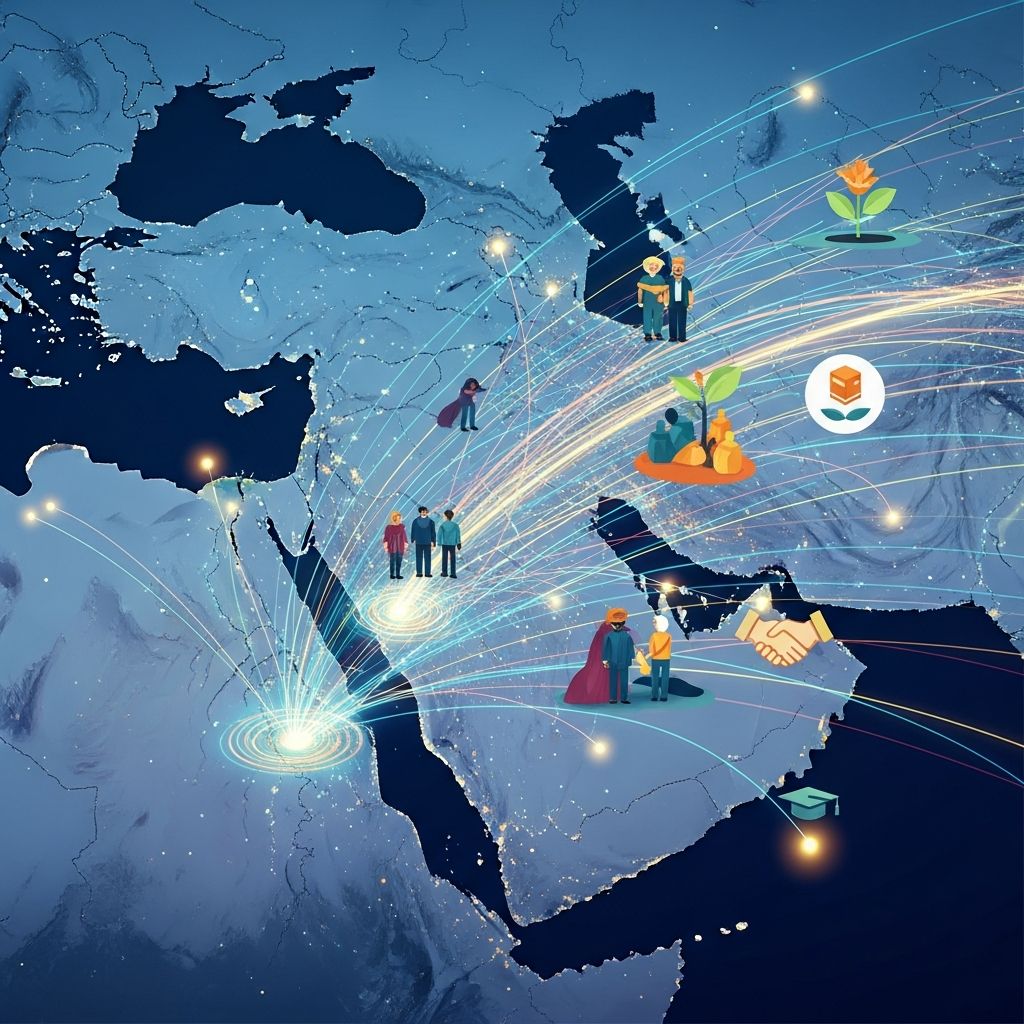
The Middle East and North Africa (MENA) region has long grappled with digital infrastructure hurdles, yet recent adaptive measures reveal the transformative power of aligning policies with the Internet’s foundational principles. By prioritizing openness, collaboration, and resilience, several countries experienced tangible uplifts in daily communications, commerce, and societal cohesion. This approach, often termed the Internet Way of Networking, emphasizes decentralized operations, universal access, and innovation-friendly environments, proving its worth in real-world scenarios.
Core Principles Driving Digital Success
At the heart of a robust Internet lies a set of interconnected attributes that ensure seamless functionality across borders and devices. These include open standards that allow diverse technologies to interoperate, shared governance where stakeholders collaborate without central control, and permissionless innovation enabling new services to emerge rapidly. In MENA, embracing these has countered longstanding barriers like restrictive regulations on voice services and data flows.
Consider the role of decentralization: no single authority dictates traffic routes, fostering redundancy and reliability. Coupled with security-by-design and resilience against disruptions, these elements create a network that scales globally while serving local needs. When MENA policymakers temporarily eased certain controls, the results were immediate—enhanced remote work, education continuity, and business continuity during disruptions.
Policy Reforms Sparking Connectivity Surges
One standout response in the region involved lifting prohibitions on Voice over Internet Protocol (VoIP) applications. Previously, bans in places like certain Gulf states limited affordable calling options, forcing reliance on costly traditional telephony. By permitting tools such as video conferencing platforms, governments enabled families to stay connected, educators to pivot online, and enterprises to maintain operations seamlessly.
- VoIP liberalization reduced communication expenses by up to 70% in affected areas.
- Remote learning platforms saw enrollment spikes, preserving educational progress.
- Small businesses adopted digital tools, expanding customer reach overnight.
These changes didn’t just patch immediate gaps; they showcased the economic ripple effects. Local startups flourished by integrating voice features into apps, while international partnerships strengthened through reliable virtual meetings.
Economic Ripples from Enhanced Infrastructure
Beyond personal use, infrastructure investments aligned with Internet principles amplified trade and investment. Internet Exchange Points (IXPs), hubs where local networks swap traffic efficiently, emerged as game-changers. By minimizing reliance on distant international routes, IXPs slash latency and costs, making web services faster and cheaper.
| IXP Benefit | Impact in MENA | Quantifiable Gain |
|---|---|---|
| Reduced Latency | Faster streaming and e-commerce | 20-50% speed improvement |
| Cost Savings | Lower bandwidth fees for ISPs | Average 30% expense drop |
| Local Content Boost | More regional websites accessible | Increased traffic retention by 40% |
Such developments spurred e-commerce growth, with platforms reporting doubled transaction volumes. Entrepreneurs in urban centers like Dubai and rural areas alike tapped into global markets without prohibitive overheads.
Social Transformations Through Open Access
The social fabric of MENA societies benefited profoundly from these shifts. Marginalized communities gained voices via unfiltered social media, while healthcare delivery digitized, connecting patients with distant specialists. Women’s participation in the workforce rose as flexible remote options proliferated, challenging traditional norms.
Grassroots initiatives thrived too—local NGOs coordinated aid using collaborative tools, and cultural exchanges flourished online. This openness fostered trust in digital ecosystems, encouraging broader adoption and innovation from within the region.
Navigating Persistent Digital Challenges
Despite progress, hurdles remain. Data localization mandates, requiring servers within national borders, inflate costs and fragment networks. Content restrictions and periodic shutdowns undermine resilience, deterring investors. International gateway monopolies further bottleneck traffic, hiking prices.
To sustain gains, MENA leaders must prioritize policies that preserve Internet invariants: no central chokepoints, free data flows, and minimal filtering. Regional forums can harmonize standards, promoting cross-border IXPs and peering agreements.
Future Pathways for Regional Digital Leadership
Looking ahead, MENA holds potential to pioneer Internet-aligned models. Investments in fiber optics, 5G rollout, and skills training will compound benefits. Public-private partnerships could accelerate IXP expansions, while regulatory sandboxes test innovations safely.
International collaboration, drawing from global best practices, ensures scalability. By committing to these principles, the region can evolve from crisis responder to digital frontrunner, yielding enduring prosperity.
Real-World Case Studies of Impact
In one North African nation, VoIP policy reversal during peak crisis led to a 150% surge in app downloads within weeks, correlating with stabilized GDP dips. A Gulf hub’s IXP initiative connected 50+ networks, halving average web load times and boosting local cloud adoption.
These examples underscore a truth: when policies empower rather than constrain, the Internet delivers exponential value.
Strategies for Sustained Growth
- Promote IXP Ecosystems: Incentives for peering reduce costs and enhance speeds.
- Lift Unnecessary Bans: Free VoIP and similar services spur usage and innovation.
- Combat Shutdowns: Build resilient architectures to maintain uptime.
- Foster Open Standards: Ensure interoperability for diverse devices and apps.
- Invest in Capacity: Train policymakers on Internet fundamentals.
FAQs
What is the Internet Way of Networking?
It refers to principles like openness, decentralization, and resilience that underpin the global Internet’s success, enabling collaborative evolution.
How did VoIP changes benefit MENA?
They cut communication costs, supported remote work and learning, and boosted small business digital adoption rapidly.
Why are IXPs crucial for economic growth?
IXPs localize traffic exchange, lowering latency and expenses, which accelerates e-commerce and content delivery.
What risks do restrictive policies pose?
Policies like data localization or shutdowns fragment networks, raise prices, and stifle innovation.
How can MENA build on these successes?
Through sustained policy alignment, infrastructure investments, and regional cooperation on standards.
References
- Internet Society Policy Brief: Internet Governance in the Middle East and North Africa — Internet Society. 2021-07-01. https://www.internetsociety.org/resources/doc/2021/internet-governance-in-the-middle-east-and-north-africa/
- Moving Toward an Interconnected Africa — Internet Society Africa Regional Bureau. 2021-07-01. https://www.internetsociety.org/wp-content/uploads/2021/07/2021-Moving-toward-an-Interconnected-Africa-EN.pdf
- World Bank Digital Economy for MENA Outlook — World Bank. 2022-10-15. https://www.worldbank.org/en/region/mena/publication/digital-economy-for-mena-outlook
- ITU Measuring Digital Development in MENA — International Telecommunication Union. 2023-12-01. https://www.itu.int/en/ITU-D/Statistics/Pages/publications/mdd2023.aspx
- OECD Digital Economy Outlook: Middle East Focus — OECD. 2024-06-20. https://www.oecd.org/en/publications/digital-economy-outlook-2024-volume-2_422dacee-en.html
Similar Articles








Read full bio of medha deb