Internet Shutdowns: Hidden Costs of Digital Blackouts
Explore how government-imposed internet restrictions inflict massive economic losses, disrupt daily life, and erode public trust worldwide.
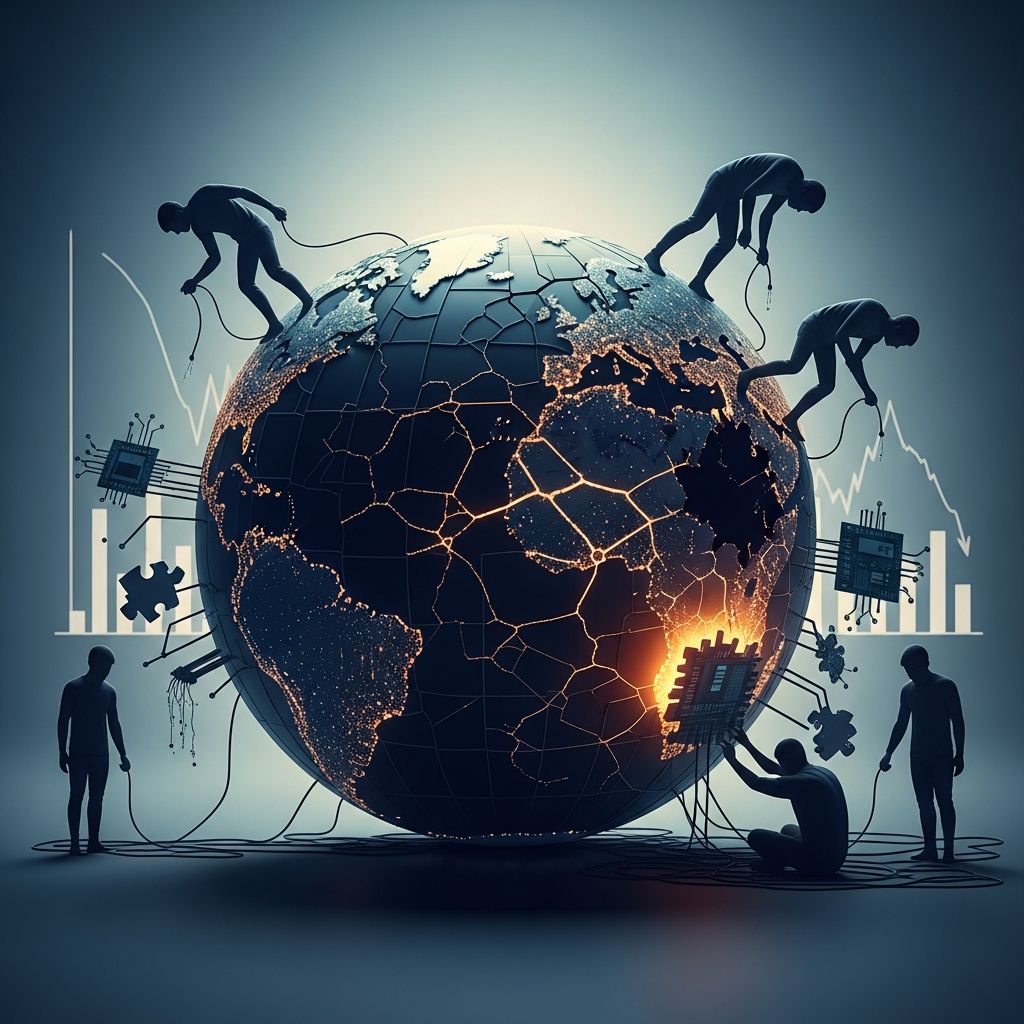
In an increasingly connected world, governments occasionally resort to severing digital lifelines during crises. These internet shutdowns, often justified as measures to curb unrest or misinformation, carry steep prices that extend far beyond the immediate disruption. From stifled economies to fractured communities, the repercussions ripple through societies, leaving lasting scars. This article delves into the multifaceted consequences of such actions, drawing lessons from pivotal events and broader trends.
The Rise of Digital Restrictions Worldwide
Over the past decade, internet shutdowns have surged globally. According to comprehensive tracking, deliberate outages affected 648.4 million people in 2024 alone, with blackouts totaling 49,101 hours and social media blocks adding another 39,687 hours.4 Platforms like X (formerly Twitter) faced the most interference at 20,322 hours, underscoring how targeted blocks have become tools for control.
These measures are not isolated; they form part of a pattern where 93 shutdowns in 2020 cost $4.01 billion, escalating to $8.07 billion across 134 incidents in 2019.4 By April 2024, cumulative losses since 2020 neared $53 billion.5 Nations like Myanmar bore the brunt in recent years, with $2.8 billion in self-inflicted damage.4 Such statistics highlight a troubling escalation, where short-term security bids yield long-term economic sabotage.
Economic Toll: Billions Lost in Productivity and Growth
The financial fallout from internet curbs is staggering. Tools like the Cost of Shutdown Tool (COST), developed by NetBlocks with Brookings Institution methodology, quantify direct GDP hits by factoring in a nation’s digital reliance.15 Conservative estimates exclude intangible losses like eroded investor confidence or stifled innovation, yet they still reveal immense damage.
Consider a real-world benchmark: a partial week-long restriction in Sri Lanka from March 7-15, 2018, tallied $30 million in losses.12 Traditional sectors like tourism and high-tech exports, intertwined with online operations, ground to a halt. Businesses couldn’t process payments, tourists canceled bookings, and remote workers lost vital connectivity.
| Year | Shutdowns | Total Hours | Economic Cost (USD) |
|---|---|---|---|
| 2019 | 134 | 19,207 | $8.07B |
| 2020 | 93 | 27,165 | $4.01B |
| 2024 | N/A | 88,788 (combined) | $7.69B |
This table illustrates the escalating scale, with sub-Saharan models adjusting for regional GDP shares.5 Small economies suffer disproportionately; a day’s blackout can erase 1-2% of GDP in digital-heavy nations.
Social Disruptions: Beyond the Balance Sheet
While dollars quantify losses, human impacts defy easy measurement. Shutdowns sever access to essential services, amplifying crises they aim to quell. During Sri Lanka’s 2018 curbs on platforms like Facebook, WhatsApp, Instagram, and Viber—imposed amid anti-Muslim riots—citizens lost tools for coordination, reporting violence, and seeking aid.2
- Emergency Response Hampered: Families couldn’t summon help via messaging apps, delaying medical aid and evacuations.
- Health Services Blocked: Telemedicine and health hotlines went dark, endangering vulnerable groups.
- Education Interrupted: Students relying on online resources faced learning gaps, widening inequalities.
The Global Network Initiative noted how such blocks in Sri Lanka interfered with public safety communications, even under a state of emergency.3 Ironically, restrictions fueled rumors, as offline networks spread unchecked misinformation faster than digital ones could be moderated.
Case Study: Sri Lanka’s 2018 Digital Clampdown
In early March 2018, Sri Lanka’s government, led by President Maithripala Sirisena, throttled key web services to stem mob violence targeting Muslim communities (about 10% of the population).2 The blackout slowed broader internet speeds in affected areas, hitting urban hubs hardest.
Intended to curb hate speech coordination, it instead isolated victims and responders. Economic analyses pegged immediate GDP dents at $30 million, but ripple effects lingered: tourism dipped, e-commerce stalled, and public trust eroded.1 NetBlocks’ early COST prototype revealed how hi-tech sectors, pivotal to Sri Lanka’s growth, crumbled without digital access.1
This event foreshadowed global patterns, where partial shutdowns—less overt than full blackouts—still inflict comparable harm while evading scrutiny.
Human Rights and Long-Term Ramifications
One-third of 2024 outages linked to broader rights abuses, including assembly curbs and expression suppression.4 Shutdowns don’t just mute voices; they enable unchecked state actions, fostering opacity during crackdowns.
Long-term, they deter investment. Businesses flee unstable connectivity, innovation stalls, and youth migration rises. Freedom House’s 2024 Sri Lanka report flagged ongoing internet freedom woes, despite easing blackouts.6 Repeated incidents erode digital literacy and resilience, trapping nations in analog vulnerabilities.
Why Shutdowns Fail: Evidence from Data
Data debunks efficacy claims. Violence often persists or worsens offline, as seen in Sri Lanka where riots continued despite blocks.2 Targeted content moderation, judicial oversight, and community dialogues prove more effective, per intergovernmental analyses.
Alternatives include traffic management and platform cooperation, preserving access while addressing threats. Yet, shutdowns persist due to their simplicity—blunt tools for complex problems.
Global Lessons and Policy Recommendations
To mitigate harms:
- Adopt Proportionality: Use narrow blocks over blanket shutdowns, with clear timelines.
- Invest in Tools: Deploy AI moderation and real-time monitoring collaboratively.
- Transparent Reporting: Mandate impact assessments pre- and post-shutdown.
- International Standards: Align with UN guidelines on digital rights.
Policymakers must weigh costs: a World Bank-inspired model shows every $1 saved in crisis response costs $10+ in recovery.5
FAQs on Internet Shutdowns
What triggers most internet shutdowns?
Primarily protests, elections, or conflicts, with governments citing security.
How are economic costs calculated?
Using GDP contributions from digital sectors, via tools like NetBlocks’ COST, focusing on direct losses.
Do shutdowns actually reduce violence?
Rarely; they often exacerbate issues by blocking information flow and aid.
Which country suffers most?
Myanmar in recent years ($2.8B in 2024), but India leads cumulatively.
Can individuals prepare?
Yes: use VPNs, offline backups, and satellite alternatives where legal.
Conclusion: Reconnecting for Resilience
Internet shutdowns epitomize shortsighted governance, trading fleeting control for enduring damage. As digital economies boom—projected to underpin 25% of global GDP by 2025—nations imposing them risk isolation. Prioritizing open networks fosters security through transparency, not suppression. The path forward demands accountability, innovation, and a commitment to connectivity as a human right.
References
- Counting the cost of Sri Lanka’s internet shutdown — NetBlocks. 2018-03. https://netblocks.org/reports/sri-lanka-internet-shutdown-economic-impact-VxyM7EAZ
- Sri Lankan Shutdown of Web-Based Services Creates Huge Social Costs — Internet Society. 2018-03. https://www.internetsociety.org/blog/2018/03/sri-lankan-shutdown-web-based-services-creates-huge-social-costs/
- Disruptions of Social Media Platforms in Sri Lanka — Global Network Initiative. 2018. https://globalnetworkinitiative.org/disruptions-of-social-media-platforms-in-sri-lanka/
- Government Internet Shutdowns Cost $7.69 Billion in 2024 — Uwazi Media Monitoring Library (PDF report). 2024. https://mmlibrary.uwazi.io/api/files/17376942649987gus0lpzwlm.pdf
- Cost of internet shutdowns worldwide 2024 — Statista (sourced from NetBlocks). 2024. https://www.statista.com/statistics/1383246/economic-cost-internet-shutdowns-global/
- Sri Lanka: Freedom on the Net 2024 Country Report — Freedom House. 2024. https://freedomhouse.org/country/sri-lanka/freedom-net/2024
Similar Articles







Read full bio of medha deb