Internet Metering Explained
Discover how internet metering tracks data usage, enforces caps, and shapes modern broadband billing for fairer network access.
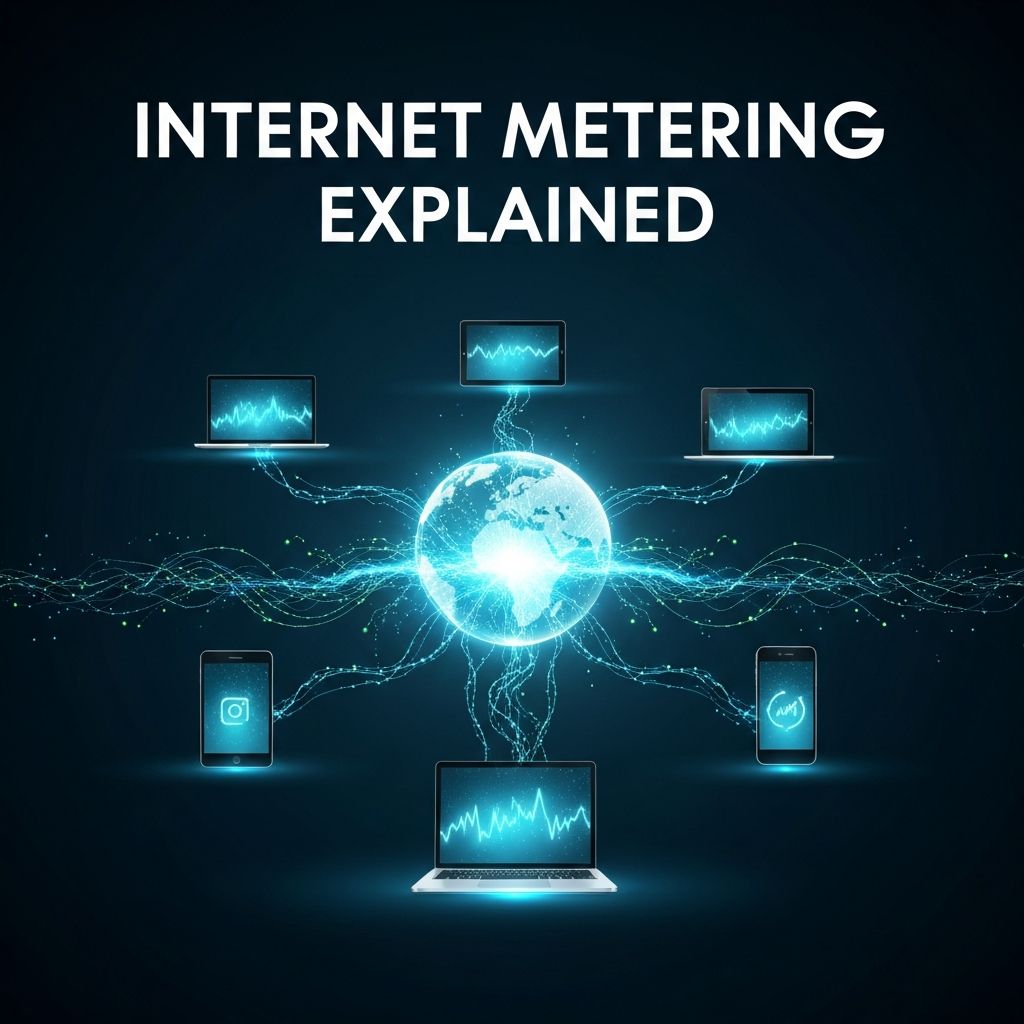
Internet metering represents a fundamental shift in how broadband services are delivered and priced. At its core, this approach involves ISPs monitoring customer data consumption and applying charges based on actual usage patterns. Unlike traditional unlimited plans, metering introduces accountability, ensuring that high-volume users contribute more to infrastructure costs. This model has gained traction as networks face escalating demands from streaming, gaming, and cloud services.
The Rise of Data-Conscious Broadband
Modern internet usage has exploded, with global data traffic projected to surpass 5,000 exabytes annually by 2025, according to official reports from network authorities. ISPs, tasked with maintaining service quality amid finite spectrum and fiber resources, increasingly adopt metering to allocate bandwidth equitably. This prevents a minority of heavy users from degrading experiences for the majority.
Historically, flat-rate pricing dominated, but as average household consumption climbed from 10 GB monthly in 2010 to over 500 GB today, providers pivoted. Metering aligns costs with usage, mirroring mobile data plans where overages trigger fees or throttling.
Core Mechanics of Data Tracking
ISPs deploy sophisticated systems to tally every byte transferred. This includes downloads, uploads, and sometimes protocol-specific tracking for video streams or peer-to-peer transfers. Billing cycles typically span 30 days, with real-time dashboards alerting users to nearing thresholds.
- Daily Accumulation: Usage logs aggregate across devices on a single account.
- Threshold Alerts: Notifications via app, email, or router LED when 80-90% of the cap is reached.
- Post-Cap Actions: Options include pay-per-GB fees, speed reductions to 1-5 Mbps, or temporary suspension.
Accuracy is paramount; standards from bodies like the FCC mandate transparent methodologies to avoid disputes.
Data Caps: Defining Usage Boundaries
A data cap sets the maximum allowable transfer volume per period, often 1-2 TB for residential plans. Exceeding it activates penalties, incentivizing moderation. Caps vary by tier: basic plans might limit to 200 GB, while premium ones extend to unlimited with ‘soft’ enforcement during peak hours.
| Plan Type | Typical Cap | Overage Fee | Throttling Speed |
|---|---|---|---|
| Basic | 200 GB/mo | $10/50 GB | 1 Mbps |
| Standard | 1 TB/mo | $5/50 GB | 3 Mbps |
| Premium | 2 TB/mo | $2/50 GB | 5 Mbps |
| Unlimited | No hard cap | N/A | Peak-hour deprioritization |
Caps promote sustainability, as unchecked usage strains last-mile connections shared among neighbors.
Billing Models in Metered Services
Diverse structures cater to user profiles:
- Fixed Allowance + Overage: Base fee covers up to the cap; extras billed per GB.
- Pay-Per-Use: No cap, charged strictly by volume—ideal for low-usage scenarios.
- Tiered Plans: Step-up pricing where higher tiers unlock larger allowances at marginal cost increases.
- Throttled Unlimited: No fees, but speeds drop post-cap, preserving access for essentials.
These models, detailed in FCC broadband reports, empower consumers to match plans to habits, reducing bills for light users by 20-30% versus unlimited alternatives.
Distinguishing Metering from Network Management Tools
Metering focuses on usage-based billing, while traffic shaping prioritizes packets by type—e.g., slowing torrents to favor video calls. Both combat congestion, but metering adds a financial layer. Net neutrality debates highlight concerns over discriminatory shaping, though metering remains largely unregulated as a pricing mechanism.
Hybrid deployments combine them: meter high-bandwidth apps, then shape excess traffic during peaks.
Pros and Cons for Consumers
Advantages
- Fair Pricing: Light users (email, browsing) pay less than streamers or gamers.
- Network Stability: Discourages abuse, maintaining low latency for all.
- Usage Insights: Apps reveal habits, aiding data diet adjustments.
Challenges
- Surprise Bills: Unmonitored households risk hefty overages.
- Activity Limits: 4K streaming (7 GB/hour) erodes caps quickly.
- Rural Disparities: Fixed wireless users hit limits sooner due to shared towers.
User-Side Controls and Best Practices
Devices like Windows and Android offer ‘metered connection’ settings, pausing auto-updates and background syncs to conserve quotas. Steps include:
- Access Settings > Network > Set as Metered.
- Monitor via ISP portals or tools like GlassWire.
- Prioritize: Limit HD streams, use Wi-Fi for downloads.
Router firmware (e.g., DD-WRT) enables per-device quotas, vital for multi-user homes.
Enterprise and Mobile Contexts
Businesses negotiate metered plans with burstable bandwidth for spikes. Mobile metering is ubiquitous, with 5G plans capping at 50-200 GB before throttling. IoT growth amplifies needs, as sensors generate constant low-volume traffic.
Global Perspectives and Regulations
In the EU, transparency rules mandate clear cap disclosures. Australia’s NBN enforces soft caps. U.S. ISPs like Comcast and Verizon pioneered post-2016 ‘unlimited’ revivals with deprioritization clauses. Future 6G may refine metering via AI-driven predictions.
Frequently Asked Questions
What counts toward my data cap?
All IP traffic: web, email, streaming, updates. Some ISPs exempt first 5 GB or off-peak usage.
Does VPN usage affect metering?
No—ISPs meter total volume, pre-encryption. VPNs add slight overhead (5-10%).
Can I avoid overages entirely?
Yes, via throttling options or unlimited plans (often pricier). Track religiously.
Is metering legal everywhere?
Yes, as private pricing; regulated only for transparency and false advertising.
How does it impact smart homes?
Devices like cameras (1-5 GB/day) accelerate depletion; use Ethernet where possible.
Future Outlook
As edge computing and Wi-Fi 7 proliferate, metering evolves toward dynamic, real-time pricing. Blockchain-based micropayments could enable true pay-per-byte, while satellite broadband like Starlink experiments with usage tiers. Ultimately, metering fosters a balanced ecosystem where innovation meets sustainability.
References
- Measuring Fixed Broadband – Ninth Report — Federal Communications Commission (FCC). 2021-07-28. https://www.fcc.gov/reports-research/reports/measuring-fixed-broadband-ninth-report
- Broadband Usage Data Caps — Organization for Economic Co-operation and Development (OECD). 2023-05-15. https://www.oecd.org/sti/broadband/oecd-broadband-usage-data-caps.htm
- 2024 Home Broadband Report — Federal Communications Commission (FCC). 2024-02-20. https://docs.fcc.gov/public/attachments/DQC-419941A1.pdf
- Metered Connections in Windows — Microsoft Support. 2023-11-10. https://support.microsoft.com/en-us/windows/metered-connections-in-windows-7b33928f-a144-b265-97b6-f2e95a87c408
- Global Internet Traffic Trends — International Telecommunication Union (ITU). 2025-01-15. https://www.itu.int/en/ITU-D/Statistics/Pages/stat/default.aspx
Similar Articles








Read full bio of Sneha Tete