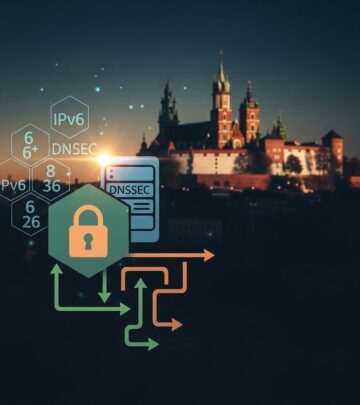
Internet 2030: Funding Future Visions
Explore how new research grants are shaping predictions for the Internet's evolution by 2030 and empowering global innovators.

The Internet has transformed from a niche academic tool into the backbone of global communication, commerce, and culture. As we approach 2030, its trajectory demands forward-thinking exploration. Organizations are stepping up with targeted funding to spark innovative research on what lies ahead. This article delves into a pivotal grants program designed to uncover the Internet’s next decade, highlighting opportunities for researchers worldwide to influence its direction.
Why Predict the Internet’s Next Decade?
By 2030, the Internet will likely underpin unprecedented levels of automation, data generation, and interconnected systems. Visions from bodies like the International Telecommunication Union (ITU) paint a picture of networks handling holographic communications, high-density data flows, and self-governing infrastructures fueled by 5G and beyond. Yet, realizing this requires proactive study of emerging trends, risks, and governance needs.
Research funding plays a crucial role here. It empowers academics, technologists, and policymakers to model scenarios, test hypotheses, and propose safeguards. Without such efforts, we risk reactive policies that stifle innovation or exacerbate divides. Programs targeting 2030 visions bridge this gap, fostering evidence-based foresight.
Unpacking Core Research Themes
Forward-looking grants prioritize multifaceted inquiries. Key areas include:
- Architectural Shifts: How will core protocols adapt to quantum computing, edge processing, and massive IoT deployments?
- Societal Impacts: What transformations in education, healthcare, and governance will hyper-connectivity bring?
- Risk Mitigation: Strategies to counter cyber threats, privacy erosions, and digital monopolies.
- Global Equity: Ensuring underserved regions aren’t left behind in the rush to advanced networks.
These themes draw from authoritative projections. For instance, ITU’s Network 2030 initiative outlines needs for networks supporting immersive realities and petabyte-scale data from sensor swarms.
Eligibility and Application Insights
Open to diverse applicants—individuals, teams, or institutions—grants emphasize originality and feasibility. Proposals must align with predefined focus areas while demonstrating real-world applicability. Evaluation criteria stress methodological rigor, interdisciplinary approaches, and potential for policy influence.
| Criteria | Weight | Description |
|---|---|---|
| Innovation | 30% | Novelty of ideas and deviation from status quo thinking |
| Impact Potential | 25% | Relevance to 2030 challenges and broad applicability |
| Feasibility | 20% | Realistic timelines, resources, and execution plans |
| Team Expertise | 15% | Demonstrated capabilities in relevant fields |
| Dissemination Plan | 10% | Strategies for sharing findings globally |
Deadlines are firm, with rolling reviews in some cases. Successful applicants receive not just funding but mentorship and networking opportunities.
Spotlight on Promising Research Directions
Imagine networks that autonomously heal from attacks or prioritize traffic for life-saving applications. Grants could fund explorations into:
- AI-driven network orchestration for zero-touch operations.
- Decentralized identity systems resilient to surveillance.
- Sustainable infrastructure models minimizing energy use amid exploding data demands.
Projections suggest urban wireless speeds hitting 1-5 Gbps routinely, with 6G pilots at 10-100 Gbps. Yet, rural gaps persist, demanding hybrid satellite-terrestrial solutions. Research here could redefine broadband equity, aligning with updated FCC benchmarks of 100 Mbps download/20 Mbps upload.
Overcoming Barriers to Digital Progress
Challenges abound: cybersecurity escalates with connectivity, as seen in rising IoT vulnerabilities. Privacy concerns intensify with pervasive sensing. Economic models strain under bandwidth-hungry holography and VR/AR. Grants encourage solutions like trustworthy AI governance and blockchain for secure data flows.
Policy research is vital too. How should regulations evolve for sovereign data control versus global interoperability? Studies might analyze low-Earth orbit satellites’ role in closing divides, as optimistic experts predict significant rural gains by 2030.
Expected Outcomes and Global Reach
Awarded projects yield whitepapers, prototypes, and convened workshops. Outputs inform standards bodies, governments, and industry. Past initiatives have influenced encryption standards and net neutrality debates—expect similar ripple effects.
International collaboration is emphasized, with funds supporting diverse voices from Africa, Asia, and Latin America. This counters Western-centric views, ensuring 2030 visions reflect true global needs.
How to Get Involved
Researchers: Review guidelines, assemble interdisciplinary teams, and submit compelling narratives backed by prelim data. Institutions: Promote the call internally. Stakeholders: Offer matching funds or expertise.
Deadlines approach—act swiftly to shape the Internet’s blueprint.
Frequently Asked Questions (FAQs)
What funding amounts are available?
Grants range from $50,000 to $200,000, depending on project scope and duration.
Who can apply?
Individuals, academic teams, nonprofits, and for-profits worldwide, with preference for innovative newcomers.
What makes a winning proposal?
Alignment with themes, bold yet feasible ideas, and clear paths to societal impact.
Are there regional priorities?
Yes, special consideration for projects addressing Global South challenges.
When do results get announced?
Typically 3-6 months post-deadline, with funds disbursed shortly after.
Conclusion: Crafting Tomorrow’s Web
The push to fund 2030 Internet research signals a maturing digital ecosystem—one that invests in foresight amid rapid change. By supporting visionary studies, we pave the way for resilient, inclusive networks. Whether probing technical frontiers or equity hurdles, these efforts ensure the Internet evolves as a force for good. Join the movement: the future is grant-funded.
References
- Towards a New Internet for the Year 2030 and Beyond — ITU-T Study Group 13. 2017-12-01. https://www.itu.int/en/ITU-T/studygroups/2017-2020/13/Documents/Internet_2030.pdf
- What Will the Internet Look Like in 2030? We Asked Experts — AllConnect. 2022-05-01. https://www.allconnect.com/blog/what-will-the-internet-look-like-in-2030
- Broadband Progress Reports — Federal Communications Commission (FCC). 2025-06-30. https://www.fcc.gov/reports-research/reports/broadband-progress-reports
Similar Articles







Read full bio of medha deb