Bridging Digital Divides: Indigenous Internet Access Solutions
Empowering Indigenous communities through affordable and sustainable digital infrastructure
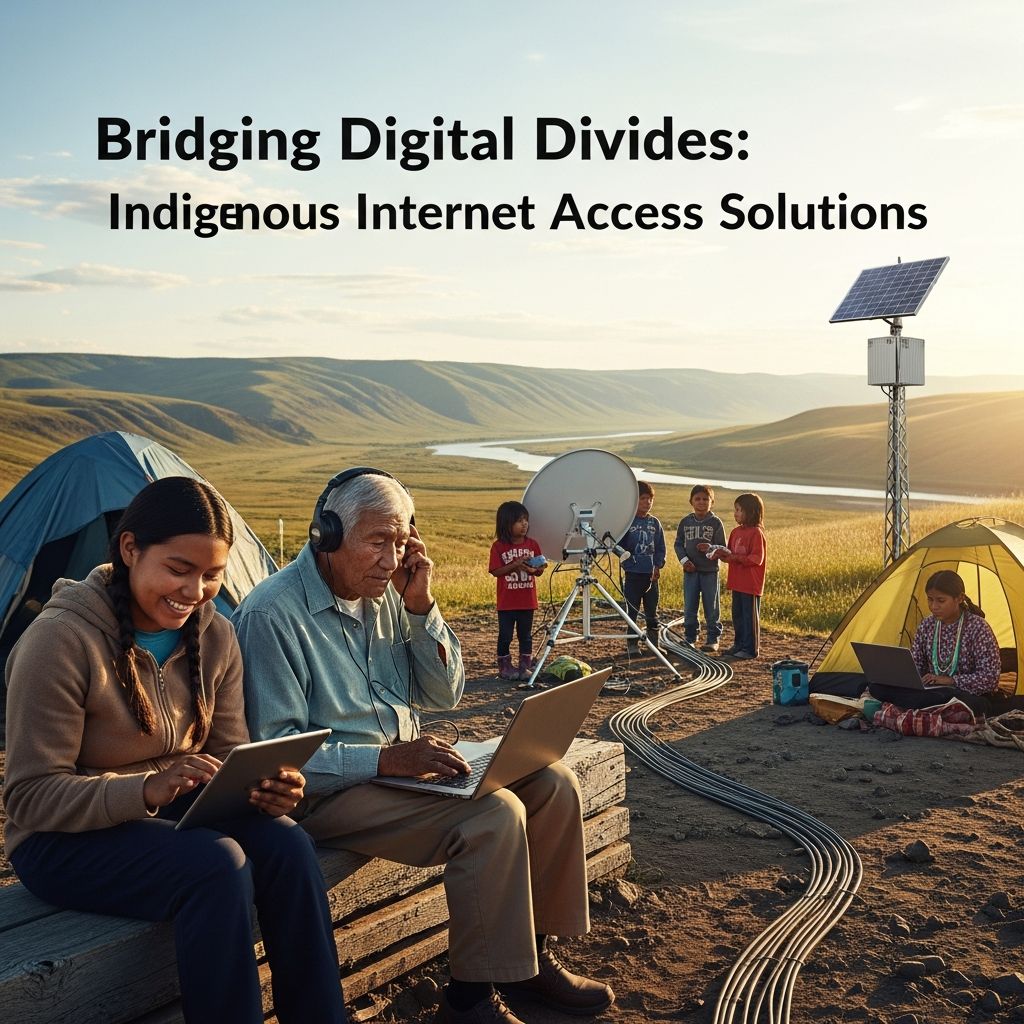
Bridging Digital Divides: How Indigenous Communities Are Driving Connectivity Innovation
The persistent gap in digital access between Indigenous and non-Indigenous populations represents one of the most pressing challenges in contemporary telecommunications policy. Despite technological advances and increased investment in broadband infrastructure, many Indigenous communities across North America continue to face systematic barriers to affordable, reliable internet connectivity. These obstacles extend beyond simple infrastructure limitations; they encompass policy exclusion, limited access to funding mechanisms, spectrum constraints, and the erosion of community autonomy in connectivity decision-making processes. Understanding how Indigenous communities are mobilizing to address these challenges requires examining the collaborative efforts, innovative business models, and policy recommendations emerging from community-led initiatives.
Understanding the Scope of Digital Inequality in Indigenous Communities
The digital divide affecting Indigenous populations operates on multiple levels, creating compounding disadvantages that extend into education, economic opportunity, and healthcare access. Indigenous communities in North America—including Alaska Native, American Indian, Inuit, Native Hawaiian, First Nations, and Métis populations—experience connectivity rates significantly below national averages. This disparity is not incidental but rather reflects historical patterns of marginalization and ongoing policy frameworks that prioritize market-driven solutions over community-based approaches.
The challenges Indigenous communities face in securing reliable internet access include:
- Geographic Isolation: Many Indigenous territories span remote or rural areas where traditional commercial telecommunications providers view infrastructure investment as economically unfeasible, leaving communities without basic connectivity options.
- Economic Barriers: Even where connectivity exists, affordability remains problematic for communities with limited economic resources, making monthly service fees prohibitive for households struggling with poverty rates often exceeding national averages.
- Spectrum Access Limitations: Indigenous communities frequently lack access to the radio spectrum necessary for deploying wireless networks, as existing allocation frameworks prioritize commercial interests over community needs.
- Infrastructure Gaps: Inadequate backhaul capacity—the connection between local networks and broader internet infrastructure—creates bottlenecks that prevent high-quality service delivery even when initial last-mile connectivity exists.
- Policy Exclusion: Decision-making processes regarding telecommunications policy often exclude Indigenous voices, resulting in frameworks that do not address community-specific needs or respect Indigenous sovereignty over connectivity solutions.
Community-Led Approaches to Connectivity Solutions
Rather than waiting for external entities to resolve connectivity challenges, Indigenous communities have developed innovative, locally-controlled solutions that prioritize community autonomy, cultural preservation, and sustainable business models. These community network initiatives represent a fundamental shift in how connectivity infrastructure can be conceived and deployed, moving away from top-down, commercially-driven models toward bottom-up, community-managed approaches.
Community networks operated by Indigenous organizations demonstrate several distinctive characteristics that differentiate them from conventional commercial telecommunications infrastructure:
- Local Ownership and Control: Community networks remain under Indigenous operational management, ensuring that connectivity decisions reflect community priorities rather than external commercial interests or shareholders.
- Cultural Integration: These networks often incorporate Indigenous languages, support cultural programming, and facilitate knowledge-sharing practices aligned with Indigenous values and governance traditions.
- Sustainable Economics: Rather than pursuing rapid growth and profit maximization, community networks typically adopt business models designed for long-term sustainability, reinvesting revenues into infrastructure maintenance and capacity building.
- Affordability Focus: Community operators frequently subsidize service costs for low-income households, ensuring that connectivity becomes accessible to all community members rather than only those with substantial disposable income.
Collaborative Frameworks for Advancing Connectivity Equity
Addressing the digital divide affecting Indigenous communities requires moving beyond isolated community efforts toward coordinated, multi-stakeholder collaboration that brings together Indigenous leaders, network operators, researchers, policymakers, and funding organizations. Structured dialogue platforms create opportunities to identify common challenges, share successful strategies, coordinate advocacy efforts, and develop policy recommendations grounded in community expertise and real-world implementation experience.
Effective collaborative approaches incorporate several key elements:
- Indigenous Leadership: Community members and Indigenous leaders must occupy central roles in dialogue and decision-making processes, ensuring that solutions reflect Indigenous priorities and incorporate Indigenous knowledge systems.
- Knowledge Exchange: Platforms for sharing implementation experiences, technical innovations, and lessons learned from both successes and challenges enable communities to benefit from collective learning rather than duplicating efforts or repeating mistakes.
- Funding Coordination: Collaborative frameworks facilitate identification and matching of available funding sources to community needs, addressing information barriers that often prevent communities from accessing support programs they qualify for.
- Policy Development: Multi-stakeholder engagement in policy recommendation processes produces guidance grounded in practical implementation experience and community-identified priorities rather than theoretical frameworks disconnected from Indigenous realities.
Funding Sources and Resource Mobilization
Securing adequate funding represents a critical barrier to connectivity infrastructure development in Indigenous communities. Traditional funding mechanisms often prove inaccessible due to documentation requirements, application complexity, matching fund obligations, or alignment between funder priorities and community-identified needs. Identifying diverse funding sources and understanding application requirements constitute essential components of successful connectivity initiatives.
Potential funding mechanisms include:
- Government grants specifically designated for tribal or Indigenous connectivity infrastructure development
- Philanthropic funding from organizations focused on digital equity, Indigenous development, or rural connectivity
- Federal broadband development programs that allocate resources across geographic regions
- Community development block grants available through federal and state programs
- Spectrum auction revenues or dedicated telecommunications-focused development funds
- Public-private partnership arrangements that leverage government resources with private sector expertise
Successful funding strategies require comprehensive needs assessment, clear articulation of community objectives, demonstration of organizational capacity, and strategic alignment with funder priorities. Communities benefit from technical assistance in grant application preparation, budget development, and project management that enables more effective resource mobilization.
Policy Advocacy and Regulatory Advancement
Transforming the policy environment affecting Indigenous connectivity requires sustained advocacy efforts that articulate community needs, challenge restrictive regulatory frameworks, and propose alternative approaches better aligned with Indigenous sovereignty and connectivity objectives. Policy recommendations emerging from community-led processes carry particular weight by grounding advocacy in practical implementation experience and community-identified priorities.
Key policy advocacy priorities include:
- Spectrum Access: Advocating for regulatory frameworks that provide Indigenous communities with access to radio spectrum for deploying wireless networks, including mechanisms for community spectrum licenses and technical support for spectrum management.
- Backhaul Infrastructure: Promoting investment in backbone connectivity infrastructure that connects community networks to broader internet infrastructure, addressing a critical bottleneck in service quality delivery.
- Funding Accessibility: Streamlining application processes for connectivity-related grants and establishing dedicated funding streams targeted at Indigenous communities with reduced bureaucratic barriers.
- Regulatory Flexibility: Advocating for policy frameworks that accommodate diverse business models and ownership structures rather than mandating commercial telecommunications licensing requirements incompatible with community-managed approaches.
- Disaster Resilience: Developing policy frameworks that prioritize connectivity infrastructure resilience and community access to emergency communication systems, particularly critical for remote communities dependent on internet connectivity for emergency response coordination.
Capacity Building and Technical Support
Sustaining and scaling community connectivity initiatives requires investment in capacity building that develops Indigenous technical expertise, organizational management capability, and sustainability planning skills. Technical training programs, mentorship relationships, and knowledge-sharing platforms enable communities to develop internal capacity rather than remaining dependent on external technical support.
Effective capacity building approaches include:
- Training programs in network administration, maintenance, and troubleshooting that develop Indigenous technical workforce capability
- Business management and financial planning support that enables sustainable operation of community networks
- Grant writing and fundraising training that strengthens community capacity to identify and secure funding resources
- Organizational development assistance that strengthens governance structures and operational management
- Access to technical consultants and specialized expertise available through network-of-networks arrangements
Success Stories and Implementation Models
Across North America, Indigenous communities have successfully deployed diverse connectivity solutions demonstrating feasibility and effectiveness of community-led approaches. These implementation examples provide concrete evidence that Indigenous communities can achieve connectivity objectives while maintaining local control, building technical capacity, and developing sustainable business models.
Successful models include:
- Hybrid Infrastructure Models: Communities combining multiple connectivity technologies—satellite, wireless, fiber—to achieve service coverage and redundancy appropriate to local geography and usage patterns.
- Cooperative Operating Structures: Community networks operated as cooperatives or nonprofit organizations that maintain local control while enabling collaborative purchasing power and resource-sharing among multiple communities.
- Revenue-Generating Services: Community networks supplementing basic connectivity through value-added services—cloud storage, content hosting, technical support—generating revenue for operations and maintenance.
- Public-Private Partnerships: Arrangements where communities partner with private sector entities while maintaining local control over operational decisions and service priorities through contractual arrangements and governance mechanisms.
Addressing Disaster Resilience Through Connectivity Planning
Remote and rural Indigenous communities often experience heightened vulnerability during natural disasters, public health emergencies, and other crises when communication infrastructure failure isolates communities from emergency response coordination, resource deployment, and critical information distribution. Incorporating disaster resilience into connectivity planning represents an essential component of comprehensive community infrastructure development.
Disaster-resilient connectivity approaches include:
- Deployment of redundant network paths preventing single-point failures that could disable all community connectivity during infrastructure damage
- Community-controlled backup communication systems enabling emergency coordination independent of commercial telecommunications infrastructure
- Emergency response coordination systems accessible through multiple technologies ensuring functionality despite partial infrastructure failure
- Training programs enabling community members to maintain critical communication systems during emergencies when external technical support may be unavailable
Measuring Success and Tracking Progress
Demonstrating the effectiveness of connectivity initiatives requires developing metrics and monitoring systems that capture both quantitative measurements and qualitative outcomes valued by Indigenous communities. Conventional broadband metrics—speed, uptime percentages—constitute only partial measures of connectivity initiative success; community-defined metrics must also incorporate social, economic, and cultural outcomes aligned with community priorities.
Comprehensive evaluation frameworks should incorporate:
- Broadband access and adoption rates measuring percentage of community population with connectivity access and active service usage
- Economic development metrics tracking business formation, employment growth, and income changes associated with connectivity availability
- Educational outcomes measuring student online learning participation, digital skill development, and educational attainment influenced by connectivity access
- Healthcare delivery improvements capturing telehealth utilization, diagnostic capability expansion, and health outcomes influenced by connectivity
- Cultural preservation metrics assessing connectivity platform utilization for Indigenous language education, cultural knowledge documentation, and cultural programming distribution
Frequently Asked Questions About Indigenous Connectivity Initiatives
- What defines a community network in the Indigenous connectivity context?
- Community networks are internet infrastructure systems owned and operated by Indigenous communities themselves, providing local connectivity services while maintaining community control over operational decisions, service pricing, and technology adoption.
- How do community networks differ from commercial telecommunications providers?
- Community networks prioritize affordability, accessibility, and community autonomy over profit maximization, whereas commercial providers optimize for shareholder returns and typically focus infrastructure investment on densely populated areas with strong profit potential.
- What funding opportunities exist for Indigenous connectivity projects?
- Diverse funding sources including government grants, philanthropic organizations, federal broadband programs, and community development funds provide resources for Indigenous connectivity initiatives, though accessibility varies based on community organizational capacity and application complexity.
- How can Indigenous communities maintain local control over connectivity infrastructure?
- Establishing community ownership through nonprofit or cooperative organizational structures, negotiating contractual arrangements that preserve operational autonomy in public-private partnerships, and maintaining technical expertise through capacity building enable communities to sustain local control.
- What role does spectrum access play in Indigenous connectivity?
- Access to radio spectrum enables deployment of wireless connectivity networks extending coverage across geographic territories, making spectrum availability critical for remote Indigenous communities where wired infrastructure deployment proves economically impractical.
Looking Forward: Scaling Community-Led Solutions
Advancing connectivity equity for Indigenous communities requires scaling successful models while maintaining principles of community autonomy, cultural integration, and sustainable economics that distinguish Indigenous-led initiatives from conventional telecommunications approaches. This scaling process demands sustained policy advocacy, continued funding availability, capacity building investment, and recognition of Indigenous communities as legitimate actors in connectivity infrastructure development deserving equal standing with commercial and government entities in policy dialogues and resource allocation decisions.
The collective mobilization of Indigenous communities, supportive organizations, researchers, and policymakers around digital equity objectives creates momentum for transformative change that moves beyond marginalizing Indigenous connectivity as a specialized or supplementary concern toward recognizing Indigenous-led connectivity solutions as legitimate and exemplary approaches applicable across diverse contexts. As communities continue sharing experiences, jointly advocating for policy change, and collectively problem-solving around shared challenges, the pathway toward comprehensive digital equity becomes increasingly achievable and demonstrates the power of community-led innovation in addressing systemic inequities.
References
- Fifth Annual Indigenous Connectivity Summit to Address Sustainable Solutions to Ensure Digital Equity — PR Newswire / Internet Society. 2021-10-11. https://www.prnewswire.com/news-releases/fifth-annual-indigenous-connectivity-summit-to-address-sustainable-solutions-to-ensure-digital-equity-301396472.html
- Indigenous Connectivity Summit 2021 — Internet Society. 2021. https://www.internetsociety.org/events/indigenous-connectivity-summit/2021/
- Indigenous Connectivity Institute: Internet Society Comments on NTIA Broadband Equity, Access, and Deployment Program — National Telecommunications and Information Administration / Internet Society. 2021. https://www.ntia.gov/sites/default/files/publications/indigenous_connectivity_institute_internet_society.pdf
- 2025 Indigenous Connectivity Summit — Indigenous Connectivity / ARIN. 2025-09-16. https://indigenousconnectivity.org/summits/2025-indigenous-connectivity-summit/
- 1st-Mile Institute: Indigenous Connectivity Summit — 1st-Mile Institute. 2017. http://www.1st-mile.org/indigenous-connectivity-summit.html
Similar Articles








Read full bio of Sneha Tete