Indigenous Digital Empowerment: Lenca Communities Online
How technology bridges tradition and progress for Honduras' Lenca people.
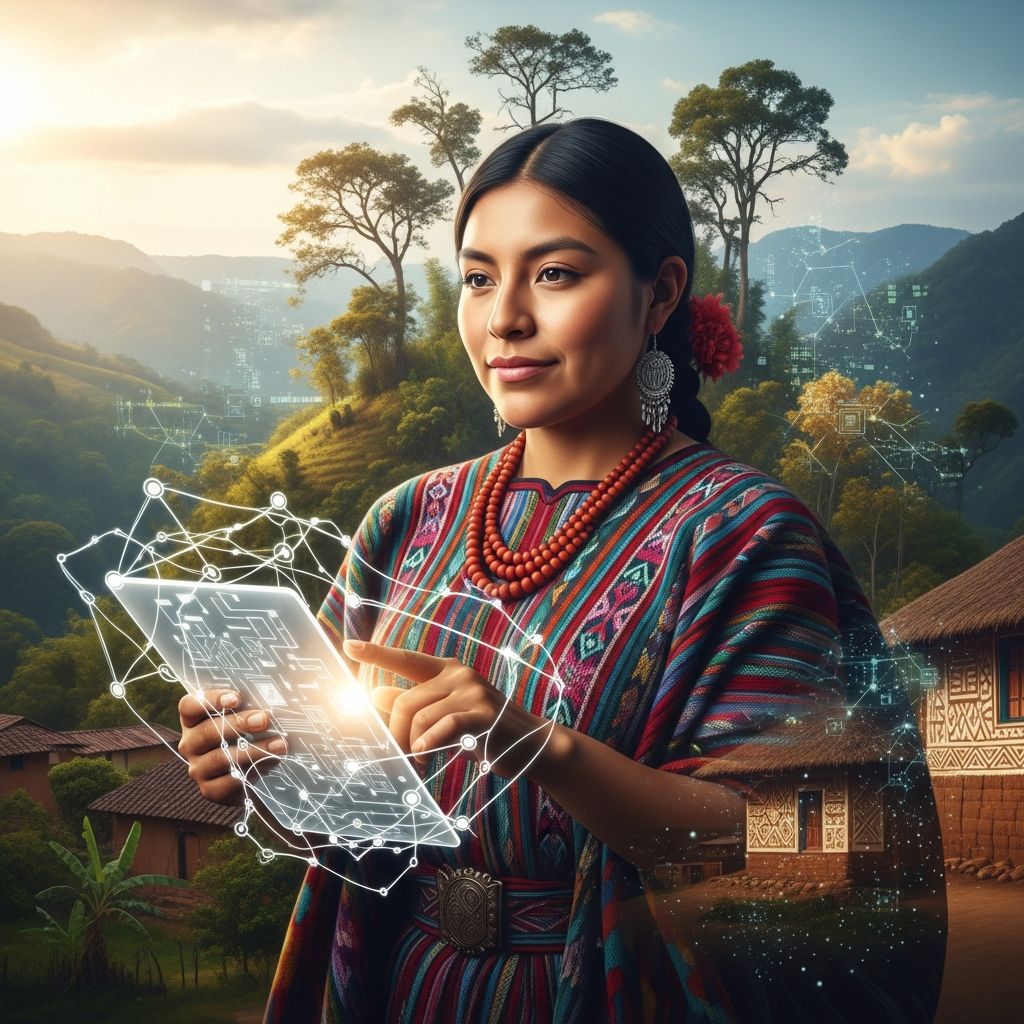
Bridging Tradition and Technology: The Lenca Path Forward
In the mountainous regions of Honduras, the Lenca people have inhabited their ancestral lands for centuries, maintaining distinct cultural practices, languages, and ways of living that reflect a deep connection to their environment. Today, this indigenous community faces a unique intersection of challenges and opportunities as modernization and technological advancement reshape rural landscapes across Central America. The story of how the Lenca are navigating this transition reveals important insights about leveraging digital tools not as replacements for traditional knowledge, but as complementary resources that strengthen cultural continuity while enabling economic and social progress.
Understanding the Lenca Indigenous Heritage
The Lenca people represent one of Honduras’ most significant indigenous populations, with a rich historical legacy that extends back to pre-Columbian times. Their identity is deeply rooted in the landscape surrounding them, from the forests that provide sustenance to the mountain passes where their ancestors defended their sovereignty against colonial forces. This cultural foundation remains central to how contemporary Lenca communities approach questions of development and modernization.
Cultural identity among the Lenca extends far beyond symbolic representation. It encompasses practical knowledge systems developed over generations—agricultural techniques perfectly adapted to local ecological conditions, medicinal practices grounded in deep botanical understanding, and artistic traditions that tell the stories of their people. Language serves as both a repository of this knowledge and a marker of group identity, making linguistic preservation an urgent priority for communities increasingly influenced by Spanish and other dominant languages.
The Digital Divide in Remote Communities
Geographic isolation has historically insulated Lenca communities from certain modern pressures, but it has also limited their access to educational resources, market opportunities, and services available to urban populations. The digital divide—the gap between those with reliable internet access and those without—has become an increasingly critical factor shaping life opportunities for people in remote rural areas. Without connectivity, younger Lenca residents often face a difficult choice: migrate to urban centers or military zones in search of employment, or remain in their communities with severely limited economic prospects.
This migration pattern carries significant cultural consequences. When young people leave their communities to seek work, they interrupt the intergenerational transmission of knowledge. Traditional practices risk being forgotten as new generations grow up with different reference points and priorities. Additionally, the departure of working-age individuals weakens community cohesion and can accelerate cultural erosion.
Economic Pressures and Market Integration
The pressure to integrate into national and global economic systems has pushed many Lenca communities toward extraction-based industries—logging, mining, and hydroelectric development—that promise immediate income but threaten long-term environmental sustainability and community wellbeing. These industries, often controlled by external corporations, offer limited local control and frequently result in environmental degradation that undermines traditional subsistence practices. The tension between immediate economic need and long-term community preservation has become a defining challenge for Lenca leadership.
Reimagining Connectivity as Cultural Tool
Rather than viewing the internet merely as a technology for consumption or entertainment, forward-thinking Lenca leaders began exploring how digital connectivity could serve cultural preservation and community-directed development. This perspective shift opened new possibilities: what if internet access could enable Lenca people to document and share their traditions with global audiences? What if digital tools could connect dispersed community members and strengthen collective decision-making? What if technology could create economic opportunities that didn’t require leaving home or compromising environmental values?
These questions motivated the development of innovative projects that positioned technology not as an external imposition but as a tool selected and shaped according to community values and priorities. The framework that emerged treated internet connectivity as foundational infrastructure supporting multiple community objectives simultaneously.
The Comunidades Inteligentes Initiative
In 2018, Lenca communities launched an ambitious project designed to address connectivity gaps while centering cultural goals. Comunidades Inteligentes, led by the Red De Desarrollo Sostenible (RDS) organization in partnership with the Internet Society Honduras Chapter, represented a significant collective commitment to digital inclusion grounded in local values. The initiative received crucial support through the Beyond the Net Funding Programme, demonstrating how strategic partnership between indigenous organizations, international technical bodies, and development funding can align toward shared objectives.
The project’s core infrastructure component involved establishing community networks capable of providing free wireless internet to participating households. The ambitious target—connecting approximately 300 families—demonstrated the scale of the intervention and reflected realistic assessment of community capacity and coordination. Community networks, as opposed to commercial internet service provider infrastructure, offered critical advantages for indigenous communities: local ownership and governance, affordability through cooperative models, and alignment with community priorities rather than corporate profit motives.
Multi-Layered Project Objectives
While connectivity represented the foundation, the actual vision extended much further. The initiative conceptualized internet access as enabling several interconnected outcomes:
- Cultural Documentation: Creating digital archives of Lenca oral traditions, stories, and knowledge before they are lost to generational change
- Language Revitalization: Using digital tools to teach and preserve the Lenca language, which had become increasingly displaced by Spanish
- Knowledge Integration: Enabling community members to research and access global resources that could complement traditional knowledge systems
- Economic Opportunity: Supporting small business development and market access for locally-produced goods and services
- Educational Access: Providing learning resources to improve educational outcomes while maintaining cultural relevance
Digital Archives and Cultural Memory
One of the most significant applications of community internet access involved creating permanent digital records of cultural knowledge traditionally maintained through oral transmission. Stories, histories, medicinal plant knowledge, agricultural techniques, and artistic traditions that existed primarily in the minds and practices of community elders could be documented, organized, and preserved in formats accessible to younger generations and the broader world.
This approach to cultural preservation differs fundamentally from external anthropological documentation. When communities control the documentation process, they determine which knowledge to share publicly and which to keep private, how to represent their traditions accurately, and how to present their culture to the world on their own terms. Digital tools enable this self-directed preservation in ways that previous technologies did not.
Language Revival Through Digital Platforms
The Lenca language represents a particularly urgent preservation priority. Language shift—the process by which community members gradually adopt another language as their primary means of communication—has affected many indigenous communities globally. In Honduras, Spanish dominance has accelerated this process, with younger Lenca increasingly growing up with Spanish as their first language or with limited proficiency in Lenca.
Internet connectivity creates new possibilities for language revitalization. Digital platforms can host language learning materials, connect dispersed speakers for practice and conversation, and document linguistic knowledge for future reference. Additionally, creating digital content in Lenca language—from educational materials to entertainment—increases the language’s perceived relevance and usefulness among younger speakers who might otherwise see Spanish as the only practical choice.
Women’s Empowerment and Community Leadership
The Azacualpa community network, representing one of Honduras’ first indigenous-led community network projects, demonstrated how digital inclusion initiatives could serve broader social transformation objectives. Community members, particularly women who had historically occupied limited roles in public decision-making, found that the collaborative process of designing and implementing the network required new forms of participation and leadership.
The participatory planning process necessary to establish community networks—identifying needs, making collective decisions, managing shared resources—created unprecedented opportunities for voices traditionally marginalized in community governance. As women took on roles in network planning, maintenance, and community coordination, their positions within the broader community shifted. This transformation extended beyond the technical realm into fundamental reconsideration of gender roles and community decision-making processes.
Connecting Traditional Knowledge to Global Resources
Rather than positioning traditional knowledge and global information as competing systems, the Lenca approach emphasized integration and dialogue. Community members could access scientific research that validated or complemented ancestral practices, medical information about treating common health conditions, and agricultural techniques from other indigenous communities facing similar environmental challenges. Simultaneously, this increased connectivity enabled Lenca knowledge holders to share their expertise with global audiences and contribute to worldwide understanding of sustainable practices.
This bidirectional knowledge flow challenged the historical pattern in which western knowledge was imposed on indigenous communities as superior and more legitimate. Instead, communities became active participants in generating and sharing knowledge on a global platform.
Economic Development Aligned with Values
Perhaps most significantly, connectivity enables economic development that respects community values and environmental sustainability. Rather than forcing a choice between poverty and participation in extractive industries, digital tools can support alternative economic models based on local resources and community control.
Coffee production, agroforestry practices, artisanal crafts, and other activities rooted in traditional knowledge can reach broader markets through digital platforms. Women in particular have expanded their economic participation through these models, developing small businesses that generate income while strengthening rather than undermining community social structures. This approach to economic development keeps resources and control within community hands rather than transferring wealth to external corporations.
Challenges and Ongoing Barriers
The vision of digital empowerment faces significant obstacles. Sustainable operation of community networks requires ongoing technical support, maintenance, and coordination that stretched many communities’ existing capacity. External pressure from extractive industries, government policies that sometimes conflicted with community priorities, and limited resources for expansion all constrained implementation scope.
Additionally, the mere existence of internet connectivity does not automatically generate the cultural, economic, or social benefits communities envisioned. Intentional community education, capacity building, and governance structures proved essential to translating technological infrastructure into actual benefits. Communities needed to collectively decide how to use connectivity in ways aligned with their values and priorities.
The Broader Significance for Indigenous Communities
The Lenca experience with digital inclusion provides important lessons extending far beyond Honduras. Indigenous communities worldwide face similar pressures—geographic marginalization, economic integration into extractive industries, cultural erosion through generational change, and limited access to services and opportunities. Yet they also possess resources, knowledge, and social structures that could be strengthened through appropriate technology application.
Successful models of indigenous-controlled digital infrastructure demonstrate that technology need not follow the same patterns of corporate control and cultural homogenization that have characterized globalization. Instead, technology can serve as a tool for strengthening community autonomy, preserving knowledge, and enabling sustainable development grounded in indigenous values.
FAQs
Frequently Asked Questions
What makes community networks different from commercial internet service providers?
Community networks are owned and operated by local residents rather than corporations. This means communities maintain control over how the network functions, what services it provides, and how resources are allocated. Community networks also tend to be more affordable and can be designed specifically to meet local needs rather than maximizing corporate profit.
How can internet access help preserve indigenous languages?
Digital platforms enable creation and distribution of language learning materials, connect dispersed speakers for practice, and allow communities to create content in their language. When young people see their language used for meaningful communication and accessed online, they are more likely to learn and use it actively.
What economic opportunities does connectivity create for indigenous communities?
Internet access enables small businesses to reach broader markets, farmers to access price information and agricultural knowledge, artisans to sell directly to consumers, and community members to access remote employment opportunities. Importantly, these opportunities can be pursued from home, reducing pressure to migrate.
How does community participation in technology projects create leadership opportunities?
Implementing community networks requires collective decision-making about infrastructure, resource management, and priorities. This process draws participation from diverse community members, including those historically excluded from leadership roles, expanding who sees themselves as capable of leadership and who has input into community decisions.
Can traditional knowledge and internet-based information coexist?
Yes. Communities increasingly view these knowledge systems as complementary rather than competing. Internet access allows validation and enhancement of traditional practices, connection with similar communities, and preservation of ancestral knowledge while remaining engaged with contemporary information sources.
Conclusion: Technology as Cultural Catalyst
The Lenca experience demonstrates that technology, when applied thoughtfully and controlled locally, can serve indigenous communities’ own development priorities. Rather than simply importing western technological solutions that carry embedded assumptions about progress and modernity, communities that take ownership of technology implementation can shape it according to their values, needs, and aspirations.
As the Lenca continue building on the foundation established through Comunidades Inteligentes and similar initiatives, they model possibilities for indigenous communities worldwide. Digital connectivity need not accelerate cultural erosion or intensify economic marginalization. Instead, it can enable cultural preservation, support sustainable economic development, strengthen democratic decision-making, and create opportunities for younger generations to thrive within their home communities while honoring ancestral knowledge and values.
The path forward requires sustained commitment from communities themselves, support from international organizations and funding sources that respect indigenous autonomy, and willingness to question assumptions about technology’s inevitable social impacts. The Lenca have demonstrated this commitment and are showing the way toward technology futures designed by and for indigenous peoples themselves.
References
- How the Lenca Are Restoring the Past to Build Their Future — Internet Society. 2018. https://www.internetsociety.org/blog/2018/04/lenca-people-restoring-past-build-future/
- The Azacualpa Community Network in Honduras: Empowering the Lenca People Through Technology — Global Voices. 2019. https://rising.globalvoices.org/blog/2019/01/14/the-azacualpa-community-network-in-honduras-empowering-the-lenca-people-through-technology/
- Returning Our Roots: The Value of Ancestral Knowledge in Facing Future Challenges — United Nations Office for Disaster Risk Reduction (UNDRR). https://www.undrr.org/news/returning-our-roots-value-ancestral-knowledge-facing-future-challenges
- Cooperative Agroforestry Empowers Indigenous Women in Honduras — Mongabay. 2018. https://news.mongabay.com/2018/04/cooperative-agroforestry-empowers-indigenous-women-in-honduras/
- Up Close with Indigenous Cultural Resistance in Honduras — Grassroots Online. https://grassrootsonline.org/learning_hub/honduras-indigenous-cultural-resistance/
Similar Articles








Read full bio of Sneha Tete