India’s IPv6 Migration: Tamil Nadu Leads
Tamil Nadu's DoT pioneers IPv6 transition, setting a model for India's digital future amid IoT and 5G growth.
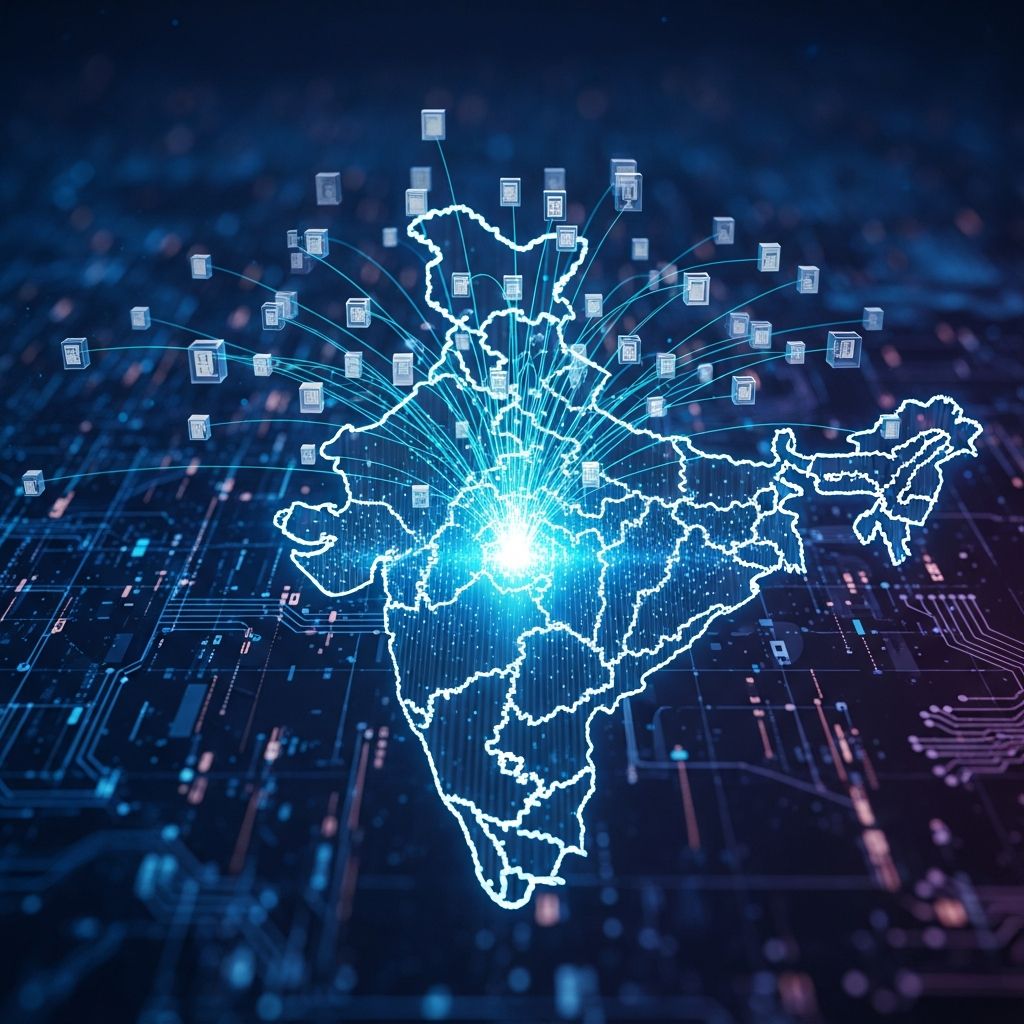
India’s IPv6 Migration: Tamil Nadu Leads the Charge
India’s digital landscape is evolving rapidly, with billions of devices connecting through 5G networks and Internet of Things (IoT) applications. At the heart of this transformation lies the shift from IPv4 to IPv6, the next-generation Internet Protocol. While IPv4’s 4.3 billion addresses are exhausted, IPv6 offers virtually unlimited addressing—3.4 × 1038 unique IPs—essential for future growth. Tamil Nadu’s Department of Telecommunications (DoT) is at the forefront, conducting comprehensive network inventories to pave the way for seamless migration.
The Imperative for IPv6 in India’s Digital Economy
India, with over 800 million Internet users as of 2023, faces acute IP address shortages. The rise of smartphones, smart cities, and industrial IoT demands more addresses than IPv4 can provide. Government initiatives like Digital India underscore the need for robust infrastructure. Tamil Nadu, a tech hub hosting Chennai’s IT corridor, recognizes this urgency. By auditing networks across government bodies, PSUs, and banks, the DoT ensures no entity is left behind in the transition.
IPv6 isn’t just about addresses; it enhances performance. Native support for end-to-end connectivity eliminates Network Address Translation (NAT) bottlenecks, improving speed for video streaming and real-time apps. Security features like IPsec are mandatory, fortifying defenses against cyber threats. For Tamil Nadu, this means reliable e-governance services, from online portals to surveillance systems.
Strategic Planning: From Inventory to Implementation
Tamil Nadu’s approach begins with meticulous data collection. The DoT is cataloging all IP-dependent assets: servers, routers, endpoints in state departments, central PSUs, and financial institutions. This inventory identifies IPv4-only devices needing upgrades, forming the backbone of a tailored migration plan.
- Phase 1: Assessment – Map current infrastructure, assess compatibility.
- Phase 2: Dual-Stack Deployment – Run IPv4 and IPv6 concurrently for minimal disruption.
- Phase 3: Full IPv6 Enablement – Phase out IPv4 where feasible.
Dual-stacking, the preferred method, allows gradual rollout. Devices communicate via IPv6 when possible, falling back to IPv4 otherwise. This strategy mirrors national guidelines from the DoT, updated in 2022 to mandate IPv6 capability for new wireline connections post-December 31, 2022.
National Context: Evolving Policies and Timelines
Tamil Nadu’s efforts align with India’s broader IPv6 roadmap, initiated under the 2012 National Telecom Policy. Early mandates targeted government IPv6 adoption by 2012, with task forces formed in 2010. Recent revisions by the DoT emphasize IoT and 5G readiness. The Telecom Regulatory Authority of India (TRAI) recommends audits to track progress, ensuring stakeholders meet deadlines.
| Timeline Milestone | National Target | Tamil Nadu Focus |
|---|---|---|
| 2012 | Govt depts start IPv6 | Initial planning |
| 2017 | Complete migration goal | Inventory completion |
| 2022 | New connections IPv6-capable | Dual-stack rollout |
| 2025+ | Full IoT/5G integration | Public interfaces dual-stack |
These timelines reflect a pragmatic shift, prioritizing readiness over rigid cutoffs. Tamil Nadu aims for all public-facing services to support both protocols by early 2025, ahead of national curves.
Technical Advantages Driving Adoption
IPv6’s 128-bit addressing uses hexadecimal notation (e.g., 2001:0db8:85a3::1), simplifying subnetting. Auto-configuration via Stateless Address Autoconfiguration (SLAAC) reduces DHCP dependency, easing management for large networks like Tamil Nadu’s government clusters.
- Scalability: Supports trillions of devices without address exhaustion.
- Mobility: Seamless handoffs for mobile users and vehicles.
- QoS: Flow labeling prioritizes traffic, vital for telemedicine and education platforms.
In banking, IPv6 enables secure, direct peer-to-peer transactions, reducing latency. For PSUs, it future-proofs industrial controls.
Challenges and Mitigation Strategies
Migration isn’t without hurdles. Legacy hardware lacks IPv6 support, requiring costly replacements. Staff training gaps persist, and vendor lock-in complicates procurement. Tamil Nadu counters with DoT-empanelled consultants like TCIL, offering gap analysis and roadmaps.
Interoperability testing ensures dual-stack harmony. Pilot projects in select departments validate strategies before statewide rollout. Funding via central schemes like BharatNet aids upgrades.
Impact on Stakeholders: Banks, Government, and Beyond
Government: Enhanced e-services with 99.9% uptime. Tamil Nadu’s dual-stack portals will serve citizens via any device.
Banks: Compliant with RBI mandates, IPv6 bolsters fintech innovations like UPI 2.0.
PSUs: Operational efficiency in power, transport sectors through IoT sensors.
Private sector benefits indirectly, as government leadership spurs ecosystem readiness. Telecom operators like BSNL, already IPv6-enabled, expand services.
Future Outlook: IPv6 in 5G and Smart Tamil Nadu
With 5G trials underway, IPv6 is non-negotiable. Network slicing demands dynamic addressing IPv6 provides. Tamil Nadu’s Vision 2025 envisions smart cities with IPv6-powered traffic management and healthcare. By leading migration, the state positions itself as India’s digital vanguard.
Frequently Asked Questions (FAQs)
What is the difference between IPv4 and IPv6?
IPv4 uses 32-bit addresses (e.g., 192.168.1.1), limited to ~4 billion. IPv6’s 128-bit addresses offer vastly more, plus built-in security and no NAT.
Why is Tamil Nadu prioritizing IPv6 now?
Exhausted IPv4 pools, 5G/IoT growth, and national policies demand it. Audits ensure smooth transition for critical sectors.
How does dual-stack work?
Devices run both protocols simultaneously, using IPv6 preferentially. It’s the safest path for zero downtime.
What are the costs involved?
Initial hardware upgrades and training; long-term savings from efficiency and scalability offset them.
Is India fully IPv6-ready?
Progressing: Majority providers support it, but full adoption needs sustained policy enforcement.
References
- DoT’s new IPv6 transition timelines to hasten adoption: Forum — Economic Times Telecom. 2022-12-01. https://telecom.economictimes.indiatimes.com/news/dots-new-ipv6-transition-timelines-to-hasten-adoption-forum/87598631
- Recommendations on ‘Transition from IPv4 to IPv6 in India’ — Telecom Regulatory Authority of India (TRAI). 2006-01-09. https://www.trai.gov.in/sites/default/files/2024-09/letter9jan06.pdf
- India Wakes Up to the Inevitability of IPv6 — Government Technology. 2010-09-01. https://www.govtech.com/dc/articles/India-Wakes-Up-to-the-Inevitability.html
- IPv6 | Telecommunications Consultants India Limited — TCIL (Govt of India Enterprise). 2023-01-01. https://www.tcil.net.in/ipv6.php
- Policy Brief on IPv6 Transition in India — ICRIER. 2011-12-01. https://icrier.org/pdf/IPv6_Transition.pdf
Similar Articles






Read full bio of Sneha Tete