IETF Meetings: A Beginner’s Roadmap
Discover the world of IETF standards development with this comprehensive guide to navigating meetings, key sessions, and emerging technologies.
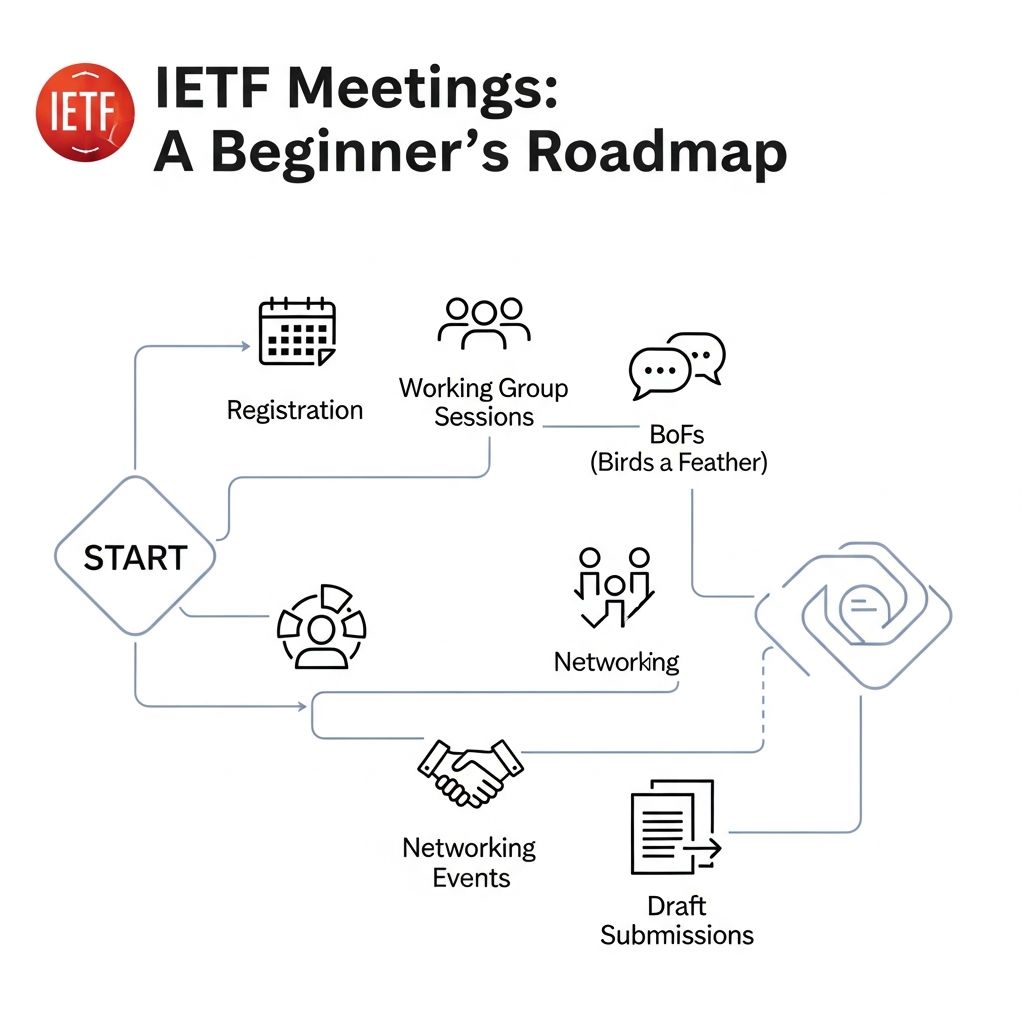
The Internet Engineering Task Force (IETF) stands as the cornerstone of Internet protocol development. For newcomers, attending an IETF meeting can feel overwhelming amid the technical discussions and specialized jargon. This guide demystifies the process, offering insights into what to expect, key areas of focus, and how these gatherings influence the web we use daily. Whether you’re a developer, policymaker, or curious enthusiast, understanding IETF dynamics equips you to contribute to the Internet’s evolution.
Understanding the IETF Ecosystem
The IETF operates as an open, volunteer-driven organization where engineers, researchers, and operators collaborate on technical specifications. Unlike formal standards bodies, it emphasizes practical implementation over theoretical perfection. Meetings occur three times a year, drawing hundreds of participants to deliberate on Requests for Comments (RFCs)—the living documents defining Internet protocols.
These events feature working group (WG) sessions, Birds of a Feather (BoF) meetings for nascent ideas, and plenaries that address overarching issues. Sessions are scheduled across multiple tracks, ensuring comprehensive coverage of network layers from physical to application. Remote participation via tools like Meetecho has made access more inclusive since the pandemic era.
Navigating Meeting Schedules and Formats
IETF agendas are meticulously planned, with tools like the Datatracker providing real-time updates. Sessions typically last 60 or 90 minutes, starting with agenda review, followed by document walkthroughs, and ending with open feedback. Chairs facilitate ‘hum’ voting—a vocal consensus gauge where ‘yes’ sounds like a murmur and dissent like a roar.
- Preparation Tips: Review WG mailing lists and draft documents beforehand.
- Session Types: WGs advance mature work; BoFs test new concepts.
- Plenaries: Highlight security, operations, and emerging challenges.
Time zones matter—meetings rotate globally, from Vancouver to Prague, accommodating diverse participants.
Core Themes in Modern IETF Discussions
Recent meetings spotlight resilience, scalability, and security amid rising threats like DDoS attacks and state surveillance. Topics span IPv6 adoption, DNS enhancements, and privacy-preserving protocols, reflecting the Internet’s maturation.
Building Resilient Network Routing
Routing protocols like BGP underpin Internet connectivity, but vulnerabilities persist. IETF efforts focus on securing updates and improving convergence. Working groups explore SIDR for cryptographically validating routes and RPKI for certificate management. These mitigate prefix hijacks, ensuring traffic flows correctly even under attack.
Discussions also cover segment routing for traffic engineering and EVPN for data centers, balancing efficiency with fault tolerance. Operators share real-world deployments, informing protocol refinements.
IPv6: The Path to Universal Addressing
IPv4 exhaustion necessitates IPv6 transition. Sessions dissect deployment strategies, from 6to4 tunneling to native dual-stack. 6MAN WG refines core specs, while V6OPS addresses operational hurdles like prefix delegation.
| IPv6 Feature | Benefits | IETF Focus |
|---|---|---|
| 128-bit Addresses | Trillions of unique IPs | Addressing Architecture (ADDRCONF) |
| Auto-Configuration | Plug-and-play devices | Stateless Autoconf (SLAAC) |
| Security Headers | Built-in IPsec support | Mobility and Multihoming |
Progress is evident: by 2026, IPv6 traffic exceeds 40% globally, per official metrics.
Securing DNS with Modern Tools
DNSSEC signs records to prevent spoofing, while DANE leverages TLS certificates for email and web validation. DNSSec and DANE WGs tackle deployment barriers, like chain-of-trust validation and stub resolver support.
Privacy concerns drive DNS-over-HTTPS (DoH) and DNS-over-TLS (DoT), encrypting queries against eavesdroppers. These protocols shift control toward end-users, sparking debates on resolver centralization.
Scaling the Internet Backbone
As traffic surges to zettabytes, scalability dominates. Discussions probe QUIC for faster web transport, replacing TCP, and HTTP/3 semantics. DetNet ensures low-latency for industrial IoT, while CCAMP automates path computation.
- QUIC: Multiplexed streams over UDP, reducing head-of-line blocking.
- Performance Metrics: TWAMP and OWAMP for active monitoring.
Privacy, Trust, and Identity Management
With data breaches rampant, IETF prioritizes user-centric controls. ART WG crafts OAuth extensions for delegated auth, TPP simplifies permissions. Privacy enhancements in TLS 1.3 obscure server details, thwarting fingerprinting.
Identity proofs via ACME automate certificate issuance, bolstering HTTPS. Debates weigh anonymity against accountability, especially for encrypted messaging.
Engaging as a First-Time Attendee
Newcomers should join the hackathon for hands-on coding and the welcome session for orientation. Networking at socials fosters collaborations. Tools like Jabber chat enable remote questions.
Post-meeting, minutes and slides appear on the IETF site, sustaining momentum via mailing lists.
Impact of IETF on Everyday Internet
IETF standards power Wi-Fi, VPNs, and streaming. Innovations like HTTP/2 halved page loads, while WireGuard streamlines VPNs. Future work targets quantum-resistant crypto and satellite integration.
Frequently Asked Questions (FAQ)
What is the IETF’s decision-making process?
Rough consensus: Chairs assess if benefits outweigh harms, prioritizing working implementations.
How can I participate remotely?
Via audio streams, Meetecho, and Datatracker for slides and chats.
Are IETF meetings free?
Registration fees apply; remote is free. Scholarships aid newcomers.
What languages are used?
Primarily English, with translations for plenaries.
How do RFCs become standards?
Through Proposed, Draft, and Internet Standard stages after WG adoption.
IETF meetings propel the Internet forward, inviting all to shape its trajectory. Dive in, contribute, and witness standards in action.
References
- IETF Datatracker — Internet Engineering Task Force. 2026-05-01. https://datatracker.ietf.org/
- IPv6 Adoption Statistics — Google IPv6 Statistics. 2026-04-30. https://www.google.com/intl/en/ipv6/statistics.html
- BGP Security (SIDR) — IETF Secure Inter-Domain Routing WG. 2023-11-15. https://datatracker.ietf.org/wg/sidr/about/
- TLS 1.3 Specification (RFC 8446) — IETF Network Working Group. 2018-08-10. https://datatracker.ietf.org/doc/html/rfc8446 (Authoritative standard, unchanged relevance).
- QUIC Protocol (RFC 9000) — IETF Transport WG. 2021-05-21. https://datatracker.ietf.org/doc/html/rfc9000
Similar Articles







Read full bio of Sneha Tete