IETF Guide: IoT Protocols Evolution
Discover key IETF working groups shaping secure, efficient IoT connectivity and standards for tomorrow's connected world.
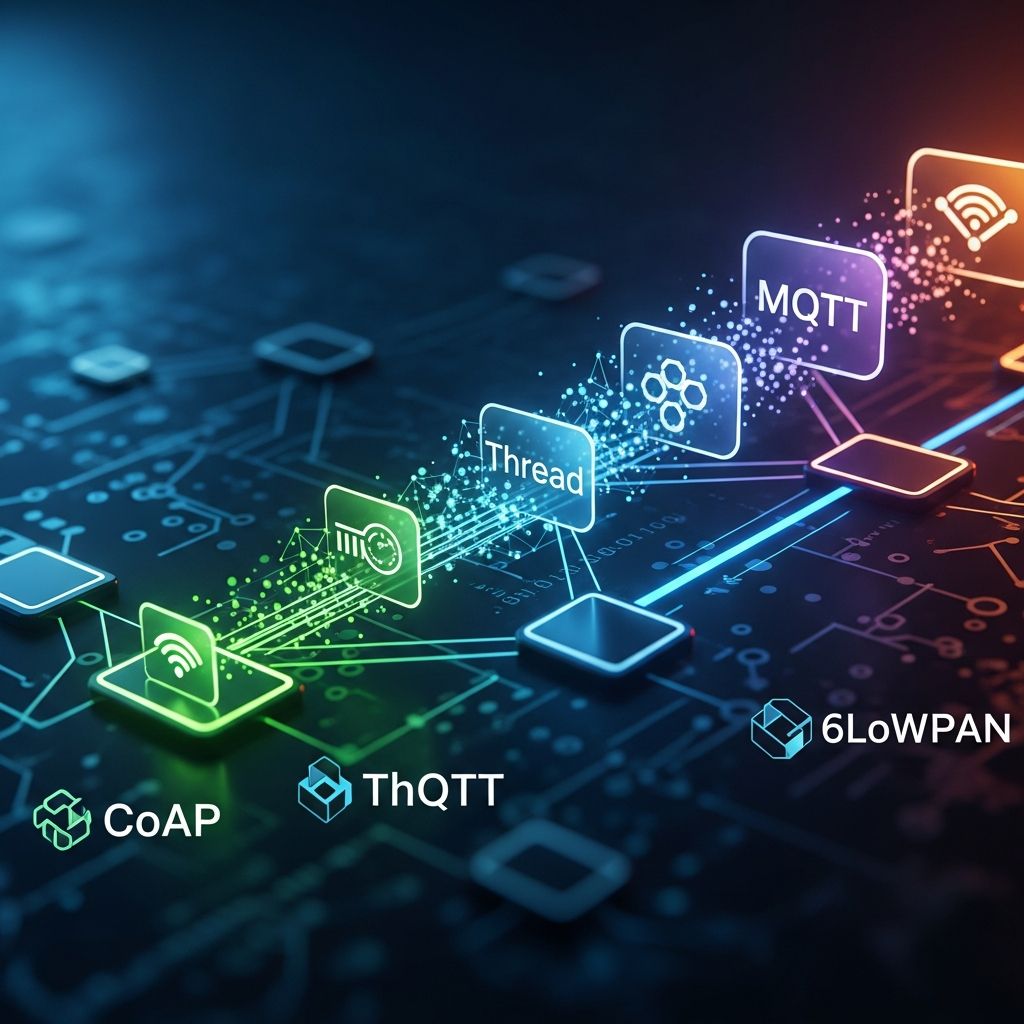
The Internet Engineering Task Force (IETF) stands at the forefront of defining protocols that power the Internet of Things (IoT). As billions of devices connect to networks worldwide, the need for reliable, secure, and efficient communication standards has never been greater. This guide delves into the IETF’s critical contributions to IoT, focusing on working groups that address challenges in resource-constrained environments, low-power wide-area networks, and secure software management. By adapting core Internet protocols like IPv unique IoT demands, these efforts ensure scalability and interoperability.
Foundational Challenges in IoT Networking
IoT devices often operate under severe constraints: limited battery life, minimal processing power, and intermittent connectivity. Traditional Internet protocols, designed for robust desktops and servers, falter in these scenarios. The IETF tackles this by developing lightweight alternatives and adaptations. For instance, embedding IPv6 directly into low-power devices eliminates proprietary stacks, fostering a unified ecosystem.
Key hurdles include neighbor discovery in dense networks, where devices must efficiently locate peers without draining energy. Efficient mechanisms reduce overhead, enabling battery-powered sensors to last years. Security remains paramount; vulnerable IoT devices have fueled massive attacks, underscoring the urgency of standardized protections.
Secure Firmware Management Essentials
One of the IETF’s standout initiatives is the Software Updates for Internet of Things (SUIT) working group. Firmware updates are vital for patching vulnerabilities and adding features, yet constrained devices complicate secure delivery. SUIT defines manifests—structured documents that detail update components, integrity checks, and authorization rules.
These manifests use cryptographic signatures to verify authenticity, preventing malicious injections. The framework supports delta updates, transmitting only changes to minimize bandwidth. In vehicular or industrial settings, where downtime is costly, SUIT enables atomic updates across fleets, rolling back if issues arise. This approach aligns with broader cybersecurity mandates, ensuring devices remain resilient post-deployment.
- Manifest Structure: Includes payload digests, vendor IDs, and dependency lists.
- Delivery Protocols: Integrates with CoAP for constrained transport.
- Invocation Modes: Supports pull-based and push-based updates.
Lightweight TCP for Resource-Limited Devices
The Lightweight Implementation Guidance (LWIG) working group provides TCP usage recommendations tailored for IoT. TCP’s reliability is invaluable, but its handshake and congestion control can overwhelm tiny devices. LWIG drafts outline optimizations like selective acknowledgments and reduced initial windows to cut latency and resource use.
Recent discussions have advanced drafts on TCP in 6LoWPAN networks, balancing reliability with efficiency. Developers gain clear guidelines: disable unnecessary options, tune timers for sleepy nodes, and pair with header compression. These enhancements make TCP viable for sensors transmitting critical data, like environmental monitors in remote areas.
| Optimization | Benefit | IoT Use Case |
|---|---|---|
| Small Initial Window | Reduces startup latency | Battery sensors |
| Efficient Neighbor Solicitation | Lowers discovery overhead | Smart meshes |
| Header Compression | Cuts packet size by 50% | LPWAN links |
CoAP: Web Standards for Embedded Systems
The Constrained RESTful Environments (CoRE) working group extends HTTP-like interactions to IoT via CoAP, a UDP-based protocol. CoAP mirrors REST principles—GET, POST, PUT, DELETE— but with multicast support and tiny headers (4 bytes base). This enables resource discovery and observation, where devices subscribe to state changes.
CoRE’s activity spans resource directories for service lookup and group communication for fan-out messaging. In smart cities, CoAP powers lighting controls and traffic sensors, integrating seamlessly with web servers. Ongoing work refines observability, ensuring low-latency notifications without polling overload.
IPv6 Adaptation Across Constrained Topologies
Three pivotal groups drive IPv6 into IoT: 6lo, LPWAN, and IPWAVE.
6lo: IPv6 over Low-Power Personal Area Networks
6lo adapts IPv6 for IEEE 802.15.4-like networks, common in home automation. It compresses headers to fit 127-byte MTUs and optimizes neighbor discovery for sleeping nodes. Tuesday sessions at recent meetings finalized policies for efficient peer management, crucial for Zigbee-like meshes.
LPWAN: Long-Range, Low-Power Connectivity
Low-Power Wide-Area Networks (LPWAN) connect thousands of devices over kilometers using unlicensed spectrum. 6loWPAN for LPWAN specifies fragmentation and adaptation layers, enabling IPv6 over LoRa or Sigfox. This unlocks cloud integration for agriculture and utilities, where devices report sporadically.
IPWAVE: Vehicular IP Networking
The IP over Wireless Access in Vehicle Environments (IPWAVE) group targets IEEE 802.11p (OCB mode) for car-to-car and car-to-infrastructure communication. Deliverables include IPv6 transmission specs, supporting safety apps like collision avoidance. Wednesday meetings advanced interoperability testing.
Broader IETF Ecosystem and Participation
IETF meetings blend hackathons, code sprints, and working group sessions. Remote hubs and live streams democratize access, with hundreds joining virtually. Proposed research groups like QIRG explore quantum networking, while PEARG assesses privacy in protocols.
For newcomers, tutorials demystify contribution processes. Tools like datatracker.ietf.org track drafts, agendas, and minutes. Engaging sustains open standards, countering closed ecosystems.
Security Imperatives from Global Standards
IoT security draws from ETSI and EU frameworks. ETSI EN 303 645 mandates no default passwords, secure updates, and minimized attack surfaces—principles echoed in IETF work. The EU Cybersecurity Act reinforces certification, aligning with SUIT and CoAP security profiles.
Standardized security isn’t optional; it’s the bedrock of trustworthy IoT deployments.
Future Directions and Open Challenges
Looking ahead, IETF eyes AI-driven optimization, edge computing integration, and 5G convergence. Challenges persist in scaling to trillions of devices, mandating zero-trust models and automated key management. Collaboration with 3GPP and IEEE accelerates progress.
Frequently Asked Questions
What is CoAP and why use it over HTTP?
CoAP is a lightweight REST protocol for IoT, using UDP for lower overhead in constrained setups, unlike TCP-based HTTP.
How does 6LoWPAN enable IPv6 in IoT?
It compresses IPv6 headers and handles fragmentation, fitting packets into small MTUs of low-power radios.
Why focus on firmware updates in IoT standards?
Secure updates patch flaws and evolve functionality without bricking devices or exposing networks.
Can I participate in IETF IoT sessions remotely?
Yes, via Meetecho hubs with audio/video and chat; check the IETF datatracker for links.
What LPWAN technologies does IETF support?
Adaptations for unlicensed bands like LoRaWAN, ensuring IP-native operation.
References
- ETSI TS 103 645: Cyber Security for Consumer Internet of Things — ETSI. 2020-06-01. https://www.etsi.org/deliver/etsi_en/303600_303699/303645/01.01.01_60/en_303645v010101p.pdf
- ETSI TR 103 621: Guide to Cyber Security for Consumer Internet of Things — ETSI. 2022-03-22. https://www.etsi.org/deliver/etsi_tr/103600_103699/103621/01.01.01_60/tr_103621v010101p.pdf
- IETF 103 Proceedings — IETF. 2018-11-01. https://datatracker.ietf.org/meeting/103/proceedings/
- CoAP: The Constrained Application Protocol (RFC 7252) — IETF. 2014-06-01. https://datatracker.ietf.org/doc/html/rfc7252
- EU Cybersecurity Act — European Commission. 2019-06-27. https://digital-strategy.ec.europa.eu/en/policies/cybersecurity-act
Similar Articles




Read full bio of Sneha Tete