IETF Briefing Panels: Shaping Internet Protocols
Discover how IETF panels drive innovation in Internet standards for diverse networks and emerging technologies.
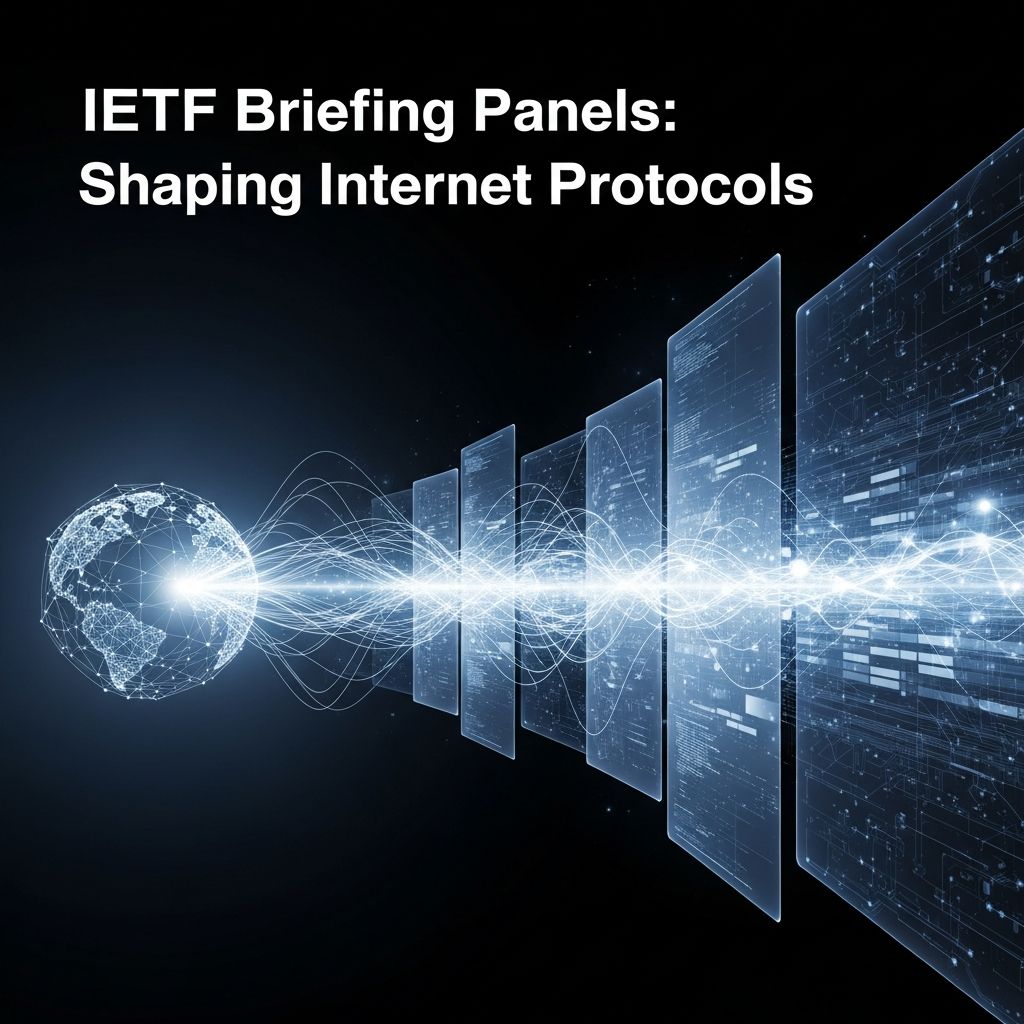
The Internet Engineering Task Force (IETF) stands as the cornerstone of Internet protocol development, fostering collaborative efforts to evolve the network that connects billions worldwide. Among its many activities, the briefing panels organized by the Internet Society (ISOC) offer a unique platform for deep dives into pressing technical challenges. These sessions bring together developers, researchers, and policymakers to dissect issues like connectivity diversity and protocol adaptations for resource-limited environments. This article delves into the significance of these panels, their structure, and their lasting influence on Internet standards.
The Essence of IETF Meetings
IETF meetings are triannual gatherings that attract hundreds of experts from around the globe. Held in various host cities, these events facilitate working group sessions, plenaries, and side events aimed at refining Requests for Comments (RFCs)—the technical documents that define Internet protocols. Unlike proprietary standards bodies, the IETF operates on a consensus-driven model, emphasizing practical implementations over theoretical ideals.
Participation requires registration, which covers access to all technical sessions. Early registration discounts encourage timely sign-ups, while remote options ensure inclusivity. For instance, the IETF’s official guide outlines fee structures for onsite and online attendees, including waivers for those in financial need. Social events and workshops, like the Hackathon or Applied Networking Research Workshop (ANRW), complement the core agenda, sparking innovation outside formal tracks.
- Onsite Access: Full-week passes grant entry to all sessions, hackathons, and optional socials.
- Remote Participation: Live streams and tools like Meetecho enable global involvement without travel.
- Special Events: HotRFC Lightning Talks showcase quick ideas from draft authors in five-minute bursts.
These elements create a vibrant ecosystem where ideas are tested rigorously, ensuring protocols like TCP/IP remain robust amid evolving demands.
Internet Society’s Role in IETF Ecosystems
The Internet Society, founded to promote Internet openness and evolution, plays a pivotal role at IETF events through its briefing panels. These sessions, held alongside main meetings, focus on strategic topics that bridge technical work with broader implications. ISOC’s involvement underscores its commitment to accessible, secure, and ubiquitous connectivity.
Briefing panels typically feature diverse panelists—application developers, network operators, and academics—who explore real-world applications of IETF outputs. Past topics have ranged from encryption standards to IPv6 deployment, reflecting ISOC’s forward-looking agenda. Unlike working group meetings, these panels emphasize high-level discussions, often webcast for wider reach.
| Aspect | ISOC Briefing Panels | IETF Working Groups |
|---|---|---|
| Focus | Strategic challenges and diversity | Protocol specification details |
| Format | Panel discussions, Q&A | Document reviews, consensus building |
| Accessibility | Pre-registration; webcast free | Registration required for all |
This table highlights how ISOC panels complement IETF’s core activities, providing context and foresight.
Navigating Connectivity Diversity in Modern Networks
One recurring theme in recent IETF discourse is connectivity diversity—the varied ways devices link to the Internet. From high-speed fiber in urban centers to low-bandwidth satellite links in remote areas, networks exhibit profound heterogeneity. Constrained radio networks, such as those in IoT deployments or disaster zones, amplify these challenges, demanding protocols that balance efficiency and reliability.
Application developers grapple with this diversity daily. Mobile apps must adapt to fluctuating signals, while edge devices in industrial settings prioritize low power over throughput. IETF working groups like 6LoWPAN and CoAP address these via lightweight protocols for low-power wide-area networks (LPWANs). Briefing panels amplify these efforts by examining cross-layer impacts, from transport to application layers.
Key challenges include:
- Intermittent connectivity in mobile or satellite scenarios.
- Resource constraints in battery-powered sensors.
- Security vulnerabilities in heterogeneous environments.
- Scalability for massive device deployments.
Panel discussions often reveal how QUIC (RFC 9000) enhances performance over diverse paths, reducing latency in constrained setups.
Protocol Innovations for Constrained Environments
Constrained devices—those with limited CPU, memory, or energy—necessitate tailored protocols. Traditional stacks like full TCP/IP prove cumbersome here, prompting innovations like the Constrained Application Protocol (CoAP). This UDP-based alternative mimics HTTP’s RESTful style but slims down for microcontrollers.
Similarly, 6LoWPAN compresses IPv6 headers to fit IEEE 802.15.4 frames, enabling IP connectivity over low-rate radios. These standards, forged in IETF, underpin smart grids, environmental monitoring, and wearables. Briefing panels dissect adoption barriers, such as fragmentation in implementations or interoperability gaps.
Emerging trends include Low-Power Wide-Area Networks (LPWAN) protocols like LoRaWAN and NB-IoT, which IETF efforts aim to integrate with core Internet architecture. Panels foster dialogue on multicast optimizations and multicast listener discovery (MLD) adaptations for these networks.
Registration and Participation Strategies
Securing a spot at high-demand events like ISOC briefing panels involves proactive registration. Slots open in batches to accommodate global time zones, often filling rapidly due to limited seating. Webcasts provide an alternative, streaming discussions live without barriers.
To prepare:
- Create an IETF Datatracker account using your primary email.
- Monitor the IETF meetings page for deadlines and fees.
- Apply for waivers if needed, supported by documentation.
- Engage remotely via chat tools during sessions.
This approach democratizes access, aligning with IETF’s “rough consensus and running code” ethos.
Impact on Global Internet Evolution
IETF and ISOC panels have profoundly shaped the Internet. Protocols born here power 5G slicing, edge computing, and satellite constellations like Starlink. By addressing diversity early, they ensure resilience against disruptions, from natural disasters to geopolitical tensions.
Looking ahead, topics like post-quantum cryptography and AI-driven networks loom large. Panels will likely pivot to these, guiding standards that sustain Internet universality.
Frequently Asked Questions (FAQs)
What is the IETF?
The IETF is an open standards organization developing and promoting Internet protocols through collaborative meetings and RFC publications.
How do ISOC briefing panels differ from IETF sessions?
They focus on high-level strategic issues with invited experts, complementing technical working groups.
Is registration mandatory for all IETF events?
Yes, for onsite and remote participation, though some public streams like webcasts are free.
What topics do panels typically cover?
Diversity in connectivity, constrained devices, security, and emerging tech integrations.
Can I participate remotely?
Absolutely—tools like audio/video streams and chat enable full engagement.
Conclusion: Fueling the Internet’s Future
IETF briefing panels, powered by ISOC, remain vital incubators for protocol evolution. By confronting connectivity diversity and constrained networks head-on, they pave the way for a more inclusive digital world. Whether attending in person or tuning in online, these events offer unparalleled insights into Internet engineering’s cutting edge. Stay informed via official channels to join the conversation shaping tomorrow’s networks.
References
- Guide to IETF Meetings — Internet Engineering Task Force (IETF). 2023-10-01. https://www.ietf.org/meeting/guide-ietf-meetings/
- ISOC Member Briefings — Internet Society (ISOC). 2022-05-15. https://www.isoc.org/briefings/
- Internet Society Briefing Panel at IETF 93 — Internet Society (ISOC). 2015-07-21. https://www.internetsociety.org/internet-society-briefing-panel-ietf-93
- RFC 9000: QUIC: A UDP-Based Multiplexed and Secure Transport — IETF Network Working Group. 2021-05-18. https://datatracker.ietf.org/doc/html/rfc9000
- CoAP Protocol Specification (RFC 7252) — IETF Constrained RESTful Environments Working Group. 2014-06-01. https://datatracker.ietf.org/doc/html/rfc7252
Similar Articles






Read full bio of medha deb