IETF 102 IoT Guide
Explore key IoT developments, working groups, and security protocols at IETF 102 for future connected devices.
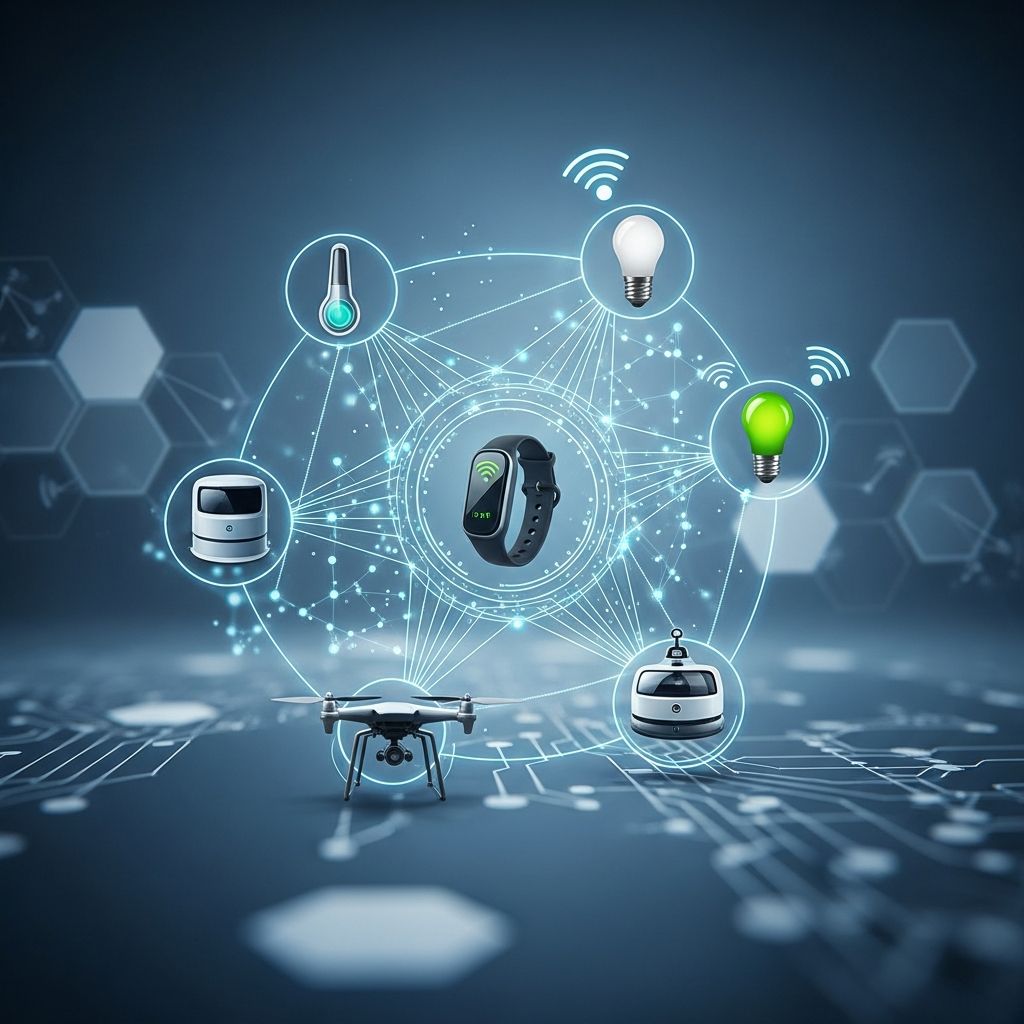
The Internet Engineering Task Force (IETF) plays a crucial role in defining standards that underpin the Internet’s evolution, particularly for the rapidly expanding Internet of Things (IoT). At IETF 102, held in Montreal, numerous sessions and working groups addressed challenges in connecting billions of devices with limited resources. This guide delves into the major IoT initiatives, from foundational networking protocols to advanced security measures, highlighting how these efforts ensure scalability, security, and interoperability in IoT ecosystems.
Pre-Meeting Innovations: The IETF Hackathon
Before the official sessions kicked off, the IETF Hackathon on July 14-15 served as a breeding ground for practical IoT experimentation. Participants tackled real-world problems, developing prototypes that align with ongoing standardization efforts. These hands-on projects not only test emerging ideas but also provide valuable feedback to working groups.
- SUIT Framework: Developers explored secure firmware update mechanisms, crucial for patching vulnerabilities in deployed devices without compromising integrity.
- ACE Protocols: Authentication solutions for resource-limited nodes were prototyped, enabling secure device-to-device and device-to-server communications.
- LPWAN IPv6 Integration: Efforts focused on enabling full IPv6 support over low-power wide-area networks, vital for massive IoT deployments in smart cities and agriculture.
- Semantic Interoperability: The WISHI project aimed at hypermedia formats to enhance discoverability and interaction between heterogeneous IoT systems.
These hackathon outcomes often influence formal working group discussions, accelerating the path from concept to RFC (Request for Comments).
New Frontiers in IoT Security
Security remains paramount as IoT devices proliferate. IETF 102 featured newly chartered groups tackling core vulnerabilities.
Secure Enclaves with TEEP
The Trusted Execution Environment Provisioning (TEEP) working group standardizes protocols for loading applications into hardware-isolated secure areas. This protects sensitive code from tampering, even on compromised hosts. By July 2018, initial drafts outlined architecture and message flows, with sessions at IETF 102 reviewing progress toward interoperability.
Firmware Resilience via SUIT
Software Updates for Internet of Things (SUIT) addresses the nightmare of unpatchable devices. Their protocols ensure updates are authenticated, integrity-checked, and rollback-capable. Discussions emphasized manifest formats and transport over CoAP, building on DTLS for encryption.
These groups’ first formal meetings underscored IETF’s commitment to proactive security, reducing risks from botnets like Mirai.
Emerging Proposals on the Horizon
Beyond established groups, IETF 102 spotlighted nascent efforts through side meetings and mailing lists.
Application-Layer TLS Innovations (ATLAS)
ATLAS proposes reusing TLS handshakes at the application level to derive keys for protecting data streams. This optimizes for IoT by minimizing round-trips in constrained scenarios. While no BoF (Birds of a Feather) was scheduled, active list discussions previewed charter refinements.
Device Provenance with EAT Tokens
Entity Attestation Token (EAT) defines lightweight tokens proving a device’s authenticity, firmware version, and hardware traits. Initial drafts used CBOR for compactness, ideal for IoT. Side events fostered community input, eyeing integration with ACE.
These initiatives signal IETF’s agility in addressing evolving threats like supply-chain attacks.
Core Networking Standards for Constrained Devices
Established working groups advanced protocols enabling IP-based IoT at scale.
| Working Group | Focus Area | Key Deliverables at IETF 102 |
|---|---|---|
| CoRE | RESTful APIs for embedded systems | CoAP extensions for resource discovery and observation |
| 6Lo | IPv6 over low-power networks | Adaptations for 6LoWPAN header compression |
| LPWAN | Wide-area low-power connectivity | IPv6 encapsulation for LoRaWAN, NB-IoT |
| ACE | AuthN/AuthZ in resource scarcity | OAuth 2.0 profiles for DTLS/CoAP |
The Constrained RESTful Environments (CoRE) group, one of IETF’s most productive, extended Web principles to tiny devices via CoAP—a UDP-based HTTP analog. IPv6 over Networks of Resource-constrained Nodes (6lo) ensured seamless IP connectivity, while LPWAN bridged long-range tech like Sigfox.
Specialized Environments
- IPWAVE: IPv6 over vehicular 802.11, supporting connected cars with low-latency multicast.
- ROLL: Routing metrics and protocols for lossy, low-power links, powering smart grids.
Manufacturer Insights: MUD Architecture
The Manufacturer Usage Description (MUD) from OPSAWG empowers devices to advertise their network needs automatically. This facilitates zero-trust access control, limiting exposure. At IETF 102, the component-based architecture was refined, with drafts specifying MUD file formats and network enforcement.
By embedding MUD URLs in devices, networks can dynamically apply policies, curbing lateral movement in breaches.
Signature Schemes for IoT Integrity
Hash-based signatures like Leighton-Micali (LMS) gained traction via HASHSIG and HASHSIG-COSE drafts. These post-quantum resistant schemes integrate with COSE for compact signing, nearing IRTF approval. Sessions debated deployment trade-offs in battery-constrained scenarios.
Why IETF Matters for IoT’s Future
IETF’s open, consensus-driven process ensures IoT standards are vendor-neutral and globally adopted. From IPv6 mandates to security bootstraps, these efforts form the ‘hourglass’ model—narrow waist at IP, diverse tops and bottoms. Participation via mailing lists or attendance amplifies impact.
FAQs
What is the IETF’s role in IoT?
IETF develops open standards for protocols enabling secure, scalable IoT connectivity over IP networks.
Why focus on constrained environments?
Most IoT devices have limited CPU, memory, and power; specialized protocols like CoAP and 6LoWPAN optimize for these.
How does SUIT improve IoT security?
SUIT provides standardized, secure firmware updates, preventing exploitation of known vulnerabilities.
What are LPWAN networks?
Low-Power Wide-Area Networks like LoRa enable long-range, low-data-rate comms for sensors over miles.
Can anyone contribute to IETF IoT work?
Yes, subscribe to WG mailing lists, attend meetings, or join hackathons—no membership required.
Conclusion
IETF 102 marked significant strides in IoT standardization, blending security innovations with robust networking. As devices permeate industries, these protocols will underpin trustworthy ecosystems. Stay engaged to shape the connected world ahead.
References
- IPv6 over Low-Power Wide-Area Networks (lpwan) WG Charter — IETF. 2024-05-15. https://datatracker.ietf.org/wg/lpwan/about/
- Constrained RESTful Environments (core) WG Documents — IETF. 2025-03-10. https://datatracker.ietf.org/wg/core/documents/
- RFC 9175: A MUD-based Publisher/Subscriber Profile for the Constrained Application Protocol — IETF. 2022-01-20. https://www.rfc-editor.org/rfc/rfc9175.html
- Software Updates for IoT Devices (SUIT) WG — IETF. 2025-11-01. https://datatracker.ietf.org/wg/suit/about/
- RFC 9592: Retiring the Tao of the IETF — IETF. 2024-07-22. https://www.rfc-editor.org/rfc/rfc9592.html
Similar Articles






Read full bio of Sneha Tete