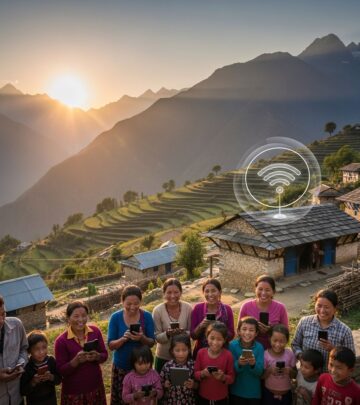
Global Pledges Against Internet Fragmentation
How US, EU, and G7 initiatives are countering the splinternet threat amid geopolitical tensions, yet face ongoing hurdles.

In an era where digital networks underpin global economies, communication, and innovation, the prospect of a fragmented Internet—often termed the ‘splinternet’—poses profound risks. Recent coordinated efforts by major powers like the United States, the European Union, and the G7 group represent a vital pushback against this trend. These initiatives, particularly in response to geopolitical conflicts, prioritize maintaining open access and information flows. However, while promising, they underscore the need for broader, sustained action to ensure the Internet remains a singular, interoperable global resource.
The Emerging Threat of Digital Division
The Internet’s strength has always lain in its universality: a single protocol stack enabling seamless connections worldwide. Yet, rising nationalism, data localization mandates, and sanctions are eroding this foundation. The splinternet envisions a world of siloed networks, where regional firewalls, proprietary standards, and restricted data flows hinder cross-border collaboration.
Geopolitical tensions, such as those involving Russia following its 2022 invasion of Ukraine, have accelerated these risks. Governments imposing sanctions risk inadvertently blocking essential telecom services, which could disconnect millions from vital information sources. This not only stifles free expression but also hampers economic activities reliant on global digital infrastructure.
Statistics highlight the stakes. According to the International Telecommunication Union (ITU), over 2.6 billion people remain offline, and fragmentation could exacerbate this divide. In sanctioned regions, abrupt service cutoffs have already led to blackouts in connectivity, affecting businesses, education, and emergency services.
Key International Commitments Taking Shape
A turning point came in early 2022 when the US, EU, and G7 nations articulated a unified stance. On April 6, they pledged to exempt telecommunications services underpinning Internet access and information flows from sanctions targeting Russia. This decision acknowledged that while economic pressures are necessary, they must not dismantle the Internet’s core architecture.
These commitments extend beyond immediate crises. The G7 Digital Ministers’ Declaration emphasizes an ‘open, free, global, interoperable, reliable, and secure Internet.’ Similarly, the EU’s Declaration for the Future of the Internet, endorsed by multiple partners, reinforces human rights, privacy, and multistakeholder governance.
- US Leadership: The Biden administration has advocated for targeted sanctions that spare connectivity providers, ensuring platforms like social media and news aggregators remain accessible.
- EU Strategy: Brussels has pushed for harmonized rules that protect data flows while upholding GDPR standards.
- G7 Coordination: Collective declarations focus on cyber resilience, digital standards, and trustworthy AI to prevent balkanization.
These steps have tangible impacts. Telecom operators report continued service in affected areas, preserving access for civilians amid conflict.
Why Exemptions Matter for Global Stability
Exempting telecom and Internet services from sanctions is not merely technical—it’s a safeguard for democratic values. During crises, unrestricted access enables independent journalism, human rights monitoring, and citizen coordination. Blocking these flows could empower authoritarian controls, fragmenting the digital public square.
Economically, the Internet drives $11 trillion in global GDP annually, per the World Economic Forum. Disruptions ripple through supply chains, e-commerce, and remote work. For developing nations, reliance on international backbones means fragmentation hits hardest where infrastructure is weakest.
Moreover, technical standards like BGP routing and DNS rely on global trust. Sanctions-induced withdrawals threaten this, potentially leading to a multipolar Internet with incompatible ecosystems—think China’s Great Firewall scaled globally.
Persistent Challenges in the Fight
Despite progress, gaps remain. Commitments are often declarative, lacking binding enforcement. Private companies face compliance dilemmas: adhere to sanctions or risk penalties, even if it fragments networks.
| Challenge | Impact | Potential Solution |
|---|---|---|
| Enforcement Gaps | Inconsistent application across jurisdictions | Multilateral treaties with compliance mechanisms |
| Private Sector Pressure | Companies self-censor to avoid fines | Clear regulatory safe harbors |
| Rising Data Localization | Forced onshoring erodes interoperability | Harmonized global standards |
| Cyber Threats | Exploits fragmentation for attacks | Enhanced international cooperation |
Other hurdles include emerging tech like satellite constellations (e.g., Starlink), which bypass traditional sanctions but introduce new governance questions.
Pathways to a Resilient, Unified Internet
To build on these pledges, stakeholders must act decisively. First, formalize exemptions in international law, perhaps via WTO updates or new UN frameworks. Second, invest in redundant infrastructure, like undersea cables and edge computing, to withstand disruptions.
Multistakeholder forums—ICANN, IETF, IGF—should lead standard-setting, ensuring no nation dominates protocols. Capacity-building in the Global South is crucial, providing tools to resist fragmentation.
Governments can incentivize compliance through subsidies for ‘Internet-essential’ services. Tech firms should adopt ‘connectivity-first’ policies, prioritizing uptime in sanction zones.
Broadening the Coalition for Connectivity
The US-EU-G7 axis is strong, but inclusivity matters. Inviting partners like India, Brazil, and African Union members counters perceptions of Western dominance. Initiatives like the Global Digital Compact, slated for UN discussions, offer platforms for consensus.
Civil society and industry must amplify voices. The Internet Society’s advocacy exemplifies how NGOs can bridge policy and practice.
Future Scenarios: Unity or Division?
Optimistically, sustained commitments could usher a ‘Declaration Era,’ with binding pacts preserving unity. Pessimistically, escalating conflicts might spawn parallel Internets, stifling innovation.
Realistically, hybrid vigilance is needed: monitor compliance, adapt to tech shifts, and educate policymakers on digital interdependence.
Frequently Asked Questions
What is the splinternet?
The splinternet refers to the potential fragmentation of the global Internet into isolated regional networks due to politics, regulations, or tech divergences.
Why exempt telecom from sanctions?
To protect free information flows, human rights, and economic stability, preventing unintended blackouts during geopolitical strife.
Are these commitments legally binding?
Mostly declarative; stronger enforcement via treaties is needed for durability.
How does this affect everyday users?
It ensures continued access to global services like email, social media, and cloud tools, even in tense regions.
What role for non-G7 nations?
Essential for true globality—broader coalitions prevent exclusionary digital blocs.
In conclusion, the US, EU, and G7’s forward strides against fragmentation are commendable but preliminary. A unified Internet demands relentless, collaborative effort to navigate an increasingly divided world.
References
- G7 Digital and Technology Ministerial Declaration — UK Government. 2022-05-11. https://www.gov.uk/government/publications/g7-digital-and-technology-ministerial-declaration
- Declaration for a Future of the Internet — European Commission. 2022-04-28. https://ec.europa.eu/commission/presscorner/detail/en/ip_22_2695
- Joint Statement of G7 and Partner Countries: Resilient Democracies — Ministry of External Affairs, India. 2022-06-28. https://mea.gov.in/bilateral-documents.htm?dtl/35462/Joint+Statement+of+G7+and+Partner+Countries+2022+Resilient+Democracies+Statement
- Ministerial Declaration: G7 Digital Ministers’ Meeting — G7 Information Centre, University of Toronto. 2022-04-08. https://g7.utoronto.ca/ict/2022-declaration.html
- G7 Media Ministers Meeting Communiqué — U.S. Department of State. 2021-09-22. https://2021-2025.state.gov/g7-media-ministers-meeting-communique/
Similar Articles







Read full bio of Sneha Tete