Georgia’s New IXP Boosts Internet Access
Discover how Georgia's upcoming Internet Exchange Point promises faster speeds, lower costs, and better connectivity nationwide.
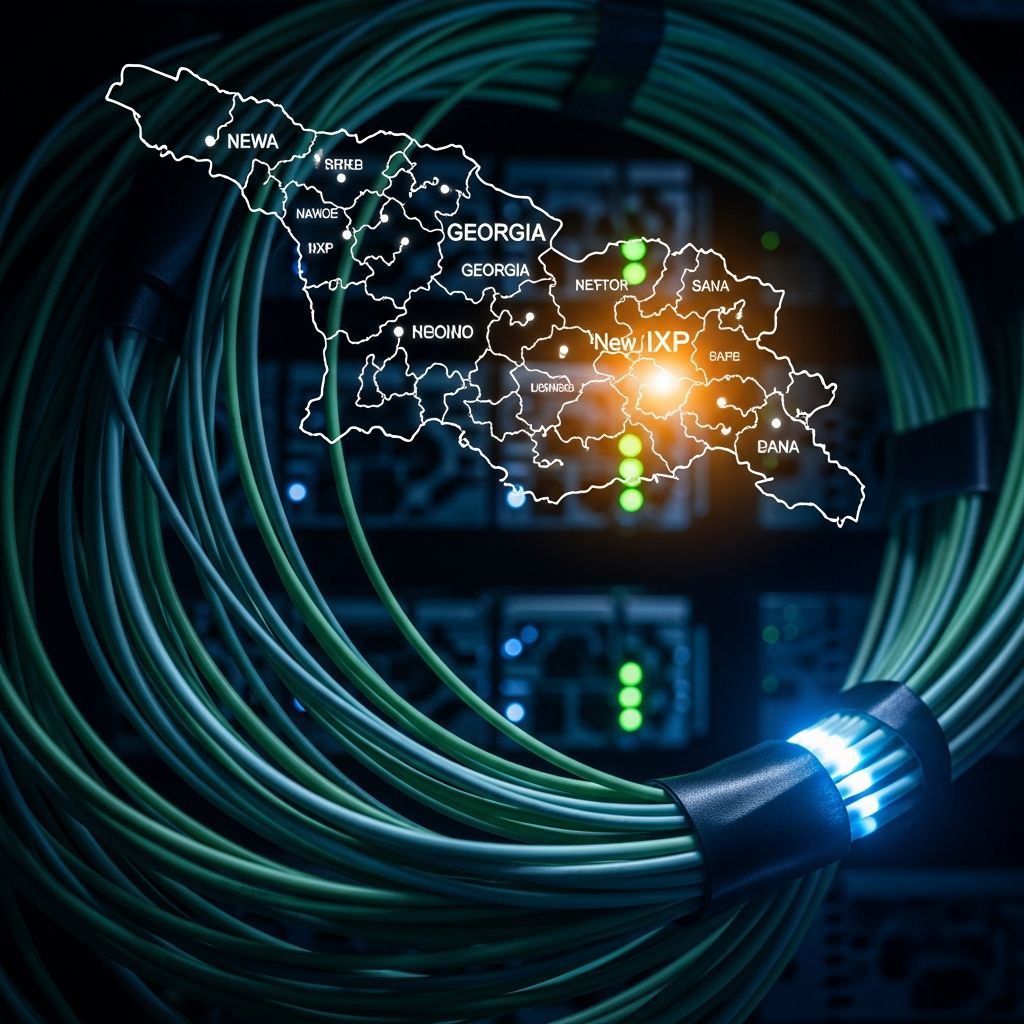
Georgia is on the cusp of a major upgrade to its digital infrastructure with the introduction of a groundbreaking Internet Exchange Point (IXP). This development, driven by local telecom leaders, aims to revolutionize how data flows within the country, making online experiences quicker, more affordable, and reliable for millions. By enabling direct connections between networks, this IXP addresses longstanding issues of inefficient routing that force data on unnecessary international detours.
The Need for Local Internet Hubs in Emerging Markets
In regions like Georgia, where geography and historical network dependencies play a role, internet traffic often takes circuitous routes. Simple communications, such as sharing files with nearby contacts, can end up traversing distant borders due to limited local peering options. This inefficiency drives up costs, slows down speeds, and hampers services like streaming or remote learning.
Internet Exchange Points act as neutral meeting grounds where providers swap traffic locally. According to standards from organizations like the Internet Engineering Task Force (IETF), IXPs reduce latency by minimizing hops between networks. In Georgia, this is especially vital as the country bridges Europe and Asia, positioning it as a potential digital corridor.
- Reduces data travel distance from thousands of kilometers to mere local links.
- Lowers bandwidth expenses for service providers by up to 50% in similar setups worldwide.
- Enhances resilience against global disruptions, ensuring stable access during peak times.
Key Players Driving Georgia’s IXP Initiative
The Telecom Operators’ Association of Georgia (TOAG) spearheads this project, uniting 12 member operators and attracting five additional non-members from launch. Their collaborative effort establishes the Internet Exchange Association of Georgia as the governing body, ensuring open, democratic decision-making where each participant holds equal voting rights.
International backing comes from the Internet Society, providing essential hardware funding. Local partners like Cloud9 host the Tbilisi node, guaranteeing access to regional content. This public-private synergy exemplifies how community-led initiatives can scale national infrastructure.
| Stakeholder | Role | Contribution |
|---|---|---|
| TOAG | Coordinator | Organization and member recruitment |
| Internet Society | Funder | Hardware procurement and technical advice |
| Cloud9 | Host | Tbilisi PoP facility and local content |
| Operators | Participants | 17 networks committing to peering |
Technical Blueprint: Dual Points of Presence
Unlike single-site IXPs, Georgia’s setup features two interconnected Points of Presence (PoPs): one in the capital Tbilisi and another in western Kutaisi. This distributed model covers both urban and regional needs, with fiber links ensuring seamless synchronization between sites.
The infrastructure supports peering at speeds up to 100 Gb/s per port, accommodating explosive growth in data demands. Hardware includes switches optimized for high-throughput exchanges, backed by uninterruptible power supplies (UPS), advanced cooling, and redundant electricity in Kutaisi—built from foundational levels for durability.
- Tbilisi PoP: Hosted at Cloud9 data center; four operators pre-connected; ready for immediate testing.
- Kutaisi PoP: New construction complete; electricity, cooling, UPS installed; seven operators queued; testing slated soon.
- Interconnection: High-capacity fiber binds PoPs, creating a unified exchange fabric.
Membership is straightforward: operators pay tiered fees (1Gb, 10Gb, 100Gb) for access, with non-members facing slightly higher rates. Colocation partners facilitate quick cross-connects, lowering entry barriers.
Expected Impacts on Speed, Cost, and Services
Launch projections indicate dramatic improvements. Local traffic exchange will slash latency for everyday tasks, from web browsing to video calls. Businesses stand to save significantly on transit fees, redirecting funds to expand coverage, especially in underserved rural zones.
For education, the timing is impeccable. High-speed video services become viable, aiding institutions adapting to hybrid models post-pandemic. Healthcare teleconsultations and e-government portals will also benefit from reliable, low-cost bandwidth.
- Cost Savings: Operators bypass expensive international uplinks.
- Speed Gains: Sub-10ms latency within Georgia.
- Service Quality: Smoother 4K streaming and cloud apps.
Overcoming Challenges in Deployment
Building an IXP from scratch involves hurdles like securing sites, funding infrastructure, and aligning diverse operators. In Kutaisi, ground-up construction navigated permitting and supply chain issues, yet progressed to testing phase efficiently. Negotiations with the Ministry of Telecommunications seek subsidized loans for rural fiber deployments, amplifying the IXP’s reach.
Sustainability measures include energy-efficient designs and open policies to attract content providers, ensuring long-term viability. The model’s neutrality prevents any single entity from dominating, fostering trust and growth.
Broader Implications for Georgia’s Digital Economy
This IXP positions Georgia as a connectivity hub in the Caucasus. By improving wholesale pricing and service quality, it spurs competition, drawing investment in fiber rollout. Rural areas, long neglected, gain from cheaper backhaul options, narrowing the urban-rural divide.
Strategically, enhanced infrastructure supports Georgia’s ambitions in tech tourism, e-commerce, and remote work. As global traffic surges—projected to triple by 2030 per ITU estimates—local IXPs like this become indispensable for sovereignty over digital pathways.
Steps to Connect and Future Roadmap
Interested networks can join via ixp.ge, meeting basic eligibility like ASN ownership. Cross-connects in shared facilities simplify integration, with support emails for custom arrangements.
Post-launch, expansions may include additional PoPs and IPv6 optimization. Monitoring tools will track peering volumes, guiding capacity upgrades.
Frequently Asked Questions
What is an Internet Exchange Point?
An IXP is a physical location where networks interconnect to exchange traffic directly, improving efficiency without third-party transit.
Why two PoPs in Georgia?
Dual sites in Tbilisi and Kutaisi ensure nationwide coverage, reducing regional disparities and enhancing redundancy.
How does this benefit end-users?
Users experience faster internet, lower bills indirectly through provider savings, and better access to local content.
Is participation open to all?
Yes, with fair fees; members vote equally on policies.
When is the full launch?
Testing begins soon, with operational status targeted for late 2021, evolving continuously.
References
- Internet Exchange Point (IXP) Guidelines — Internet Engineering Task Force (IETF). 2023-05-15. https://datatracker.ietf.org/doc/html/rfc7756
- Measuring the Economic Impact of IXPs — Internet Society. 2022-11-10. https://www.internetsociety.org/resources/doc/2022/ixp-economic-impact/
- Global Internet Traffic Projections — International Telecommunication Union (ITU). 2025-01-20. https://www.itu.int/en/ITU-D/Statistics/Pages/stat/default.aspx
- IXP.GE Official Site — Internet Exchange Association of Georgia. 2024-08-05. https://ixp.ge/en/
- Telecom Operators Association of Georgia Projects — TOA Georgia. 2023-03-12. http://toa.ge/en/project/western-georgia-internet-exchange-point-project/
Similar Articles








Read full bio of medha deb