The Future of Pervasive Computing: Seamless Digital Integration
Exploring how embedded intelligence transforms everyday spaces into responsive environments
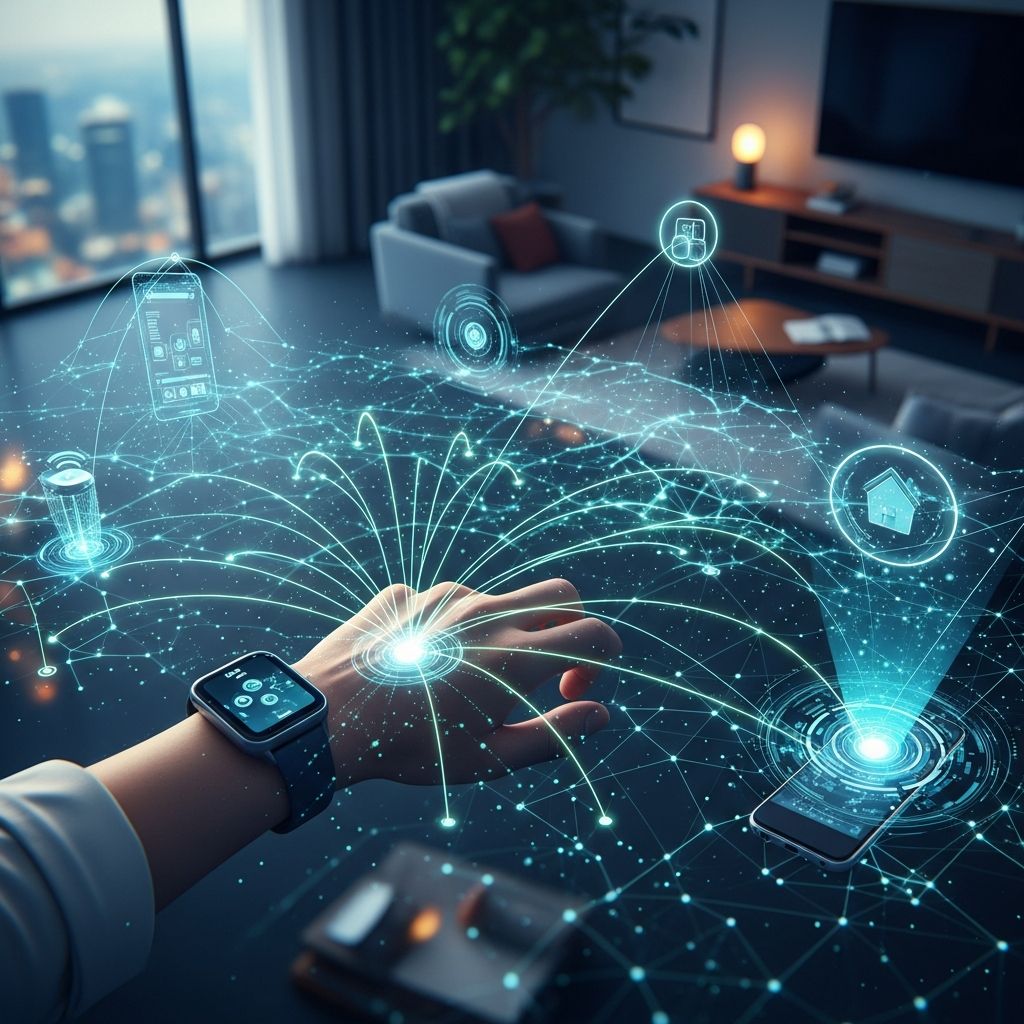
For decades, visionaries have imagined a world where technology becomes so deeply woven into the fabric of our daily lives that we no longer think about it consciously. Instead of fumbling with keyboards and staring at screens, we would interact with our environment naturally, and it would respond intelligently to our needs. This concept represents a fundamental shift in how we think about computing and human-computer interaction. Rather than technology demanding our attention, it would work silently in the background, much like electricity flowing through the walls of our homes.
Understanding the Vision of Ambient Technology
The concept of seamlessly integrated technology stretches back to the earliest days of computing research. When the first networked communications occurred in 1969, connecting Stanford Research Institute with UCLA’s laboratory, few could have imagined how this simple exchange would evolve. What began as a breakthrough in data transmission has gradually expanded into something far more transformative. Today, we stand at a pivotal moment where this vision is beginning to materialize, though we are still in the early stages of realizing its full potential.
The fundamental principle behind this vision is elegance through invisibility. Just as we rarely think about the electricity powering our devices—we simply plug something in and expect it to work—future computing should operate with similar transparency. We should not need to consciously navigate complex interfaces or remember complicated procedures. Instead, technology should anticipate our needs and present appropriate experiences automatically, tailored to who we are and what we want to accomplish.
The Disconnect Between Vision and Reality
Despite decades of progress in computing and networking, a significant gap remains between this theoretical ideal and current reality. Contemporary interfaces often frustrate users with their complexity and inconsistency. From tiny screens that strain our eyes to keyboards designed for hands but not for natural human interaction, our devices frequently complicate rather than simplify our lives. Navigation systems vary wildly between applications, forcing users to constantly relearn how to accomplish similar tasks. This fragmentation and complexity stands in sharp contrast to the envisioned seamless experience.
The current state of technology represents what might be called a transitional phase. We have made tremendous progress in processing power, connectivity, and data storage, yet we remain tethered to input methods and interfaces that feel surprisingly primitive compared to our imagination. This gap persists not because of technological impossibility, but rather because we have not yet fully committed to reimagining how humans and machines interact at a fundamental level.
Creating Responsive and Contextual Spaces
The vision of ubiquitous computing suggests a future where physical spaces become inherently intelligent and responsive. When you enter a room, office, vehicle, or any environment, the infrastructure should immediately recognize your presence and adjust accordingly. This goes far beyond simply turning on lights or adjusting temperature. A truly intelligent space would understand your profile—your preferences, your access privileges, your typical patterns—and present you with an experience customized to your unique circumstances.
Consider the implications of such environments:
- Personalization at scale: Different users experiencing fundamentally different interactions within the same physical space, each optimized for their individual needs
- Contextual awareness: Spaces that understand not just who you are, but what you are trying to accomplish and what information or tools you need
- Proactive assistance: Environments that anticipate problems before they occur and offer solutions without requiring explicit requests
- Seamless transitions: Moving between different locations while maintaining continuity of experience and access to relevant services
These responsive spaces could exist anywhere on Earth—in your personal bedroom, at your desk, inside your vehicle, throughout shopping districts, in transportation hubs, or in any physical location where technology might enhance human activity. The architecture would be consistent and predictable, yet infinitely adaptable to local circumstances and individual requirements.
The Role of Physical Intelligence Infrastructure
Realizing this vision requires deploying an extensive network of intelligent physical infrastructure. This takes the form of embedded devices distributed throughout our environment, each equipped with specialized capabilities. These devices would include sensors to perceive their surroundings, actuators to manipulate physical systems, computing logic to process information, memory to store data, communication equipment to connect with other systems, microphones and speakers for audio interaction, cameras for visual perception, and displays for presenting information.
What makes this infrastructure revolutionary is how it fundamentally changes the nature of computing. Rather than computers being distinct objects we interact with—laptops, tablets, phones—computing becomes dissolved into the environment itself. Devices disappear into walls, furniture, clothing, and infrastructure. This approach transforms the entire planet into a computational substrate, creating what some researchers describe as a distributed global nervous system for human civilization.
The implications of such distributed infrastructure are profound:
- Ubiquity: Computing becomes available everywhere, not just where we place dedicated devices
- Accessibility: Technology serves people with varying abilities by offering multiple interaction modalities simultaneously
- Efficiency: Distributed processing reduces latency and dependence on centralized systems
- Resilience: Decentralized architecture makes systems more robust against failures or attacks
Intelligent Software Agents and Autonomous Assistance
Beyond physical infrastructure, this vision includes the deployment of sophisticated software agents that operate on users’ behalf. These intelligent programs would be customized to align with individual desires, preferences, and goals. Unlike traditional software that requires explicit instructions, these agents would actively monitor, analyze, and respond to situations in the background, providing alerts when important events occur, offering relevant information proactively, making suggestions based on user patterns, and even executing transactions or actions within defined parameters.
Imagine having a digital assistant that genuinely understands your needs, habits, and preferences so thoroughly that it can make decisions and take actions you would have wanted to take if you had the time or information. Such agents could filter the overwhelming flood of information available today, highlighting what matters most to you while suppressing irrelevant noise. They could also serve as custodians of your privacy, actively enforcing the privacy policies and preferences you have established, negotiating with web services and platforms to ensure your data receives appropriate protection.
These intelligent agents represent a departure from the command-and-control paradigm that has dominated computing since its inception. Rather than users issuing explicit commands that software then executes mechanically, intelligent agents would engage in a more sophisticated relationship with their users, anticipating needs, learning from interactions, and making autonomous decisions within established guidelines.
Natural and Intuitive Interaction Methods
A cornerstone of truly pervasive computing is the ability to interact with systems using natural human communication methods rather than technical interfaces. Rather than typing on keyboards or navigating through menus, users would communicate with their environment through speech, expressing desires and questions in natural language. Gestural interfaces would allow people to manipulate digital information through hand movements and body positioning, translating physical intuition into digital action.
Beyond speech and gesture, haptic feedback could provide tactile information, allowing users to “feel” digital interactions through vibrations, pressure, and texture. This multisensory approach would make technology genuinely accessible to people with different abilities and preferences. Someone who cannot see a traditional screen might receive information through audio descriptions or tactile patterns. Someone with limited mobility might control systems through voice commands or eye tracking. The interface would adapt to the user rather than requiring users to adapt to rigid technical constraints.
The ultimate evolution of this trajectory might lead to direct neural interfaces, allowing information to flow between human brains and digital systems without requiring intermediate devices or sensory transduction. While such technology remains largely speculative today, the trajectory of innovation suggests that such capabilities might eventually become practical and commonplace.
Current Progress Toward Ambient Computing
Technology is advancing rapidly in the direction of this vision. The Internet of Things represents the most visible manifestation of this trend. Billions of connected devices now exist throughout the world, embedding computation and communication capabilities into devices that previously operated mechanically or in isolation. Smartphones, smart home devices, wearable sensors, connected vehicles, and industrial equipment all contribute to a growing infrastructure of networked intelligence.
Beyond hardware, software is evolving in parallel. Machine learning systems are becoming increasingly sophisticated, capable of learning patterns from data and making predictions or decisions without explicit programming for every scenario. Cloud computing platforms provide the processing and storage capacity needed to support pervasive systems at a global scale. Wireless networking technologies continue to improve, offering faster speeds, lower latency, and broader coverage than ever before.
The convergence of these technological trends creates momentum toward realizing the vision of invisible, ambient computing. Each advance in sensor technology, processing power, communication protocols, and artificial intelligence brings us closer to systems that can genuinely disappear into the background while providing increasingly sophisticated and personalized experiences.
Challenges and Considerations
Realizing this vision requires overcoming substantial technical, organizational, and social challenges. Privacy and security become increasingly critical as computing penetrates every aspect of physical space. Standards and interoperability must be established to prevent fragmentation and ensure that devices from different manufacturers and time periods can coexist and communicate effectively. Power consumption must be addressed, as distributed computing infrastructure requires energy to operate continuously. Human factors like trust, transparency, and user control must be carefully considered to ensure that pervasive systems enhance rather than diminish human autonomy.
Additionally, ensuring equitable access to these technologies presents a significant challenge. Pervasive computing should not become a privilege available only to wealthy individuals or organizations in wealthy nations. Designing systems that serve diverse populations with varying abilities, cultural backgrounds, and economic circumstances requires deliberate effort and inclusive design practices.
Conclusion
The vision of invisible, ambient computing represents a fundamental reimagining of the relationship between humans and technology. Rather than technology remaining a distinct domain requiring conscious attention and effort, it would become seamlessly woven into the fabric of our physical and social environments. Responsive spaces would adapt to our needs, intelligent agents would assist us proactively, and natural interfaces would make technology genuinely accessible to everyone.
While we are still in the early stages of realizing this vision, current technological progress suggests that such capabilities are increasingly achievable. The convergence of IoT devices, artificial intelligence, distributed computing, and advancing communication technologies creates the technical foundation upon which truly pervasive systems can be built. The challenge now lies in thoughtfully designing and deploying these technologies in ways that respect human values, protect individual privacy, ensure broad accessibility, and ultimately enhance rather than undermine human flourishing.
References
- The Invisible Internet Project (I2P): Design Philosophy and Technical Architecture — Invisible Internet Project Documentation. 2024. https://geti2p.net/en/
- Internet of Things: A Survey on Enabling Technologies, Protocols, and Applications — IEEE Communications Surveys & Tutorials, 2023. https://doi.org/10.1109/COMST.2015.2444095
- Ubiquitous Computing: The Most Powerful Idea in Computing — Association for Computing Machinery (ACM). 2023. https://www.acm.org/
- Ambient Intelligence: Technologies and Applications — Springer International Publishing, 2024. https://doi.org/10.1007/978-3-030-00437-7
- The History and Future of the Internet — Internet Society Official Documentation. 2024. https://www.internetsociety.org/
- Machine Learning and Intelligent Agents: Autonomous Decision Making — MIT Press, 2023. https://mitpress.mit.edu/
- Privacy and Security in Pervasive Computing Environments — ACM Transactions on Sensor Networks, 2024. https://doi.org/10.1145/3159168
Similar Articles





Read full bio of medha deb