Facebook’s IPv6 Rollout Ahead of Schedule
Facebook beats World IPv6 Launch expectations by enabling IPv6 access two weeks early, paving the way for broader internet evolution.
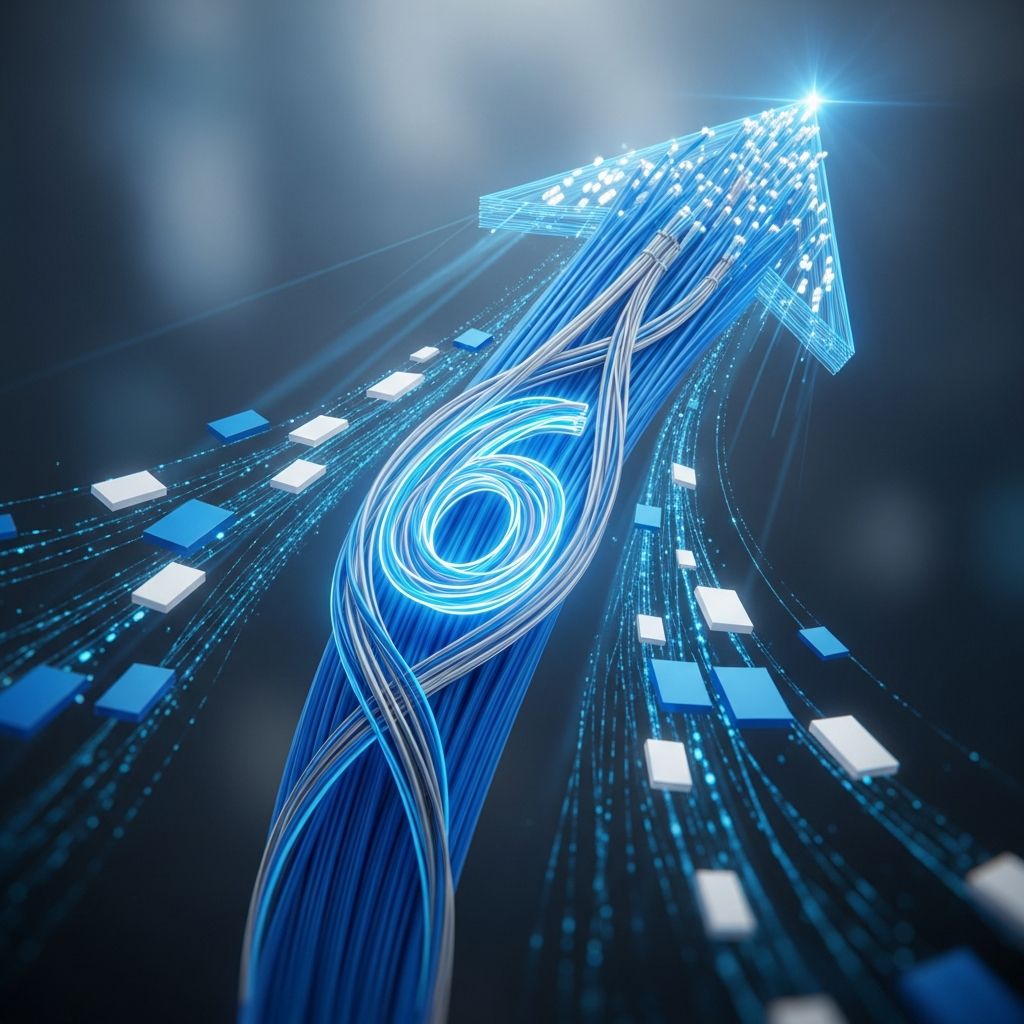
The internet’s foundational protocols are evolving, and few moments capture this shift as vividly as Facebook’s decision to activate IPv6 support well before the anticipated timeline. In the lead-up to the World IPv6 Launch on June 6, 2012, organized by the Internet Society, Facebook surprised the tech community by making its platform fully accessible over IPv6 starting May 23, 2012—two weeks early. This proactive step not only demonstrated the platform’s commitment to next-generation networking but also highlighted the growing momentum behind IPv6 adoption worldwide.
The Imperative for IPv6 Adoption
IPv4, the fourth version of the Internet Protocol, has powered the web since the 1980s. With its 32-bit address space, it supports roughly 4.3 billion unique addresses—a number that seemed ample decades ago but proved woefully insufficient as global internet usage exploded. By 2012, the exhaustion of IPv4 addresses was imminent, prompting organizations like the Internet Society to champion IPv6, which offers a staggering 128-bit address space capable of supporting 340 undecillion addresses.
This transition wasn’t merely technical; it was essential for sustaining internet growth. Devices from smartphones to smart home gadgets were proliferating, and without IPv6, network operators faced address shortages that could stifle innovation. Facebook, serving billions of daily users by then, recognized that early adoption would position it as a leader in this shift, ensuring seamless connectivity for its audience regardless of their network capabilities.
- IPv4 limitations: Finite address pool nearing depletion.
- IPv6 advantages: Virtually unlimited addresses, improved security via IPsec, and enhanced efficiency for mobile networks.
- Global stakes: Coordinated efforts needed to avoid internet fragmentation.
World IPv6 Launch: Setting the Global Stage
The World IPv6 Launch was the culmination of prior initiatives like World IPv6 Day in 2011, a 24-hour global test that proved the protocol’s readiness. Unlike the trial, the 2012 event committed participants—major players including Google, Yahoo, and Akamai—to permanent IPv6 enablement. The Internet Society’s orchestration aimed to create critical mass, encouraging ISPs and content providers to follow suit.
Facebook’s early rollout amplified this event’s impact. By going live ahead of schedule, it provided real-world data on IPv6 performance, helping others mitigate potential issues. This move aligned with broader industry trends, where content delivery networks and mobile carriers were racing to dual-stack their infrastructures—supporting both IPv4 and IPv6 simultaneously.
Technical Foundations of Facebook’s IPv6 Implementation
Deploying IPv6 at scale required rethinking network architecture. Facebook’s engineers tackled challenges like load balancing, backend compatibility, and traffic encapsulation. Their approach involved patching frontend systems to handle IPv6 packets natively while tunneling them over IPv4 to legacy backends, ensuring uninterrupted service.
Key innovations included:
- Frontend Load Balancers: Modified to encapsulate IPv6 traffic, preserving end-to-end connectivity.
- Backend Integration: Gradual migration, with new services launched IPv6-first.
- Testing Rigor: Extensive simulations to avoid disruptions for billions of users.
This infrastructure made Facebook a ‘first-class citizen’ for IPv6, influencing data center designs toward IPv6-only cores by 2014, as internal traffic shifted heavily to the new protocol.
Milestones in IPv6 Traffic Growth
Facebook’s early activation contributed to explosive IPv6 traffic surges. Data from Akamai and Facebook engineering reports show rapid adoption, especially on US mobile networks. By August 2016, over 50% of traffic from Verizon Wireless, T-Mobile, Sprint, and AT&T to dual-stack sites was IPv6—a testament to four years of progress since the 2012 launch.
| Milestone | Date | Key Achievement |
|---|---|---|
| World IPv6 Day | June 8, 2011 | 24-hour global test with major sites. |
| Facebook IPv6 Live | May 23, 2012 | Two weeks early, full platform support. |
| World IPv6 Launch | June 6, 2012 | Permanent commitments from industry leaders. |
| US Mobile Milestone | August 2016 | Over 50% IPv6 traffic from top 4 carriers. |
Services like YouTube, Netflix, and Facebook drove this, with IPv6 comprising significant portions of US broadband traffic shortly after launch.
Challenges Overcome in the Transition
No large-scale deployment is without hurdles. Facebook encountered switch limitations, software bugs in glibc and curl, BGP session issues over IPv4 tunnels, and kernel inefficiencies. Aggregation switches struggled with IPv6, falling back to slower processing modes, while TCAM limits constrained forwarding tables.
Yet, these were surmounted through iterative engineering. By 2011, Facebook had IPv6 permeating its data centers, with 75% internal traffic IPv6 by 2014—including 100% for memcached. Plans to sunset IPv4 in select clusters underscored confidence in the protocol.
Impact on Mobile Networks and Beyond
Mobile networks, hungry for addresses due to smartphone proliferation, benefited immensely. The 2016 milestone of majority IPv6 traffic from US carriers validated years of investment. T-Mobile led with aggressive deployments, but collective efforts from content providers like Facebook accelerated the shift.
Globally, this fostered IPv6-only environments in data centers, reducing complexity and costs. Developers, forced to write protocol-agnostic code, advanced application resilience.
Long-Term Legacy of Early Adoption
Facebook’s foresight rippled through the ecosystem. By prioritizing IPv6, it not only future-proofed its operations but inspired ISPs and enterprises. Today, IPv6 penetration exceeds 40% worldwide, with mobile leading at over 50% in many regions. This early win mitigated IPv4 exhaustion’s worst effects, enabling IoT expansion and 5G readiness.
Looking ahead, full IPv6 dominance awaits broader ISP upgrades, but milestones like Facebook’s set the benchmark.
Frequently Asked Questions
What is IPv6 and why does it matter?
IPv6 is the successor to IPv4, offering vastly more addresses to accommodate internet growth, built-in security, and better mobile support.
Why did Facebook enable IPv6 early?
To lead the industry transition, test real-world performance, and ensure scalability ahead of the World IPv6 Launch.
How did IPv6 adoption progress post-2012?
Rapidly on mobile networks, hitting 50%+ in the US by 2016, driven by carriers and content giants.
Are there still IPv4 addresses available?
Limited pools remain via markets, but new allocations ceased; IPv6 is the sustainable path.
Will all websites support IPv6 soon?
Adoption continues, with major sites dual-stacked; full transition depends on ISP infrastructure.
References
- Facebook, Akamai Pass Major Milestone: Over 50% IPv6 from US Mobile Networks — Internet Society. 2016-08-11. https://www.internetsociety.org/blog/2016/08/facebook-akamai-pass-major-milestone-over-50-ipv6-from-us-mobile-networks/
- Under the Hood: Network implementation for World IPv6 Launch — Facebook Engineering Blog. 2012-06-06. https://engineering.fb.com/2012/06/06/networking-traffic/under-the-hood-network-implementation-for-world-ipv6-launch/
- Facebook Is Close to Having an IPv6-only Data Center — ipSpace.net blog by Ivan Pepelnjak. 2014-03-XX. https://blog.ipspace.net/2014/03/facebook-is-close-to-having-ipv6-only/
- World IPv6 Day and World IPv6 Launch Day — Wikipedia (informed by primary sources). N/A. https://en.wikipedia.org/wiki/World_IPv6_Day_and_World_IPv6_Launch_Day
Similar Articles





Read full bio of Sneha Tete