Facebook’s IPv6-Only Network Revolution
Discover how Facebook pioneered IPv6-only internal networks, overcoming challenges and achieving massive traffic shifts for future-proof scalability.
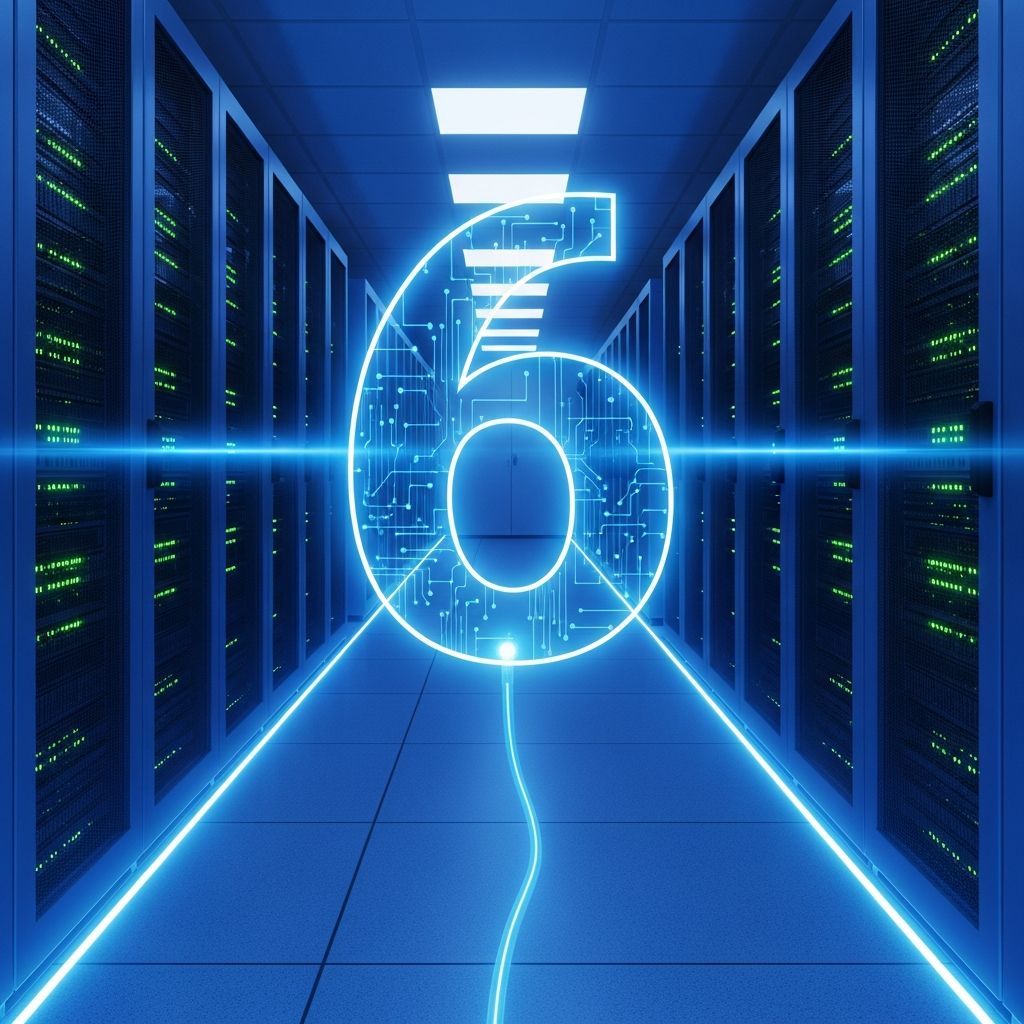
Facebook’s ambitious embrace of IPv6-only architecture inside its data centers marked a pivotal moment in internet infrastructure evolution. By ditching IPv4 internally while maintaining compatibility at the edges, the company showcased a scalable path forward amid IPv4 address exhaustion. This approach not only streamlined operations but also forced software and hardware to mature rapidly. Today, in 2026, as IPv6 dominates global traffic, revisiting this strategy reveals timeless lessons for enterprises building hyperscale environments.
The IPv4 Crisis and the IPv6 Imperative
The internet’s growth exploded the demand for IP addresses, rendering IPv4’s 4.3 billion unique identifiers woefully inadequate. Private RFC 1918 ranges, meant for internal use, buckled under massive data center loads. Facebook, scaling to billions of users, hit this wall hard, prompting a radical rethink.
IPv6, with its 128-bit addressing (roughly 340 undecillion addresses), offered abundance. But dual-stack deployments—running both protocols—introduced complexity: doubled routing tables, configuration errors, and performance drags. Facebook opted for IPv6-only cores, using dual-stack gateways for legacy IPv4 internet access. This minimized internal overhead while ensuring outward compatibility.
- Address Exhaustion Driver: Oversubscribed private IPv4 pools forced innovation.
- Scalability Goal: Eliminate protocol bloat for cleaner, faster networks.
- Developer Incentive: Remove IPv4 to compel IPv6-native coding.
Strategic Roadmap to IPv6 Dominance
Facebook’s journey began years before full rollout. By 2011, IPv6 permeated their data centers. The real leap came in 2014, when engineers targeted IPv6-only clusters. Developer machines shed IPv4 entirely, simulating production realities and accelerating fixes.
Key milestones included enabling IPv6 on every host, optimizing critical services like memcache and HHVM (their PHP runtime), and monitoring traffic shifts. Load balancers at edges handled IPv4 translation via NAT64 and DNS64, insulating the core from legacy constraints.
| Milestone | Achievement | Timeline |
|---|---|---|
| Full Host Enablement | 100% IPv6-capable servers | Early 2014 |
| Traffic Shift | 75% internal IPv6 traffic | Mid-2014 |
| Service Optimization | 100% memcache over IPv6 | 2014 |
| Full Transition Goal | IPv6-only network | 2-3 years |
These steps built momentum, proving IPv6-only viable at planetary scale.
Overcoming Hardware and Software Hurdles
Transitioning wasn’t seamless. Switches reverted to CPU processing under IPv6 loads, spiking latency. TCAM limitations in ASICs cramped large IPv6 tables. Linux kernels thrashed caches; libraries like glibc and curl crashed on edge cases; BGP sessions flapped unpredictably.
Facebook’s team debugged relentlessly, upstreaming fixes to open-source projects. They tuned kernels, patched apps, and swapped finicky hardware. Removing IPv4 from dev environments exposed flaws early, turning developers into IPv6 advocates.
- Identify bottlenecks via traffic analysis.
- Test IPv6-only clusters in staging.
- Collaborate with vendors for firmware updates.
- Monitor with custom tools for regressions.
Impressive Metrics and Performance Wins
By mid-2014, results dazzled: 100% of critical hosts responded on IPv6; 75% internal traffic flowed IPv6-only, aiming for 100% soon; 98% of HHVM traffic and 100% memcache used IPv6. These weren’t lab numbers—real production at exabyte scales.
Performance matched or exceeded dual-stack. IPv6’s larger headers were offset by jumbo frames and hardware accelerations. Fewer protocols meant simpler state management, reducing failure domains.
Facebook’s metrics underscored IPv6’s readiness: from zero to hyperscale dominance in under three years.
Lasting Influence on Global IPv6 Adoption
Facebook’s success rippled outward. Their 2014 v6 World Congress talk inspired clouds like AWS and Azure to ease IPv6 enablement. By 2026, RIPE Labs reports IPv6 more-specifics at 60% of IPv4 levels, signaling maturity.1 Traffic shares hover near 40% globally, per recent studies.
Cloud tenants now deploy IPv6 faster where providers simplify it, correlating with higher adoption rates.4 Facebook proved IPv6-only data centers work, fixing bugs that benefited everyone.
Modern Implications for Data Center Builders
In 2026, with IPv6 standard in 5G, IoT, and edge computing, Facebook’s model endures. Enterprises should:
- Prioritize IPv6-only internals with edge translation.
- Phase out IPv4 in dev/test pipelines.
- Invest in IPv6-proficient staff and tools.
- Leverage automation for dual-stack edges.
Challenges persist—legacy apps, vendor lag—but tools like 464XLAT bridge gaps. The payoff: infinite scaling without address pain.
FAQ: IPv6-Only Networks Demystified
What is an IPv6-only internal network?
It means core data center traffic uses solely IPv6, with dual-stack (IPv4/IPv6) devices only at internet-facing edges for translation.
Why did Facebook remove IPv4 from developer machines?
To mirror production, forcing IPv6-aware code and uncovering issues early.
Did performance suffer?
No—metrics showed parity or gains, thanks to optimizations and reduced protocol overhead.
Is IPv6-only ready for my org in 2026?
Yes, if you plan incrementally. Start with dual-stack, test IPv6-only pods, scale winners.
How does NAT64 work here?
It translates IPv6 to IPv4 at edges, preserving IPv4 app compatibility without internal IPv4.
Conclusion: A Blueprint for the IPv6 Era
Facebook’s IPv6-only pivot wasn’t just technical—it was visionary. By internalizing IPv6 and externalizing IPv4, they future-proofed operations, catalyzed ecosystem fixes, and set a benchmark. As IPv4 fades, their story guides the next wave of builders toward efficient, boundless networks. Emulate it: go IPv6-only inside, and watch your infrastructure soar.
References
- Case Study: Facebook Moving To An IPv6-Only Internal Network — Internet Society Deploy360. 2014-03-25. https://www.internetsociety.org/resources/deploy360/2014/case-study-facebook-moving-to-an-ipv6-only-internal-network/
- Facebook Is Close to Having an IPv6-only Data Center — ipSpace.net blog. 2014-03-22. https://blog.ipspace.net/2014/03/facebook-is-close-to-having-ipv6-only/
- Adding :face: to every IP: Celebrating IPv6’s one-year anniversary — Facebook Engineering Blog. 2013-06-07. https://engineering.fb.com/2013/06/07/web/adding-face-to-every-ip-celebrating-ipv6-s-one-year-anniversary/
- Towards a Non-Binary View of IPv6 Adoption — USC/ISI (peer-reviewed paper). 2025 (approx., recent). https://ant.isi.edu/~johnh/PAPERS/ThottungalValapu25a.pdf
- IPv6 10 Years Out: An Analysis in Users, Tables, and Traffic — RIPE NCC Labs. 2022-06-01. https://labs.ripe.net/author/wilhelm/ipv6-10-years-out-an-analysis-in-users-tables-and-traffic/
Similar Articles






Read full bio of medha deb