Facebook iOS Apps Embrace IPv6-Only Networks
Discover how Facebook's iOS apps now seamlessly operate on pure IPv6 networks, paving the way for future-proof mobile connectivity.
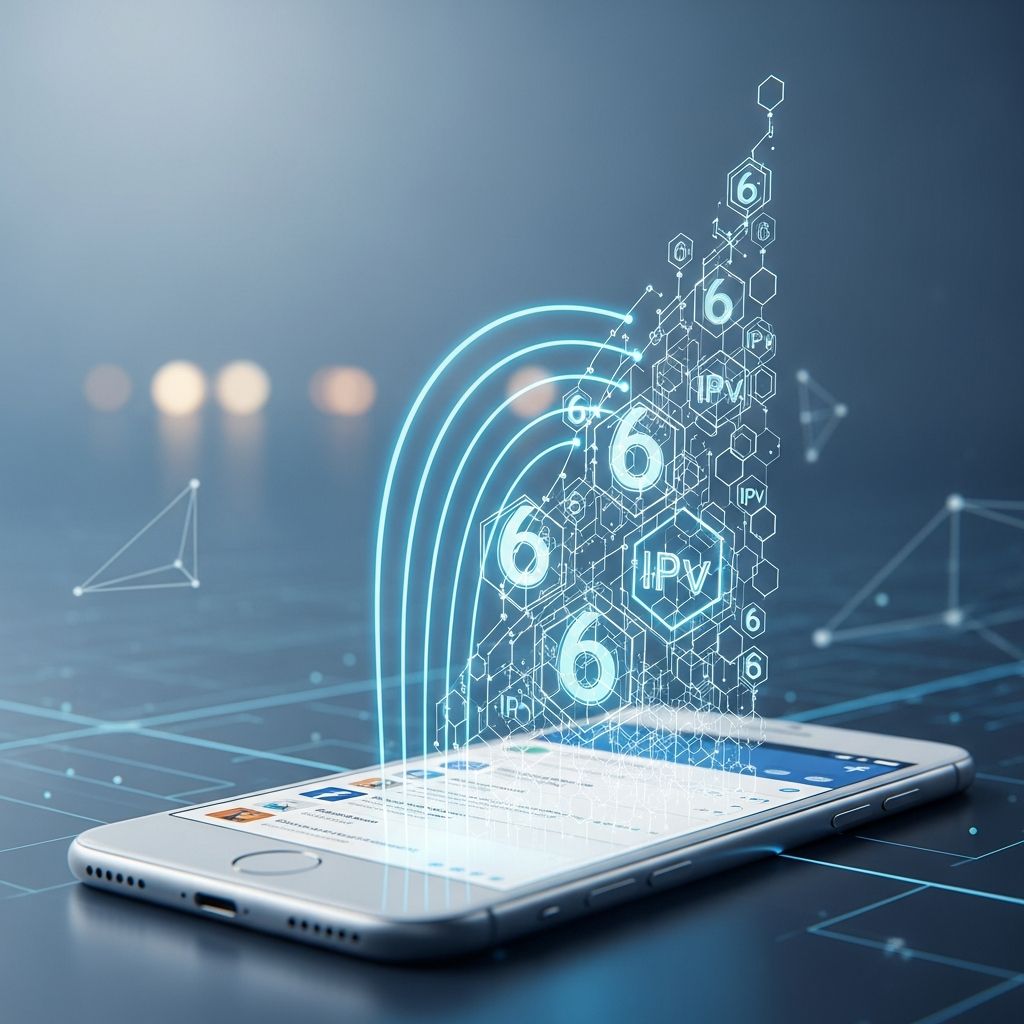
The internet is undergoing a profound transformation as IPv4 addresses dwindle, pushing networks worldwide toward IPv6 adoption. In a significant development, Facebook has updated its iOS applications to function flawlessly on networks that rely solely on IPv6, without any IPv4 fallback. This move not only highlights Facebook’s proactive stance on next-generation internet protocols but also ensures uninterrupted access for users on cutting-edge networks.
The IPv6 Imperative: Why the Shift Matters
IPv4, the longstanding backbone of the internet, offers only about 4.3 billion unique addresses—a number exhausted years ago due to explosive growth in connected devices. IPv6, with its 340 undecillion addresses, resolves this scarcity while introducing enhancements like simplified packet headers, better security via IPsec, and improved multicast capabilities.
Mobile networks, in particular, are accelerating IPv6 deployment. Carriers like T-Mobile and Verizon have pioneered native IPv6 support, enabling faster connections and reduced latency. For app developers, compatibility with these networks is crucial to avoid service disruptions. Facebook’s achievement demonstrates how major platforms can lead this transition, benefiting billions of users.
According to the Internet Society’s Deploy360, over 40% of global internet traffic now traverses IPv6, with mobile sectors leading at nearly 60%. This statistic underscores the urgency for apps to adapt.
Technical Breakthroughs in Facebook’s iOS Implementation
Adapting apps for IPv6-only environments involves more than flipping a protocol switch. Developers must handle network reachability, DNS resolution, and connection establishment without assuming IPv4 availability. Facebook engineers tackled these hurdles head-on.
Key challenges included:
- Reachability Detection: Apple’s Reachability API, while useful, traditionally focused on IPv4 or dual-stack hostnames. On IPv6-only networks, dual-stack DNS could fail if IPv4 resolution looped back incorrectly.
- Happy Eyeballs Algorithm: This IETF standard (RFC 8305) prioritizes the fastest-connecting address family. Facebook optimized it for pure IPv6 scenarios, ensuring quick fallbacks where needed.
- Backend Integration: Facebook’s data centers, increasingly IPv6-native, required client-side alignment to route traffic efficiently.
The result? Both the core Facebook app and Messenger now connect natively over IPv6, delivering content from IPv6-enabled servers. This eliminates translation layers like NAT64, which can introduce overhead.
Comparing Dual-Stack vs. IPv6-Only Performance
To illustrate the advantages, consider this comparison table of network types:
| Network Type | Connection Speed | Latency | Compatibility |
|---|---|---|---|
| Dual-Stack (IPv4 + IPv6) | High (with preference) | Low | Universal |
| IPv6-Only (Native) | Optimal | Lowest | Future-Proof |
| IPv6 with NAT64 | Moderate | Moderate | IPv4 Legacy |
IPv6-only setups shine in performance, especially on mobile where battery life and data efficiency matter. Facebook’s apps leverage this for smoother scrolling, faster media loads, and reliable messaging.
Facebook’s Broader IPv6 Strategy
This iOS milestone fits into Facebook’s (now Meta’s) long-term infrastructure pivot. Internal networks have shifted to IPv6-dominant, with over 99% of traffic IPv6 as of recent reports. New data centers launch IPv6-only, using software load balancers to proxy IPv4 externally.
For external users, techniques like IPv6 tunneling encapsulate IPv4 packets, maintaining compatibility without full dual-stack overhead. This hybrid approach allows serving 85% IPv4 users while optimizing for IPv6 growth.
Challenges on Other Platforms and Networks
While iOS apps succeed, Android faces hurdles. Device fragmentation and inconsistent IPv6 stacks lead to connectivity issues on pure IPv6 networks. Forum discussions highlight MTU mismatches causing stalled video loads on certain setups.
Transition mechanisms like 6to4 or NAT64 help but aren’t seamless. Facebook continues refining Android support, emphasizing native IPv6 for best results.
Industry-Wide Momentum and Testing Resources
Facebook’s progress inspires others. Apple’s App Store mandates IPv6 compatibility since iOS 9, covering social apps like Twitter and Instagram. Testing tools abound:
- IPv6-only testbeds from Hurricane Electric or Google.
- RIPE Atlas for global probing.
- Apple’s Network Link Conditioner for simulating constraints.
Major sites like google.com and facebook.com offer IPv6 endpoints, verifiable via test-ipv6.com.
Future Outlook: A Fully IPv6 World
As IPv6 adoption surges—projected to hit 70% by 2030 per OECD data—apps like Facebook’s set the standard. Benefits extend to IoT, 5G, and edge computing, where address abundance fuels innovation. Challenges remain, like legacy system upgrades, but momentum is unstoppable.
For developers, prioritize Happy Eyeballs v2, audit sockets for dual-stack, and test rigorously on IPv6-only labs. Facebook’s journey proves it’s achievable.
Frequently Asked Questions
What does IPv6-only mean for my Facebook app?
It means the app works perfectly on networks without IPv4, using only the newer protocol for faster, more efficient connections.
Do Android Facebook apps support IPv6-only?
They generally do on dual-stack but may encounter issues on pure IPv6 due to device variances; updates are ongoing.
Why is Facebook pushing IPv6?
To future-proof infrastructure amid IPv4 exhaustion and leverage IPv6’s superior performance and scale.
How can I test my network’s IPv6 support?
Use sites like test-ipv6.com or ipv6-test.com to score your connection and identify gaps.
Is IPv6 safer than IPv4?
Yes, with built-in IPsec support, though deployment varies; it also reduces NAT complexity.
Conclusion: Leading the Charge to IPv6
Facebook’s iOS apps thriving on IPv6-only networks exemplify forward-thinking engineering. This not only enhances user experience today but accelerates the internet’s evolution tomorrow. As more networks go native IPv6, such adaptations ensure seamless global connectivity. Stay tuned for further advancements from Meta and the broader ecosystem.
References
- IPv6 Deploy360 — Internet Society. 2023-05-15. https://www.internetsociety.org/deploy360/ipv6/
- Happy Eyeballs v2 (RFC 8305) — Internet Engineering Task Force (IETF). 2017-12-07. https://datatracker.ietf.org/doc/html/rfc8305
- Legacy Support on IPv6-Only Infra — Meta Engineering Blog. 2017-01-17. https://engineering.fb.com/2017/01/17/production-engineering/legacy-support-on-ipv6-only-infra/
- IPv6 Adoption Statistics — OECD Digital Economy Outlook. 2024-06-01. https://www.oecd.org/en/publications/digital-economy-outlook-2024-volume-2_9b2801bc.html
- IPv6 FAQ for High Performance Computing — U.S. Department of Defense HPC. 2023-11-20. https://www.hpc.mil/solution-areas/networking/ipv6-knowledge-base/frequently-asked-questions/available-ipv6-social-media-websites-and-apps
Similar Articles








Read full bio of Sneha Tete