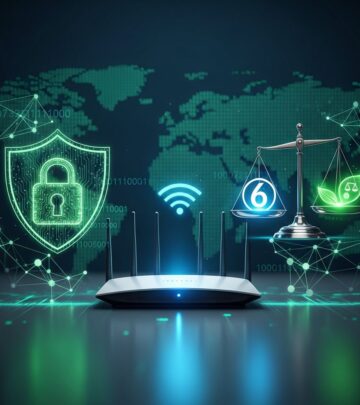
Evolving Digital Protection: Internet Security Over Time
Examining how cybersecurity frameworks and privacy protections have transformed across decades.

Understanding the Historical Context of Digital Security
The digital landscape has undergone remarkable transformations since the internet became accessible to the general public. What began as a relatively simple network designed for research and communication has evolved into a complex, interconnected ecosystem supporting billions of transactions, personal communications, and critical infrastructure operations daily. The security frameworks that protect this ecosystem have similarly evolved, adapting to new threats and technological capabilities.
When examining the trajectory of internet security, it becomes clear that protection mechanisms have become increasingly sophisticated. Early internet protocols were designed with openness and accessibility as primary concerns, often treating security as a secondary consideration. However, as the stakes have risen and threats have multiplied, security has shifted to become a fundamental requirement rather than an optional enhancement.
Foundational Technologies That Continue to Matter
Several core technological building blocks have remained relevant across the decades, demonstrating their fundamental importance to digital security architecture. These technologies represent decades of cryptographic research, standardization efforts, and real-world deployment experience.
Transport Layer Security and Its Evolution
Transport Layer Security (TLS) stands as one of the most enduring protective mechanisms in modern internet communication. Originally developed as Secure Sockets Layer (SSL), TLS has undergone numerous iterations to address emerging vulnerabilities and incorporate stronger cryptographic algorithms. Each version has built upon previous work while deprecating weaker approaches that no longer meet contemporary security standards.
The continued relevance of TLS demonstrates how foundational technologies can remain valuable through iterative improvement. Modern implementations incorporate forward secrecy, updated cipher suites, and mechanisms to prevent downgrade attacks. Organizations worldwide rely on TLS to protect sensitive data during transmission, from banking transactions to private communications.
Domain Name System Security Extensions
DNSSEC provides another example of long-lasting security infrastructure. This extension to the Domain Name System adds cryptographic signatures to DNS responses, enabling users and systems to verify that domain information has not been tampered with during transmission. DNSSEC addresses a fundamental vulnerability in the original DNS design, which lacked any authentication mechanism.
Implementation of DNSSEC has proceeded gradually across the internet, with challenges related to complexity, performance considerations, and the need for coordinated adoption among many organizations. Nevertheless, DNSSEC remains a critical component of internet security architecture for organizations seeking to protect their domain information and prevent DNS-based attacks.
The Shifting Threat Landscape
The categories and characteristics of threats facing internet users, organizations, and infrastructure have transformed dramatically over the past two decades. Understanding these changes provides context for evaluating whether existing security mechanisms remain adequate.
From Novelty Threats to Sophisticated Adversaries
Early internet security concerns often focused on technical vulnerabilities and opportunistic attackers. Script kiddies and hobbyist hackers represented common threats, typically motivated by curiosity or modest financial gain. Security responses during this era emphasized perimeter defense and basic access controls.
Contemporary threats present a fundamentally different challenge. Nation-states, criminal organizations, and other well-resourced actors now conduct sophisticated campaigns targeting specific organizations or infrastructure sectors. These adversaries invest substantial resources in discovering zero-day vulnerabilities, developing custom malware, and planning multi-stage attacks that often evade traditional security mechanisms.
Expansion of Attack Surfaces
The number and diversity of connected devices and systems have exploded since the internet’s early days. Personal computers, smartphones, tablets, smart home devices, industrial control systems, medical devices, and countless other connected technologies now participate in networked communications. Each additional device represents a potential attack surface and vulnerability point.
This proliferation creates challenges for security practitioners attempting to maintain protective measures across heterogeneous environments. Devices with varying capabilities, update frequencies, and security maturity levels must coexist on networks designed decades ago with different assumptions about scale and diversity.
Privacy Considerations in the Modern Digital Era
Privacy protection has emerged as a distinct challenge alongside security, though the two concepts are interconnected. Security protects information from unauthorized access, while privacy governs the collection, use, and retention of personal data by authorized parties.
Data Collection and User Awareness
Modern digital services frequently collect substantial quantities of personal information. User behavior, preferences, locations, communications, and countless other data points are gathered, aggregated, and analyzed. While some collection supports legitimate service delivery, the scope often extends beyond what users understand or explicitly approve.
Regulatory frameworks have increasingly sought to require transparency and user consent for data practices. These approaches attempt to restore agency to individuals whose information is collected, while acknowledging the practical impossibility of most people managing the details of every data handling practice they encounter.
Encryption as a Privacy Safeguard
Encryption technology protects privacy by rendering collected data unintelligible to unauthorized parties, including service providers themselves. End-to-end encryption, where only the communicating parties possess decryption keys, represents the strongest privacy protection model. However, widespread deployment of end-to-end encryption creates policy tensions regarding law enforcement access and surveillance capabilities.
Evaluating Technology Adequacy for Future Requirements
A critical question for internet security practitioners involves assessing whether technologies developed years or decades ago remain adequate for emerging challenges and requirements.
Computational Advances and Cryptographic Implications
Cryptographic algorithms depend on computational difficulty for their protective value. As computing capabilities advance through faster processors, distributed computing, and potentially quantum computing, algorithms designed for earlier eras may require replacement. Organizations must plan for cryptographic transitions well in advance, as replacing encryption algorithms across deployed systems presents massive logistical challenges.
Post-quantum cryptography research addresses the potential threat that quantum computers might compromise current encryption approaches. This research community works to identify and standardize cryptographic algorithms resistant to both classical and quantum computing attacks, preparing for a potential future technological shift.
Architectural Limitations and Redesign Considerations
Some security challenges emerge not from individual technology failures but from fundamental architectural decisions made decades ago. The internet’s original design prioritized openness and decentralization, characteristics that provide tremendous benefits but complicate security implementation across the entire system.
Internet security experts debate whether fundamental redesign might address current limitations more effectively than incremental improvements to existing mechanisms. However, the internet’s vast scale, heterogeneity, and installed base make comprehensive architectural changes extraordinarily difficult to implement globally.
Emerging Technologies and Future Protective Mechanisms
While established technologies like TLS and DNSSEC continue to evolve, emerging approaches offer additional protective possibilities for addressing future challenges.
Zero-Trust Security Models
Traditional security models assumed that threats primarily originated outside organizational boundaries. Zero-trust approaches reverse this assumption, requiring verification and authentication for all communications, regardless of source location. This model acknowledges the reality that modern threats often originate from compromised internal systems or trusted partners.
Artificial Intelligence and Anomaly Detection
Machine learning systems can analyze massive quantities of network traffic and system behavior data to identify patterns consistent with attacks or unauthorized access. These approaches may detect compromises that signature-based detection misses, though they also introduce new challenges regarding false positives and the adversarial development of evasion techniques.
Decentralized and Blockchain-Based Approaches
Distributed ledger technologies offer novel approaches to authentication, verification, and data integrity in scenarios where centralized authorities may be unavailable or untrustworthy. However, these technologies introduce their own complexity, performance, and security considerations that remain subjects of active research and debate.
Addressing Current Gaps and Vulnerabilities
Despite decades of security research and deployment experience, substantial gaps and vulnerabilities persist in protecting internet communications and data.
Implementation Quality Challenges
Even well-designed security technologies provide inadequate protection when implemented incorrectly. Configuration errors, outdated versions, and insufficient key management represent common failure points. Organizations often lack the expertise or resources to properly implement complex security technologies, creating gaps between theoretical and practical protection levels.
Supply Chain and Third-Party Risks
Modern systems depend on software, hardware, and services from numerous suppliers. Compromises in supply chains or third-party services can undermine security measures deployed at the organizational level. Managing these risks requires visibility into supplier security practices and the ability to respond quickly when issues emerge.
The Role of Collaboration and Standardization
Internet security advancement depends on coordination and consensus among diverse stakeholders including equipment manufacturers, service providers, security researchers, policymakers, and users.
Technical standardization bodies establish specifications and best practices that enable interoperability while advancing the state of security practice. These organizations balance innovation with stability, attempting to move quickly enough to address emerging threats while providing sufficient stability for implementations across the globally distributed internet.
Information sharing about threats, vulnerabilities, and effective protective measures also contributes to collective defense. Organizations that discover new attack techniques or security issues must decide how quickly and broadly to share that information to enable others to defend themselves while minimizing the window during which attackers possess exclusive knowledge.
Looking Forward: The Continued Evolution of Protection
The trajectory of internet security suggests continued evolution rather than convergence on final solutions. As technologies change, adversary capabilities advance, and connected systems proliferate, security requirements will shift accordingly.
Future security frameworks will likely combine established foundational technologies with emerging approaches, creating layered defenses that address threats across multiple vectors. Success will depend on organizations maintaining security fundamentals while adapting to new challenges, researchers continuing to advance protective technologies, and policymakers establishing frameworks that encourage security investment without creating perverse incentives.
The question of whether security technologies from today will remain adequate in ten years cannot be answered with certainty. However, the history of internet security suggests that technologies addressing fundamental protective requirements—authentication, confidentiality, integrity—will continue to matter, even as specific implementations evolve to address contemporary threats and leverage new technological capabilities.
Key Considerations for Security Practitioners
- Maintain awareness of evolving threats and how adversary tactics change over time
- Implement security fundamentals thoroughly before pursuing emerging technologies
- Plan for cryptographic transitions well in advance of potential algorithm weaknesses
- Evaluate new protective mechanisms critically rather than adopting based on marketing claims
- Invest in staff expertise to implement and maintain security technologies effectively
- Participate in information sharing and collaborative defense efforts within relevant communities
- Balance security investments with broader organizational risk management strategies
References
- Internet Society Global Internet Report 2017: Paths to Our Digital Future — Internet Society. 2017. https://www.internetsociety.org/wp-content/uploads/2022/12/2017-Internet-Society-Global-Internet-Report-Paths-to-Our-Digital-Future.pdf
- RFC 5246: The Transport Layer Security (TLS) Protocol Version 1.2 — Internet Engineering Task Force (IETF). August 2008. https://tools.ietf.org/html/rfc5246
- RFC 4034: Resource Records for the DNS Security Extensions — Internet Engineering Task Force (IETF). March 2005. https://tools.ietf.org/html/rfc4034
- Privacy Online Course — Internet Society. Accessed 2026. https://www.internetsociety.org/learning/privacy/
- Post-Quantum Cryptography Project — National Institute of Standards and Technology (NIST). Updated 2024. https://csrc.nist.gov/projects/post-quantum-cryptography/
Similar Articles








Read full bio of medha deb