Essential Cybersecurity Priorities
Exploring critical cybersecurity frameworks and strategies to address urgent threats in today's digital landscape.
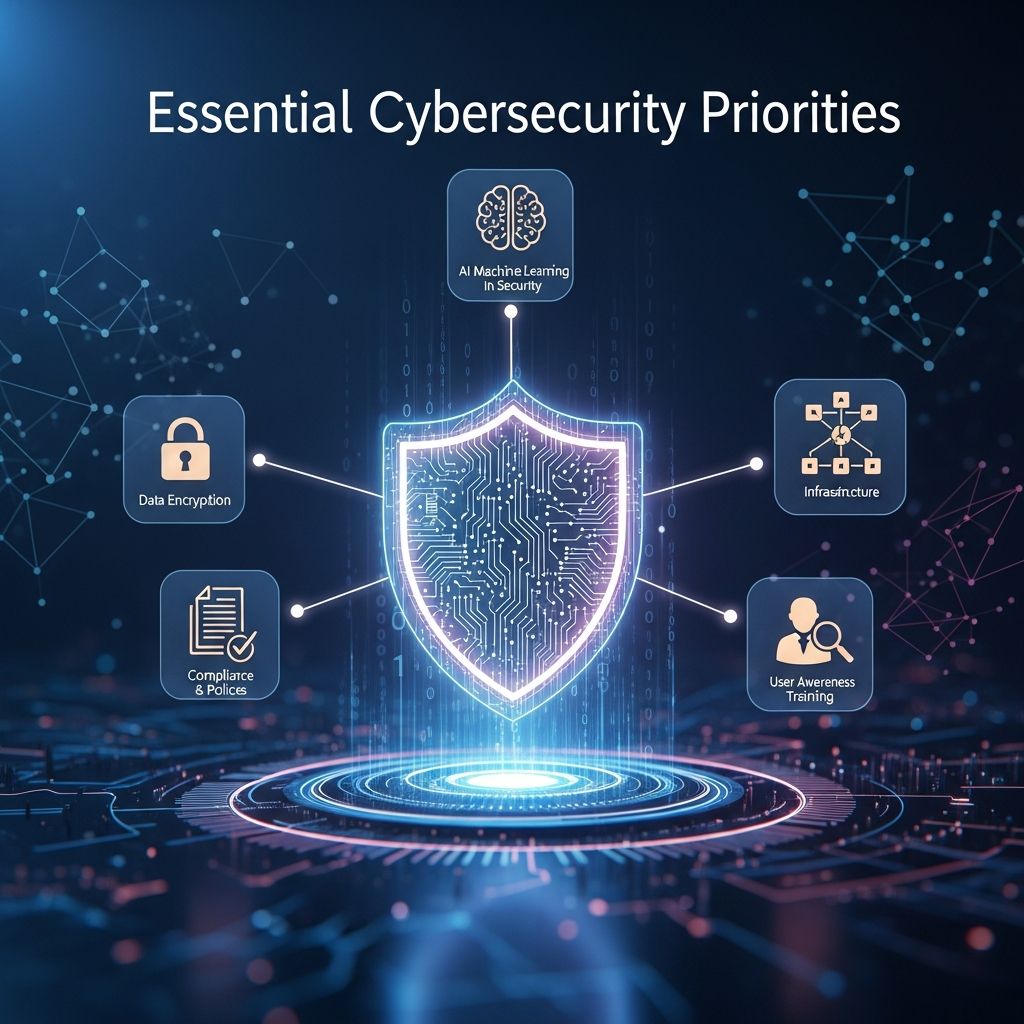
In an era where digital threats evolve rapidly, organizations must adopt structured approaches to safeguard their operations. Cybersecurity frameworks provide a roadmap for managing risks, from identifying vulnerabilities to recovering from incidents. This article examines pivotal elements of modern cybersecurity strategies, drawing on established standards to offer practical insights for businesses and leaders.
Understanding the Foundation of Cybersecurity Frameworks
Cybersecurity frameworks serve as comprehensive guides that help organizations assess, implement, and maintain protective measures. One of the most influential is the NIST Cybersecurity Framework (CSF), originally developed to enhance critical infrastructure security but now widely applicable across sectors. It promotes an outcomes-based methodology, allowing flexibility for various organizational sizes and industries.
The framework’s strength lies in its structured functions, which align cybersecurity efforts with business objectives. By categorizing activities into identifiable stages, it enables teams to prioritize resources effectively and respond proactively to threats. Recent updates have expanded its scope, incorporating governance and emerging risks like supply chain vulnerabilities.
The Six Core Pillars of Modern Cybersecurity
The NIST CSF 2.0 introduces six core functions, providing a holistic view of cybersecurity management. These pillars—Govern, Identify, Protect, Detect, Respond, and Recover—form a cycle that ensures continuous improvement.
- Govern: Establishes oversight and policy foundations, ensuring cybersecurity aligns with organizational goals and regulatory demands.
- Identify: Builds awareness of assets, risks, and environments to inform decision-making.
- Protect: Implements safeguards to prevent or limit threat impacts.
- Detect: Monitors for anomalies to enable early threat identification.
- Respond: Coordinates actions to contain and mitigate incidents.
- Recover: Restores operations and strengthens resilience post-incident.
This structure emphasizes that cybersecurity is not a one-time effort but an ongoing process. Organizations can use these functions to create tailored profiles, comparing current capabilities against desired states.
Building Governance for Strategic Cybersecurity
The addition of the Govern function in NIST CSF 2.0 underscores the role of leadership in cybersecurity. It involves defining policies, understanding stakeholder expectations, and integrating risk management into enterprise strategy. Effective governance ensures accountability, from board-level oversight to third-party vendor standards.
For instance, leaders must comprehend legal requirements and align protections with business priorities. This pillar sets the tone for the entire framework, fostering a culture where cybersecurity is everyone’s responsibility. Without strong governance, even advanced technical controls can falter due to misaligned priorities or inadequate oversight.
Identifying Risks in a Complex Landscape
The Identify function is the starting point for effective cybersecurity. It requires organizations to inventory assets, assess business contexts, and evaluate risks. Key categories include asset management, governance processes, and risk strategies.
By mapping out systems, data flows, and potential threats, teams can prioritize protections. For example, understanding supply chain dependencies helps mitigate third-party risks, a growing concern in global operations. Tools like risk assessments and vulnerability scans support this phase, providing data-driven insights.
| Risk Category | Description | Key Actions |
|---|---|---|
| Asset Management | Tracking hardware, software, and data | Inventory audits, labeling |
| Business Environment | Aligning with missions and dependencies | Stakeholder mapping |
| Risk Assessment | Evaluating threats and impacts | Threat modeling |
Implementing Protective Measures
Protection focuses on deploying controls to safeguard assets. Categories encompass access management, training, data security, and technology deployments. Multi-factor authentication, encryption, and regular maintenance are staples here.
These measures limit the blast radius of attacks. For example, restricting administrative privileges prevents lateral movement by attackers. Training programs raise awareness, reducing human error—a common entry point for breaches.
Enhancing Detection Capabilities
Detection is crucial for minimizing damage. It involves continuous monitoring, anomaly detection, and process improvements. Organizations should deploy tools for real-time alerts, such as intrusion detection systems and security information event management (SIEM).
Early detection allows for swift response, often measured in minutes rather than days. Integrating managed security services can bolster in-house teams, ensuring 24/7 vigilance.
Coordinated Response to Incidents
When threats materialize, the Respond function guides containment and analysis. It includes planning, communications, mitigation, and lessons learned. Pre-defined playbooks streamline actions, while clear communication maintains stakeholder trust.
Post-incident reviews drive improvements, turning experiences into resilience. This iterative approach ensures responses evolve with threat landscapes.
Achieving Rapid Recovery and Resilience
Recovery emphasizes restoring operations and adapting. Backup strategies, redundancy, and recovery planning are vital. Testing these plans regularly uncovers gaps, ensuring minimal downtime.
Resilience goes beyond recovery, incorporating lessons to fortify future defenses. Metrics like mean time to recover (MTTR) help gauge effectiveness.
Comparing Leading Cybersecurity Strategies
Beyond NIST CSF, frameworks like Australia’s Essential Eight offer complementary tactics. These include patching, application control, and backups—proven to thwart common attacks.
| Framework | Key Focus | Best For |
|---|---|---|
| NIST CSF | Holistic risk management | All sectors |
| Essential Eight | Mitigation strategies | Windows environments |
Practical Steps for Implementation
To adopt these frameworks:
- Conduct a gap assessment against core functions.
- Prioritize based on risk and resources.
- Assign ownership and timelines.
- Monitor progress with metrics.
- Review annually or post-incident.
Start small, scaling as maturity grows. Collaboration with experts accelerates adoption.
FAQs
What is the NIST Cybersecurity Framework?
A voluntary set of standards for managing cybersecurity risks, now with six functions in version 2.0.
Why was Govern added to NIST CSF?
To emphasize leadership’s role in strategy, oversight, and alignment with business goals.
How does NIST CSF differ from other frameworks?
Its flexible, outcomes-based approach suits diverse organizations, unlike more prescriptive models.
Is NIST CSF only for large enterprises?
No, it’s scalable for small businesses to global corporations.
What are common challenges in implementation?
Resource constraints and cultural resistance; overcome with phased rollouts and training.
Conclusion
Addressing cybersecurity requires commitment to proven frameworks like NIST CSF. By focusing on its six pillars, organizations can navigate threats confidently, ensuring sustainability in a digital world. Regular assessments and adaptations keep defenses robust.
References
- Cybersecurity Framework | NIST — National Institute of Standards and Technology. 2024. https://www.nist.gov/cyberframework
- NIST Cybersecurity Framework (CSF) Core Explained — CyberSaint. 2023. https://www.cybersaint.io/blog/nist-cybersecurity-framework-core-explained
- Tenable Cyber Exposure Study – The Essential Eight Strategies — Tenable. 2023. https://docs.tenable.com/cyber-exposure-studies/essential-eight/Content/PDF/Tenable_Cyber_Exposure_Study-Essential_Eight.pdf
- Defense Industrial Base Cybersecurity Strategy 2024 — U.S. Department of Defense CIO. 2024. https://dodcio.defense.gov/Portals/0/Documents/Library/DIB-CS-Strategy.pdf
- Cybersecurity Reference Guide for UC Leadership — University of California Office of the President. 2023. https://www.ucop.edu/ethics-compliance-audit-services/audit/cybersecurityreferenceguideforucleadership_final.pdf
Similar Articles








Read full bio of medha deb