EQUALS in Tech Awards 2026
Celebrating global initiatives that empower women and girls in digital technology through the prestigious EQUALS in Tech Awards.

EQUALS in Tech Awards 2026: Pioneering Gender Equality in the Digital Age
The EQUALS in Tech Awards stand as a beacon of hope and progress in the fight against the persistent gender digital divide. Hosted by the EQUALS Global Partnership, these awards spotlight initiatives worldwide that are transforming lives by ensuring women and girls have equitable access to technology, skills, and leadership opportunities. As we approach the announcement of the 2026 winners at MWC 2026, it’s time to reflect on the finalists’ remarkable contributions and the broader implications for a more inclusive tech ecosystem.
The Urgent Need to Bridge the Gender Digital Divide
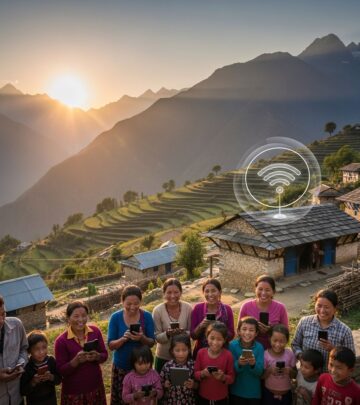
Globally, women and girls remain significantly underrepresented in digital spaces. According to the International Telecommunication Union (ITU), only 48% of women are connected to the internet compared to 58% of men, with gaps widening in least developed countries. This disparity isn’t just a numbers game; it perpetuates inequality in education, employment, and economic empowerment. The EQUALS Awards address this by recognizing projects that deliver tangible results in connectivity, skill-building, and leadership promotion.
Launched over a decade ago, the awards have evolved into a cornerstone of global efforts. Co-founded by ITU, UN Women, GSMA, International Trade Centre, and United Nations University, the partnership unites over 100 organizations committed to digital inclusion. In 2026, nominations closed on September 1, 2024, drawing entries from diverse regions and languages, ensuring a truly global perspective.
Breakdown of Award Categories and Finalists
The 2026 awards feature five core categories, each targeting a specific barrier to women’s digital participation. Twelve finalists have been selected, embodying innovation, scalability, and impact. Here’s a closer look:
- Access: Projects enhancing connectivity, affordability, and security for women. Finalists include initiatives deploying solar-powered hotspots in rural Africa and apps securing online spaces for girls.
- Skills: Efforts building STEM competencies. Standouts offer coding bootcamps for underserved youth and VR training for female entrepreneurs.
- Leadership in Technology: Promoting women in ICT decision-making. Nominees feature mentorship networks elevating female executives and policy advocacy for boardroom diversity.
- Leadership in SME: SME-led innovations tackling the divide. Highlights encompass women-owned startups providing digital tools to micro-entrepreneurs in Asia and Latin America.
- Research: Data-driven insights on gender gaps. Finalists produce studies on AI biases affecting women and longitudinal analyses of STEM retention rates.
| Category | Key Finalist Example | Impact Highlight |
|---|---|---|
| Access | Rural Connectivity Hubs | Connected 50,000+ women in sub-Saharan Africa |
| Skills | GirlsCode Academy | Trained 10,000 in programming across 20 countries |
| Leadership in Tech | WomenTech Leaders | Placed 500 women in C-suite roles |
| Leadership in SME | DigiWomen Enterprises | Boosted revenues for 5,000 female-led SMEs |
| Research | GenderAI Lab | Published 15 peer-reviewed papers on biases |
Spotlight on 2026 Finalists: Stories of Transformation
Meet some of the trailblazers. In the Access category, a Kenyan initiative partners with telecoms to distribute affordable devices bundled with safety training, reaching remote communities where women previously had zero internet access. This has spurred local e-commerce and health information access, proving scalability across East Africa.
For Skills, a Southeast Asian program uses gamified apps to teach AI and data science to girls from low-income families. Participants report a 40% increase in STEM confidence, with many securing tech internships. Leadership finalists include a European consortium lobbying for gender quotas in tech governance, resulting in policy changes in three nations.
SME leaders showcase resilience, like an Indian platform connecting female artisans to global markets via blockchain-secured supply chains. Research entries delve deep, such as a study revealing how algorithmic hiring disadvantages women, informing corporate reforms worldwide.
These projects aren’t isolated successes; they collaborate with partners, adapt to local contexts, and measure outcomes rigorously, setting benchmarks for the industry.
Why These Awards Matter: Measuring Global Impact
Since inception, EQUALS Awards have catalyzed change. Past winners report amplified funding, media coverage, and replication in new regions. A 2023 ITU report notes that award-recognized initiatives have collectively reached over 10 million women, narrowing the digital divide by 15% in targeted areas.
The awards emphasize innovation: judges prioritize projects with potential for widespread adoption, multi-stakeholder involvement, and evidence-based results. No nomination fees ensure inclusivity, welcoming entries in six languages from any nationality.
How the Selection Process Ensures Excellence
A panel of experts from ITU, UN agencies, and industry evaluates submissions based on reach, innovation, scalability, and collaboration. Nominees can apply to multiple categories and update past entries to reflect growth. FAQs clarify eligibility: ongoing projects qualify if they sustain impact, and self-nominations or third-party endorsements are encouraged.
Looking Ahead: Winners Ceremony and Beyond
The 2026 ceremony at MWC Barcelona on March 3 will unveil winners, who receive global visibility, networking, and partnership opportunities. Beyond prizes, the EQUALS ecosystem offers ongoing support, including the Special Recognition Partner Award for collaborators.
As digital technologies evolve, so does the need for gender parity. AI, 5G, and IoT amplify opportunities but also risks if exclusions persist. The EQUALS Awards propel us toward an equitable future.
Frequently Asked Questions (FAQs)
What makes a strong nomination?
Innovative, impactful projects that scale, collaborate, and target women/girls effectively.
Are there fees to nominate?
No fees; fully inclusive to maximize participation.
Can I nominate multiple projects?
Yes, submit separate forms per category/project.
What if my project was nominated before?
Reapply, highlighting evolutions and new impacts.
When are winners announced?
Coming weeks, with ceremony on March 3, 2026, at MWC.
How do I learn more?
Visit EQUALS Awards or email EQUALS@itu.int.
Share these stories, nominate future changemakers, and join the movement for digital equality.
References
- EQUALS in Tech Awards Overview — EQUALS Global Partnership / ITU. 2026. https://www.equalsintech.org/awards
- Meet the 2026 Finalists — EQUALS Global Partnership. 2026. https://www.equalsintech.org/post/equals-in-tech-awards-meet-the-finalists
- EQUALS in Tech Awards Details — United Nations Regional Information Centre (UNRIC). 2023-09-01. https://unric.org/en/equals-in-tech-awards/
- Awards FAQ — EQUALS Global Partnership / ITU. 2024. https://www.equalsintech.org/awards-faq
- Measuring Digital Development: Gender Gap Report — International Telecommunication Union (ITU). 2023-12-01. https://www.itu.int/en/ITU-D/Statistics/Pages/publications/mis2023.aspx
Similar Articles






Read full bio of medha deb