Enterprise Network Subscriptions: Financial Impact and Strategic Considerations
Evaluate the true costs and benefits of switching to subscription-based network models for your organization.
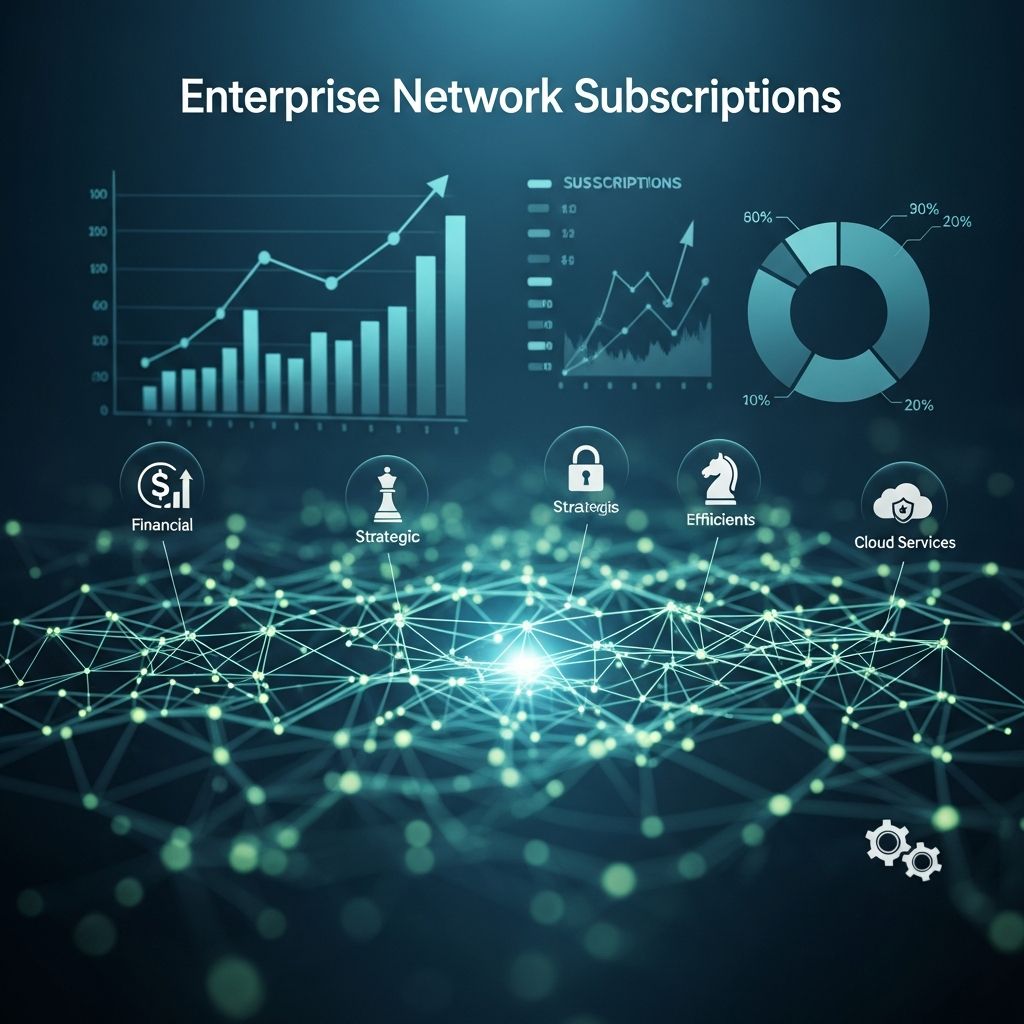
The technology landscape continues to shift as vendors increasingly embrace subscription-based business models for their offerings. For enterprise customers, this transformation presents a complex decision-making process that extends beyond simple price comparisons. Organizations must carefully analyze how subscription models align with their existing infrastructure, financial planning, and operational workflows. The implications of this shift touch everything from capital allocation strategies to long-term asset management planning.
The Growing Shift Toward Subscription-Based Licensing
Major networking vendors have made strategic decisions to transition their licensing structures away from traditional perpetual licensing models toward recurring subscription arrangements. This industry-wide movement reflects broader business model evolution across technology sectors. The transition creates significant ripple effects throughout enterprise IT departments, requiring organizations to reevaluate procurement strategies, budget forecasting methodologies, and technology lifecycle management.
Understanding this shift requires examining both the strategic motivations behind vendor decisions and the practical implications for customer organizations. As subscription models become the default approach across networking vendors, enterprises that fail to adapt their purchasing frameworks may find themselves at operational and financial disadvantages.
Discovering Improved Asset Visibility and Control
One of the most tangible advantages of subscription-based licensing models involves the centralized management and visibility of deployed assets. Traditional licensing often resulted in fragmented deployments across multiple departments, making it difficult for IT leadership to maintain a comprehensive inventory of what was purchased, deployed, and actually utilized within the organization.
Subscription models typically feature consolidated dashboards and management portals that provide real-time insights into asset utilization patterns. This centralized repository enables IT teams to:
- Track deployment status across all departments and locations
- Identify underutilized or unutilized licenses that represent wasted spending
- Monitor which products are actively supporting business operations
- Understand capacity requirements across different business units
- Plan future technology investments based on actual usage patterns rather than assumptions
This improved visibility frequently leads to better resource allocation decisions and helps organizations eliminate redundant purchases that previously drained capital budgets without delivering additional business value.
Reducing Duplicate Licenses and Overlapping Investments
In decentralized organizations where multiple departments independently manage technology purchases, duplicate licensing frequently occurs as a hidden cost. When one business unit purchases a particular network solution without awareness of existing deployments in other departments, the organization pays multiple times for capabilities it could have consolidated.
Subscription platforms often incorporate hierarchical management structures that create organizational visibility across department boundaries. This structure enables IT departments to:
- Establish departmental quotas and tracking mechanisms
- Monitor spending patterns across the organization
- Redistribute unused licenses to departments with emerging requirements
- Negotiate volume discounts based on total organizational consumption
- Enforce purchasing governance policies
By preventing overlapping purchases and enabling efficient license redistribution, organizations can significantly optimize their technology spending and redirect capital toward strategic initiatives rather than redundant investments.
Accelerating Technology Deployment Timelines
The traditional process for activating network products involved numerous manual steps that introduced delays and created confusion, particularly in less centralized environments. Products required activation keys, hardware identifier verification, and subsequent license code delivery—a process that could span days or weeks depending on organizational structure and vendor responsiveness.
Modern subscription platforms streamline this process considerably. Rather than managing individual activation keys for each deployment, IT teams can draw licenses from centralized pools and activate them instantly. This approach delivers several operational benefits:
- Reduced deployment time from weeks to hours or minutes
- Eliminated confusion from managing multiple activation keys
- Faster response to business requirements for new network capacity
- Reduced manual administrative work for IT teams
- Lower likelihood of activation failures due to process complexity
These efficiency gains translate into faster time-to-value for technology investments and reduce the burden on IT operations teams who can redirect efforts toward higher-value strategic work.
Evaluating the Long-Term Financial Trade-offs
Despite the operational advantages subscription models offer, organizations must carefully examine the financial implications of this business model shift. Vendor communications frequently emphasize cost savings potential, yet the underlying economics require scrutiny. In most cases, subscription models result in higher total cost of ownership compared to traditional perpetual licensing when examined over extended timeframes.
Several factors drive the higher costs associated with subscription models:
- Continuous payment requirements rather than one-time capital expenditures
- Elimination of pricing advantages associated with maintaining older product versions
- Mandatory inclusion of features and support tiers that may exceed organizational requirements
- Limited ability to negotiate perpetual licensing terms
- Vendor control over pricing increases in subsequent renewal periods
While organizations might achieve short-term operational savings through reduced deployment complexity or administrative overhead, these soft cost savings typically prove insufficient to offset the higher hard costs imposed by subscription pricing structures. Over a five to ten year period, organizations frequently find themselves spending substantially more on subscription models compared to traditional licensing arrangements.
Understanding the Management Burden Paradox
Subscription vendors frequently promote centralized license management as a cost reduction strategy, yet this advantage applies inconsistently across different organizational structures. Enterprises with highly centralized IT operations where purchasing authority concentrates within IT departments do indeed benefit from streamlined management processes.
However, decentralized organizations where business units maintain purchasing autonomy face different dynamics. Implementing subscription management across decentralized structures requires new governance frameworks, departmental communication processes, and procurement oversight mechanisms. These requirements actually increase complexity rather than reducing it.
In decentralized environments, subscription models introduce management overhead that includes:
- New governance frameworks for approving departmental purchases
- Interdepartmental communication channels for tracking license utilization
- Chargeback mechanisms if departments bear their own technology costs
- Conflict resolution processes when departments compete for limited budget allocations
- Training and change management initiatives to educate departments on new processes
Many organizations discover that the operational cost savings promised by vendors materialize as significantly lower than expected, particularly in decentralized environments where the transition to subscription management actually shifts operational costs rather than eliminating them.
Navigating Depreciation and Asset Lifecycle Complexity
Traditional asset purchasing models involve acquiring products, depreciating them over a defined useful lifetime, and replacing them when they reach end-of-life. Subscription models disrupt these familiar financial planning frameworks by changing how organizations account for technology investments and plan capital expenditures.
Financial optimization in subscription models depends on precise alignment between subscription payment schedules and actual asset replacement cycles. If an organization’s natural replacement cycle matches the subscription renewal period, the financial mechanics work smoothly. However, misalignments between subscription terms and actual replacement needs create financial inefficiencies:
- Organizations requiring extended asset lifecycles beyond subscription terms face compounding costs
- Businesses needing rapid replacement cycles pay for unused subscription periods
- Capital budgeting becomes more complex with mixed perpetual and subscription investments
- End-of-life timing becomes a critical financial planning variable
- Technology refresh cycles lose flexibility that perpetual licensing provided
The financial implications of depreciation timing represent a significant consideration that extends beyond simple annual cost calculations and requires sophisticated multi-year financial modeling.
Key Decision Factors for Enterprise Organizations
Determining whether subscription models align with organizational needs requires honest assessment of multiple variables. Organizations should evaluate their specific characteristics rather than accepting generic vendor recommendations:
- Purchasing Patterns: How does the organization currently procure technology? Does centralized purchasing exist or do business units maintain autonomy?
- Organizational Structure: How decentralized is IT decision-making? How much purchasing authority do individual departments exercise?
- Asset Lifecycle: How long does the organization typically maintain network infrastructure? Are replacements periodic or driven by specific business events?
- Financial Planning: Does the organization prefer predictable operational expenses or strategically manage capital expenditures?
- Technology Strategy: Is the organization actively modernizing infrastructure or maintaining stable, proven configurations?
- Vendor Relationships: Does the organization value flexibility to work with multiple vendors or prefer consolidation with primary vendors?
Organizations that succeed with subscription models typically share characteristics including centralized IT governance, relatively frequent technology replacement cycles, and comfort with predictable operational expense models. Conversely, organizations with decentralized structures, extended asset lifecycles, or capital-constrained environments may find subscription models less advantageous.
Developing a Strategic Assessment Framework
When evaluating specific subscription offerings, organizations should move beyond vendor-provided analyses and conduct independent financial assessments. Critical evaluation components include:
Economic Modeling: Organizations should develop detailed financial projections comparing subscription costs against traditional licensing over a ten-year horizon. These models should account for likely price escalation, replacement timing, and organizational growth patterns.
Total Cost of Ownership Analysis: Moving beyond vendor claims about cost savings, organizations should calculate comprehensive TCO that includes all direct costs, indirect management costs, and operational impacts. Often, hidden management overhead proves more substantial than anticipated.
Operational Impact Assessment: Organizations should honestly evaluate how subscription models align with existing operational workflows. Will subscriptions streamline operations or introduce new complexity? Will promised efficiency gains actually materialize given organizational culture and structure?
Strategic Flexibility Evaluation: Organizations should assess whether subscription terms restrict strategic flexibility. Do subscription requirements lock organizations into particular vendors? Can the organization easily transition to alternative solutions if business requirements evolve?
Preparing for the Subscription-Dominant Future
Regardless of individual subscription decisions, organizations should recognize that the technology industry’s trajectory continues moving toward subscription models. Vendors will increasingly consolidate products under subscription-only offerings, making periodic reassessment necessary. Organizations benefit from developing proactive strategies rather than reactive responses.
Strategic preparation includes building organizational capability in subscription license management, developing financial modeling expertise for subscription evaluation, and establishing governance frameworks that can effectively manage mixed licensing environments. Organizations that develop these capabilities early will navigate future transitions more effectively and negotiate from stronger positions with vendors.
The transition to subscription-based networking represents one of the most significant shifts in IT infrastructure financing since cloud computing emerged. By conducting thorough evaluation of their specific circumstances, organizations can make informed decisions that align financial models with strategic objectives rather than simply following industry trends.
References
- Weighing the pros and cons of enterprise network subscriptions — TechTarget. https://www.techtarget.com/searchnetworking/tip/Weighing-the-pros-and-cons-of-enterprise-network-subscriptions
- Is subscription-based networking the future? — Information Age. https://www.information-age.com/is-subscription-based-networking-the-future-123514412/
- Enterprise Networking: Essentials, Types, and Advantages — Koombea. https://www.koombea.com/blog/enterprise-networking/
- 7 Key Advantages of Enterprise Subscription Management — Billing Platform. https://billingplatform.com/blog/7-key-advantages-of-enterprise-subscription-management
Similar Articles







Read full bio of medha deb