Enterprise IPv6 Migration: Facebook’s Internal Network Transformation
How major tech companies are modernizing data center infrastructure with IPv6-only networks
The evolution of internet protocols represents one of the most significant infrastructure challenges facing large-scale technology organizations. As businesses expand their digital operations and data processing capabilities, the underlying network protocols supporting these systems must adapt accordingly. Facebook’s ambitious initiative to transition its internal network infrastructure to IPv6-only represents a landmark effort in addressing the limitations of legacy networking approaches and establishing practical methodologies for modernizing enterprise systems at unprecedented scale.
Understanding the Motivation Behind Protocol Evolution
The decision to migrate toward IPv6-only infrastructure stems from fundamental constraints inherent to IPv4, the protocol that has dominated internet communications for decades. Organizations operating massive data centers face exponential growth in connected devices and services, each requiring unique network addresses. IPv4’s limited address space, based on 32-bit addressing, eventually becomes insufficient for enterprises managing millions of individual devices and services within their infrastructure.
Facebook encountered this precise limitation. The company’s explosive growth in data center capacity and service diversification exhausted available private IPv4 address ranges, making continued reliance on IPv4 untenable for future expansion. Rather than implementing temporary workarounds or network address translation solutions that merely defer the underlying problem, Facebook’s engineering teams recognized that fundamental protocol modernization offered a more sustainable path forward.
Beyond addressing space constraints, the transition to IPv6 provides architectural advantages that improve network efficiency, reduce operational complexity, and enable more sophisticated traffic management capabilities. IPv6’s 128-bit addressing scheme provides practically unlimited address availability, eliminating the need for complex address reuse strategies that characterize IPv4 environments.
Strategic Architecture: Dual-Stack at the Edge, IPv6 Internally
Facebook adopted an innovative architectural approach that balances the realities of a globally distributed IPv4 internet with the benefits of IPv6-only internal infrastructure. Rather than attempting an immediate wholesale conversion of all systems, the company implemented a hybrid model that maintains IPv4 compatibility at network boundaries while operating exclusively on IPv6 within data centers.
This strategy acknowledges a critical reality: external internet users, particularly those accessing Facebook services from regions with limited IPv6 deployment, still require IPv4 connectivity. Attempting to force these users to immediately adopt IPv6 would create service disruptions and alienate significant portions of the user base. Simultaneously, imposing the burden of dual-stack protocol handling throughout internal networks creates unnecessary complexity and operational overhead.
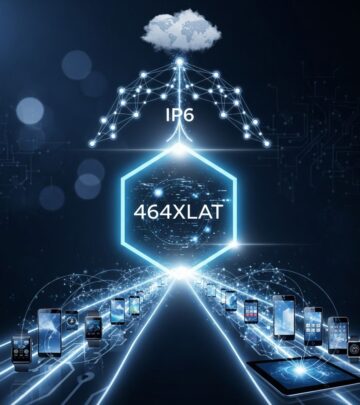
The elegant solution positions load balancers and edge infrastructure as translation boundaries. These devices maintain dual-stack capabilities, accepting both IPv4 and IPv6 traffic from external sources while routing all internal traffic exclusively through IPv6 pathways. This separation of concerns allows data center infrastructure to benefit from IPv6’s advantages while maintaining seamless service delivery to all users regardless of their external network configuration.
Load Balancer Architecture and Traffic Translation
Facebook implemented this edge-based strategy through modifications to its multi-layered load balancing infrastructure. The company operates two primary load balancing systems: a Layer 4 load balancer handling TCP/IP operations and a Layer 7 load balancer managing HTTP/HTTPS protocols. Both systems were enhanced to support transparent protocol translation.
The technical flow works as follows: external IPv4 requests enter Facebook’s network infrastructure and arrive at Layer 4 load balancers. These devices recognize the IPv4 traffic and encapsulate the requests within IPv6 tunnels for routing to appropriate Layer 7 load balancers. The Layer 7 systems decapsulate the requests, process them using IPv6-based internal infrastructure, and return responses directly to clients. From the user’s perspective, the service operates seamlessly regardless of whether their external connection uses IPv4 or IPv6.
This tunneling approach enabled Facebook to complete its internal IPv6 migration without requiring simultaneous updates to billions of external devices and network configurations. The infrastructure transparently handles protocol differences at defined boundaries, allowing gradual user migration toward IPv6 as regional internet providers and device manufacturers increase IPv6 support.
Implementation Challenges and Practical Solutions
Transitioning infrastructure at Facebook’s scale revealed numerous technical obstacles that lesser-resourced organizations might find daunting. The company’s engineering teams encountered problems spanning hardware, software, and organizational dimensions. Addressing these challenges required innovative thinking and sometimes unconventional approaches.
Hardware and Equipment Complications
Network switches and routing equipment represented an early obstacle. Some vendor equipment proved inadequate for the demands of an IPv6-only network operating at scale. Certain switches exhibited processor fallback behaviors when handling IPv6 traffic, degrading performance and creating bottlenecks. Additionally, hardware-based routing table limitations, particularly Ternary Content Addressable Memory (TCAM) constraints, imposed restrictions on the number of routes the infrastructure could efficiently manage.
These hardware limitations forced Facebook’s teams to identify equipment configurations that provided reliable IPv6 performance and work with vendors to enhance support for next-generation protocol deployments. The company’s scale gave it leverage to influence vendor development priorities, but smaller organizations undertaking similar migrations may need to invest in newer equipment or accept performance trade-offs.
Software and Application Compatibility
Moving beyond hardware, significant software compatibility issues emerged. Various open-source libraries and tools frequently used within data center environments exhibited IPv6-related bugs. The C standard library (glibc) contained subtle issues affecting IPv6 socket operations. Popular utilities like curl demonstrated unexpected behaviors when handling IPv6 addresses. Linux kernel caching mechanisms occasionally performed suboptimally under IPv6 load conditions.
Additionally, BGP routing protocols required modifications to operate reliably in IPv6-only environments. These were not insurmountable problems, but they required patience, detailed debugging, and often coordination with upstream open-source project maintainers.
Developer Behavior and Cultural Transformation
Perhaps the most interesting challenge involved developer practices. Despite organizational directives to support IPv6, many developers continued writing applications and services that operated exclusively over IPv4. Without concrete constraints forcing IPv6 adoption, the migration proceeded more slowly than planned.
Facebook implemented an unconventional but effective solution: the company removed IPv4 network access from developer machines. This radical approach eliminated the possibility of inadvertently developing IPv4-only code while simultaneously forcing developers to understand and work with IPv6 architecture. While dramatic, this strategy proved remarkably effective at accelerating cultural acceptance and technical capability.
Measuring Progress and Establishing Milestones
Throughout the migration process, Facebook established quantifiable metrics to track progress and maintain accountability. These measurements provided visibility into the transition’s status and helped identify areas requiring additional focus.
Key Performance Indicators
- 100% of monitored hosts achieved IPv6 compatibility, with hardware unable to support IPv6 being progressively retired
- 75% of all internal network traffic transitioned to IPv6 pathways by mid-2014, with targets to achieve complete transition by late 2014
- Specialized services achieved faster migration rates, with 98% of HHVM (the PHP virtual machine powering Facebook’s application tier) traffic running over IPv6
- Memory caching infrastructure achieved complete IPv6 transition, with 100% of memcached traffic operating exclusively on the new protocol
- Overall organizational goal established for achieving comprehensive IPv6-only operations within 2-3 years from the migration’s commencement
These metrics demonstrated that the migration was progressing systematically across different infrastructure layers at varying speeds. Some systems naturally transitioned faster due to architectural simplicity or fewer external dependencies. Others required extended effort due to complexity or third-party constraints.
Broader Industry Implications
Facebook’s migration initiative provides valuable case studies and practical methodologies for other large-scale technology organizations contemplating similar transitions. The company’s approach demonstrates that IPv6-only infrastructure is operationally feasible at significant scale, contrary to skeptics who argued that complete IPv6 adoption remained years or decades away.
The strategy of maintaining dual-stack edge infrastructure while operating IPv6-only internally offers a pragmatic middle path between competing pressures. This model accommodates the reality that global IPv6 adoption remains incomplete while still achieving the operational and architectural benefits of modern protocol deployment. Other organizations can adapt this template to their specific circumstances and constraints.
Future Outlook for Network Protocol Evolution
As internet connectivity becomes increasingly ubiquitous and devices proliferate across consumer and enterprise domains, IPv4’s limitations become progressively more constraining. IPv6 adoption represents not merely a technical upgrade but a necessary evolution of internet infrastructure. Organizations that proactively embrace this transition position themselves advantageously for long-term operational efficiency and scalability.
The timeline for complete industry migration remains uncertain, particularly given the billions of existing devices and network configurations running on IPv4. However, large-scale demonstration projects like Facebook’s initiative establish practical pathways and proven methodologies that reduce uncertainty and risk for subsequent adopters.
Practical Recommendations for Organizations Considering Migration
Based on Facebook’s experience, organizations contemplating IPv6 migration should consider several key principles. First, start with internal infrastructure rather than attempting simultaneous public-facing transitions. This allows teams to develop expertise and identify technical obstacles in contained environments. Second, embrace hybrid architectures that accept external IPv4 traffic while operating internally on IPv6. This pragmatic approach acknowledges real-world constraints while still capturing modernization benefits.
Third, invest in comprehensive testing and metrics. The complexity of protocol migration requires visibility into progress across multiple systems and services. Fourth, maintain organizational flexibility and willingness to diverge from conventional approaches when necessary. Facebook’s decision to remove IPv4 from developer machines exemplified unconventional thinking that proved highly effective.
Fifth, coordinate with equipment vendors and upstream open-source projects. Organizations undertaking large-scale migrations discover bugs and compatibility issues that affect broader communities. Collaborative engagement helps resolve these issues more rapidly and benefits the entire ecosystem.
References
- Legacy support on IPv6-only infra — Meta Engineering. 2017-01-17. https://engineering.fb.com/2017/01/production-engineering/legacy-support-on-ipv6-only-infra/
- Case Study: Facebook Moving To An IPv6-Only Internal Network — Internet Society. 2014-03-31. https://www.internetsociety.org/resources/deploy360/2014/case-study-facebook-moving-to-an-ipv6-only-internal-network/
- Facebook Is Close to Having an IPv6-only Data Center — ipSpace.net. 2014-03-31. https://blog.ipspace.net/2014/03/facebook-is-close-to-having-ipv6-only/
- Facebook’s Extremely Impressive Internal Use of IPv6 — Internet Society. 2014-03-31. https://www.internetsociety.org/blog/2014/03/facebooks-extremely-impressive-internal-use-of-ipv6/
Similar Articles







Read full bio of Sneha Tete