Encryption Under Siege: New US Bill Risks Global Security
A proposed US law could dismantle end-to-end encryption, exposing millions to cyber threats and undermining digital trust worldwide.
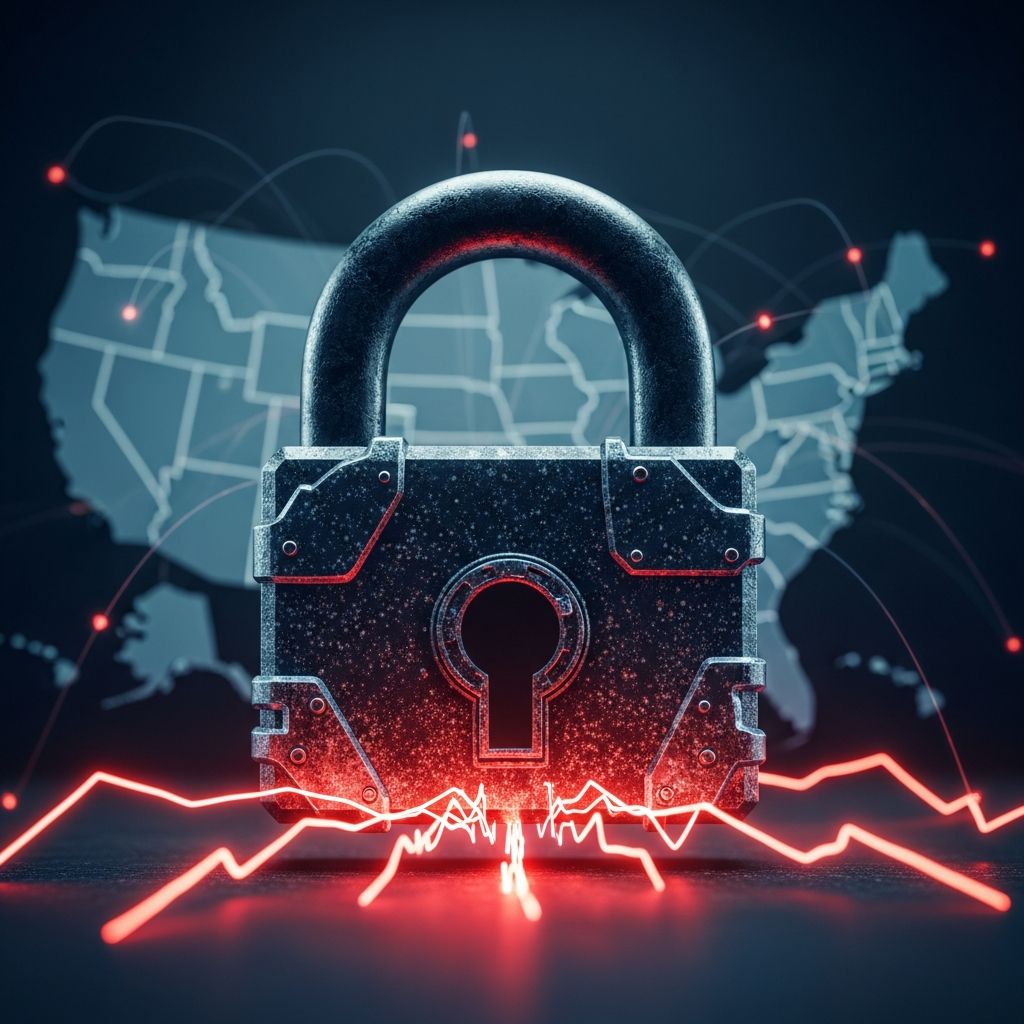
In an era where digital communications underpin everything from personal conversations to critical infrastructure, the push for government access to encrypted data has reignited fierce debates. A recently introduced bill in the US Congress aims to compel technology companies to unlock encrypted information for law enforcement, sparking alarms among security professionals, privacy advocates, and industry leaders. This legislation, framed as a tool to combat crime, could inadvertently create vulnerabilities that hackers and foreign adversaries exploit, putting at risk the security of billions worldwide.
The Core of the Controversy: What the Bill Proposes
At its heart, the bill targets end-to-end encryption (E2EE), a cornerstone of modern digital protection. E2EE ensures that only the sender and recipient can access message contents, with even service providers unable to view them. The proposed law would require firms to offer “technical assistance” when authorities present legal requests, effectively pressuring them to engineer ways to bypass these safeguards.
Proponents argue this is essential for investigations into terrorism, child exploitation, and organized crime, where encrypted apps have allegedly shielded perpetrators. However, critics highlight that no reliable method exists to grant selective access without compromising the entire system. Building so-called “backdoors”—intentional weaknesses—means anyone discovering them, be it cybercriminals or nation-states, gains an entry point.
- Mandatory Compliance: Companies must provide decryption tools or data upon warrant.
- Broad Scope: Applies to devices, apps, and cloud services handling encrypted info.
- Global Reach: US-based firms serve international users, amplifying worldwide impact.
Technical Realities: Why Backdoors Are a Flawed Solution
Encryption’s strength lies in its mathematical rigor. Algorithms like AES-256 and protocols such as Signal’s have withstood decades of scrutiny. Introducing a backdoor requires altering these foundations, either by weakening keys, adding escrow systems, or embedding hidden access points. Each approach carries inherent risks.
| Backdoor Method | Potential Risks | Real-World Examples |
|---|---|---|
| Key Escrow | Centralized storage becomes a hacking target | 1990s Clipper Chip initiative failed due to trust issues |
| Weakened Algorithms | Universal vulnerability for all users | Dual_EC_DRBG NSA backdoor exposed by Snowden |
| Client-Side Access | Requires device modifications, enabling malware | Recent state-sponsored attacks on iOS via Pegasus |
Security researchers consistently demonstrate that targeted access inevitably leaks. A 2023 study by the National Institute of Standards and Technology (NIST) emphasized that no “golden key” exists—any decryption capability proliferates uncontrollably.
Global Precedents: Lessons from Allied Nations
The US is not alone in this pursuit. The United Kingdom’s Investigatory Powers Act (2016) and Australia’s Telecommunications and Other Legislation Amendment (Assistance and Access) Act (2018) mirror these demands. In the UK, courts have compelled firms like Apple to unlock devices, while Australia fined non-compliant providers. Yet, both nations report rising cyber incidents post-legislation, with attackers exploiting the same mandated weaknesses.
Five Eyes partners—US, UK, Canada, Australia, New Zealand—coordinate on signals intelligence, raising fears of shared backdoor standards. A joint open letter from over 75 experts in 2020 warned that such laws erode trust in US tech exports, driving users to less secure alternatives.
Real-World Impacts: From Banking to Healthcare
Encryption secures daily life: online purchases via TLS, medical records in HIPAA-compliant systems, corporate VPNs for remote work. Weakening it exposes sectors to catastrophe.
- Financial Services: $6 trillion in daily transactions rely on encryption; breaches could trigger economic chaos.
- Healthcare: Telemedicine boomed post-COVID, with E2EE protecting patient data from ransomware like WannaCry.
- Critical Infrastructure: Power grids and water systems use encrypted SCADA protocols; backdoors invite sabotage.
In 2024, a simulated attack by cybersecurity firm Mandiant showed that backdoor-enabled systems failed 40% faster against advanced persistent threats (APTs).
Industry and Expert Backlash: A United Front
Tech giants like Apple, Google, and Meta, alongside nonprofits such as the Electronic Frontier Foundation (EFF), decry the bill. Apple’s 2021 fight against FBI iPhone unlocking set the tone, revealing public support for privacy. An EFF analysis notes two counter-proposals: the ENCRYPT Act and Secure Data Act, which bolster encryption without mandates.
“Mandating access undermines the very security we need to fight crime effectively.” — EFF, 2023 report on cybersecurity legislation.
Civil society coalitions, including the Internet Society, have mobilized petitions, emphasizing innovation stifling. Startups avoid US markets, fearing compliance costs, per a 2025 Brookings Institution study.
Balancing Security and Surveillance: Alternative Paths Forward
Rather than breaking encryption, experts advocate metadata analysis, AI-driven threat detection, and international cooperation. The FBI’s own 2022 report admitted 90% of investigations succeed without decryption. Enhancing legal tools—like faster warrants—and investing in quantum-resistant crypto offer sustainable solutions.
Post-quantum cryptography (PQC), standardized by NIST in 2024, prepares for future threats without backdoors. Legislation like the Quantum Encryption Readiness Act (2025) promotes PQC adoption, contrasting anti-encryption pushes.
FAQs: Addressing Common Questions on Encryption Debates
What is end-to-end encryption?
E2EE scrambles data so only endpoints can decrypt it, preventing intermediaries from access.
Does the bill explicitly require backdoors?
No, but “technical assistance” mandates imply building access mechanisms, per legal experts.
Who benefits from strong encryption?
Everyone: journalists in autocracies, businesses protecting IP, citizens shielding personal data.
Can law enforcement get data without weakening encryption?
Yes, via user-provided keys, device seizures, or cloud backups—methods used successfully today.
What happens if the bill passes?
Global users of US apps face heightened risks; innovation shifts overseas.
The Path Ahead: Protecting Digital Foundations
As debates intensify, the stakes couldn’t be higher. Policymakers must weigh short-term investigative gains against long-term security erosion. Public advocacy, informed by technical realities, remains crucial. Strengthening encryption, not subverting it, equips societies against evolving threats—from ransomware epidemics to quantum computing challenges. The choice defines the internet’s secure future.
References
- Cybersecurity Information Sharing Act (CISA) Opposition — New America Open Technology Institute. 2015-10-27. https://www.newamerica.org/insights/senate-passes-dangerous-cybersecurity-information-sharing-act/
- Encryption under attack — Electronic Frontier Foundation. 2016-01-01. https://www.eff.org/effector/29/10
- Quantum Encryption Readiness and Resilience Act — Perkins Coie LLP. 2025-08-08. https://perkinscoie.com/insights/blog/house-bill-introduced-shield-us-cybersecurity-risks-posed-quantum-computing
- Cyber Security Legislation — Electronic Frontier Foundation. 2023-05-09. https://www.eff.org/issues/cyber-security-legislation
- Post-Quantum Cryptography Standardization — National Institute of Standards and Technology (NIST). 2024-08-13. https://csrc.nist.gov/projects/post-quantum-cryptography
Similar Articles







Read full bio of medha deb