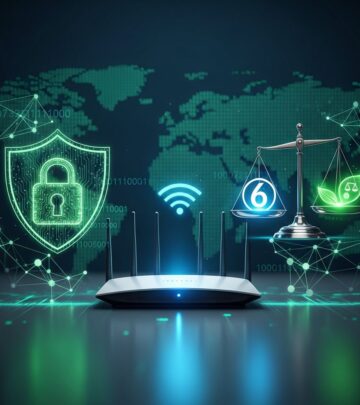
Encryption Clash: Security vs Privacy
Exploring the ongoing battle between government demands for access to encrypted communications and the essential right to digital privacy in the modern world.

In an era where digital communications underpin nearly every aspect of daily life, the debate over end-to-end encryption has intensified. Governments worldwide grapple with how to combat serious crimes like terrorism and child exploitation while tech companies champion unbreakable privacy protections. This tension reached a flashpoint in the UK, where legislative pushes have sought to compel access to encrypted messages, sparking global controversy.
The Roots of the Encryption Dilemma
End-to-end encryption (E2EE) ensures that only the sender and recipient can read messages, rendering them inaccessible even to service providers. This technology powers apps like WhatsApp, Signal, and iMessage, protecting billions of users from hackers, corporations, and states. Yet, law enforcement agencies argue that E2EE creates ‘dark pools’ where criminals operate undetected.
The core issue lies in balancing these competing interests. Public safety demands tools to investigate threats, but weakening encryption risks exposing everyone to surveillance and cyberattacks. Historical precedents, such as the 2015 San Bernardino case where Apple resisted FBI demands, illustrate this standoff.
UK’s Legislative Push for Access
The United Kingdom has been at the forefront of this debate. In 2015, then-Prime Minister David Cameron called for banning messaging services that couldn’t be read by authorities with a warrant. This rhetoric evolved into the Online Safety Act 2023, which empowers Ofcom to regulate online harms, including on encrypted platforms.
Under the Act, companies face fines up to 10% of global revenue if they fail to detect illegal content like child sexual abuse material (CSAM). Critics warn this effectively mandates scanning private messages, undermining E2EE. Apple responded dramatically by threatening to withdraw services from the UK, highlighting the stakes for innovation and user trust.
- Key Provisions: Platforms must proactively identify and remove harmful content.
- Penalties: Fines or operational blocks for non-compliance.
- Scope: Extends to private chats on apps like iMessage.
National Security Imperatives
Governments assert that lawful access to encrypted data is vital for protecting citizens. The UK Home Office emphasizes investigating serious crimes requires content access proportionate to threats. An international statement signed by multiple nations underscores how E2EE hampers responses to child exploitation and terrorism.
Encryption implementations that block all access, even with warrants, severely limit law enforcement’s ability to safeguard the vulnerable.
Statistics bolster this view: In 2022, UK police reported over 250,000 CSAM images, many on encrypted platforms. Without intervention, these numbers could rise, endangering children globally.
Privacy Advocates’ Counterarguments
Tech firms and privacy groups like the Electronic Frontier Foundation (EFF) argue that backdoors create universal vulnerabilities. Once introduced, they can’t be limited to ‘good guys’—hackers and foreign adversaries exploit them too. Apple’s stance exemplifies this: CEO Tim Cook has repeatedly stated that privacy is a fundamental right, not negotiable for security theater.
Moreover, mandated scanning erodes free speech. The Online Safety Bill’s broad definitions of ‘harm’ could chill dissent, as users self-censor fearing algorithmic flags.
| Pro-Access Arguments | Pro-Privacy Arguments |
|---|---|
| Enables crime prevention and prosecution | Risks mass surveillance and data breaches |
| Protects vulnerable groups like children | Undermines trust in digital services |
| Lawful with warrants only | Backdoors are inherently insecure |
Technical Feasibility and Innovation Risks
Implementing government access isn’t straightforward. Client-side scanning, as proposed in some models, requires decrypting messages before sending, betraying E2EE’s purpose. Alternatives like key escrow demand perfect security—unlikely given past breaches like the 2016 Yahoo hack affecting 3 billion accounts.
For the UK tech sector, such mandates could stifle growth. Companies might relocate to privacy-friendly jurisdictions, costing jobs and investment. A 2023 analysis estimated potential losses in billions if encryption is compromised.
Global Repercussions and Precedents
The UK’s approach influences worldwide policy. The EU’s Digital Services Act echoes similar duties of care, while the US debates reforming Section 702 of FISA. Authoritarian regimes cite Western examples to justify blanket surveillance, per EFF reports.
International cooperation, like the 2023 statement on E2EE, shows alignment among democracies but faces resistance from Silicon Valley. Apple’s UK standoff signals a new era where firms prioritize principles over markets.
Potential Paths Forward
Solutions must thread the needle. Ghost protocols allow access for specific users without systemic backdoors. Enhanced metadata analysis provides investigative leads without content decryption. Investing in quantum-resistant encryption future-proofs privacy.
- Legislative Safeguards: Strict oversight and sunset clauses for access powers.
- Tech Innovations: Homomorphic encryption for scanning without decryption.
- International Standards: Harmonized rules via bodies like the UN or OECD.
Public Opinion and Ethical Dimensions
Surveys reveal divided views: A 2024 YouGov poll found 55% of Brits support access for CSAM cases, but only 32% for general crime. Ethically, utilitarianism favors safety, while deontology prioritizes rights. Societies must decide: Collective security or individual liberty?
FAQs
What is end-to-end encryption?
E2EE scrambles messages so only endpoints can decrypt them, ensuring intermediaries can’t access content.
Does the UK ban encryption?
No, but the Online Safety Act pressures platforms to scan encrypted services or face penalties.
Can backdoors be made secure?
Experts widely agree no—any access mechanism is a vulnerability exploitable by bad actors.
How does this affect non-UK users?
Global apps mean weakened standards impact everyone; features may be disabled worldwide.
Conclusion: Toward Balanced Digital Governance
The encryption debate encapsulates our digital age’s paradoxes. Governments must protect without overreaching, and tech must innovate responsibly. Dialogue, not mandates, offers the best path—ensuring safety enhances, rather than erodes, privacy. As threats evolve, so must our frameworks, preserving an open, secure internet for all.
References
- International statement: End-to-end encryption and public safety — UK Government. 2023-10-04. https://www.gov.uk/government/publications/international-statement-end-to-end-encryption-and-public-safety/international-statement-end-to-end-encryption-and-public-safety-accessible-version
- The UK Online Safety Bill: A Massive Threat to Online Privacy, Security, and Speech — Electronic Frontier Foundation. 2023-09-19. https://www.eff.org/pages/uk-online-safety-bill-massive-threat-online-privacy-security-and-speech
- Online Safety Act — UK Parliament (via legislation.gov.uk). 2023-10-26. https://www.legislation.gov.uk/ukpga/2023/50/contents
- Encryption: It’s Not About Good and Bad Guys, It’s About All of Us — Center for European Policy Analysis. 2024-01-15. https://cepa.org/comprehensive-reports/encryption-its-not-about-good-and-bad-guys-its-about-all-of-us/
- Does the Online Safety Act violate privacy too harshly over security concerns? — Lancaster University Richardson Institute. 2024-02-20. https://www.lancaster.ac.uk/richardson-institute/blogs/does-the-online-safety-act-violate-privacy-too-harshly-over-security-concerns
Similar Articles








Read full bio of Sneha Tete