Empowering Sri Lanka’s Disabled Through Internet Access
Bridging digital gaps for persons with disabilities in Sri Lanka via innovative training and tech initiatives.
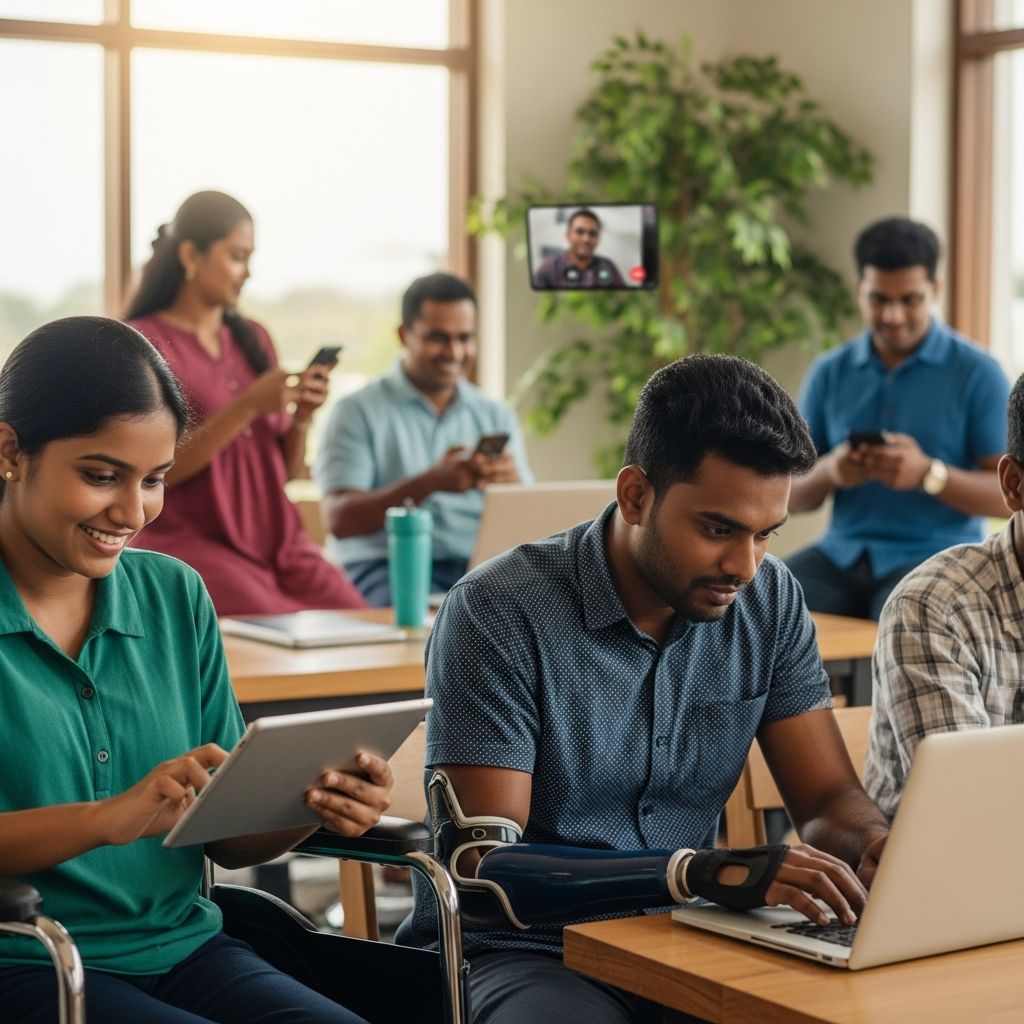
In Sri Lanka, where diverse challenges shape daily life, persons with disabilities often face barriers that extend beyond physical limitations into the digital realm. The lack of internet skills isolates many from essential opportunities in education, employment, and social engagement. Yet, targeted initiatives are emerging to change this narrative, equipping visually impaired and other disabled individuals with the tools to navigate the online world confidently. This article delves into the transformative power of internet training programs, highlighting collaborative efforts that promise widespread inclusion.
The Digital Divide Facing Disabled Communities
Sri Lanka’s disability landscape is marked by significant hurdles. According to official estimates, millions live with impairments that interact with societal barriers, limiting full participation.1 Visually impaired individuals, in particular, struggle with technology adoption due to inaccessible interfaces and insufficient training. Traditional computer literacy courses rarely accommodate screen readers or adaptive software, leaving many sidelined in an increasingly digital economy.
Remote and rural areas exacerbate these issues, where internet infrastructure is sparse. Public buildings may lack ramps or accessible features despite legal mandates, mirroring gaps in digital accessibility.2 This divide not only restricts personal growth but also hinders economic contributions, as online platforms become gateways to remote work and e-learning.
- Limited access to adaptive technologies like JAWS or NVDA screen readers.
- Scarcity of trainers skilled in disability-specific instruction.
- Policy gaps in enforcing digital inclusion standards.
Innovative Training Models Taking Shape
Pioneering projects are addressing these challenges head-on. Partnerships between tech organizations and local disability groups are rolling out specialized computer literacy programs. Starting small, these efforts train initial cohorts of visually impaired participants, who then become trainers themselves—a peer-led model that builds sustainability.
Phase one focuses on core skills: basic navigation, email usage, and web browsing with assistive tools. Certified graduates extend their expertise to peers, creating a ripple effect. This approach ensures cultural relevance and trust, as trainers understand lived experiences intimately.
| Training Phase | Focus Areas | Expected Outcomes |
|---|---|---|
| Phase 1: Core Group | 10 visually impaired trainees; screen reader proficiency | Certified trainers ready to multiply impact |
| Phase 2: Expansion | Mobile labs for remote outreach | Broader access in underserved regions |
| Phase 3: National Scale | All disabled groups across Sri Lanka | Nationwide digital empowerment |
Such models draw from global best practices but are tailored to local contexts, incorporating Sinhala and Tamil language support for broader reach.
Overcoming Physical and Technological Barriers
Mobility challenges compound digital exclusion for wheelchair users and others with physical impairments. Fixed training centers are impractical, prompting the development of mobile labs—vans equipped with computers, internet hotspots, and adaptive hardware. These units travel to villages, bringing training directly to participants.
Key adaptations include ergonomic setups, voice-activated software, and high-contrast displays. Collaborations with blindness organizations ensure content is Braille-compatible where needed. Success stories abound: trainees mastering online banking, connecting with family abroad, or enrolling in virtual courses.
“Internet access isn’t a luxury—it’s a right that unlocks independence for the disabled.” – Local advocate
Policy Frameworks Supporting Inclusion
Sri Lanka’s commitment to disability rights is enshrined in law. The Protection of the Rights of Persons with Disabilities Act (1996) and ratification of the UNCRPD in 2016 mandate equal access.1 Recent building codes require ramps and accessible facilities, setting precedents for digital mandates.2
However, implementation lags. Advocacy pushes for rights-based legislation over charity models, emphasizing self-determination. Videos and campaigns highlight shifts from pity to empowerment, urging inclusive policymaking with disabled voices at the table.3
Real-World Impacts and Success Stories
Early participants report profound changes. One trainee, previously housebound, now runs an online handicraft business, employing peers. Another accesses health resources and teleconsultations, improving quality of life. These outcomes validate the model’s efficacy, with scalability plans targeting all disabled groups.
Employment prospects brighten as digital skills align with global demands. E-commerce, freelancing, and remote education become viable, reducing dependency. Community networks form online, combating isolation.
Challenges Ahead and Solutions
Despite progress, obstacles persist: funding shortages, trainer retention, and infrastructure deficits. Rural connectivity remains patchy, demanding public-private investments. Solutions include government subsidies for mobile labs and international grants.
Sustainability hinges on peer training expansion. Monitoring via participant feedback ensures adaptability. Partnerships with telecoms can lower data costs for disabled users.
Future Horizons: A Fully Inclusive Digital Sri Lanka
Long-term visions encompass nationwide rollout, integrating all impairment types—physical, intellectual, sensory. AI-driven tools promise further personalization, like real-time translation for deaf users. By 2030, inclusive digital literacy could position Sri Lanka as a regional leader.
Global lessons from similar initiatives reinforce optimism. With sustained effort, the internet can transcend barriers, fostering equity.
Frequently Asked Questions (FAQs)
What inspired these internet training programs in Sri Lanka?
Requests from disabled veterans and collaboration with blindness organizations sparked targeted initiatives under funding programs.
How does the mobile lab model work?
Equipped vehicles deliver on-site training to remote areas, equipped with adaptive tech and internet access.
What legal protections exist for disabled persons in Sri Lanka?
The 1996 Act and UNCRPD ratification ensure rights to education, employment, and accessibility.
Who benefits from these programs?
Primarily visually impaired, with plans to include all physical and sensory disabilities.
How can one get involved?
Support via donations, volunteer as a trainer, or advocate for policy changes.
References
- Special Education in Sri Lanka: A snapshot of three provinces — Disability Studies Quarterly. 2010. https://dsq-sds.org/article/id/398/
- Living with Disabilities in Sri Lanka — Groundviews. 2025-12-03. https://groundviews.org/2025/12/03/living-with-disabilities-in-sri-lanka/
- Disability rights in Sri Lanka: From charity to empowerment — YouTube (People’s Platform). 2023. https://www.youtube.com/watch?v=PH9CB8tio0Y
Similar Articles






Read full bio of Sneha Tete