Empowering Sri Lankan Girls in Coding
Bridging the gender gap in STEM through hands-on coding and IoT training for young women across Sri Lanka's communities.
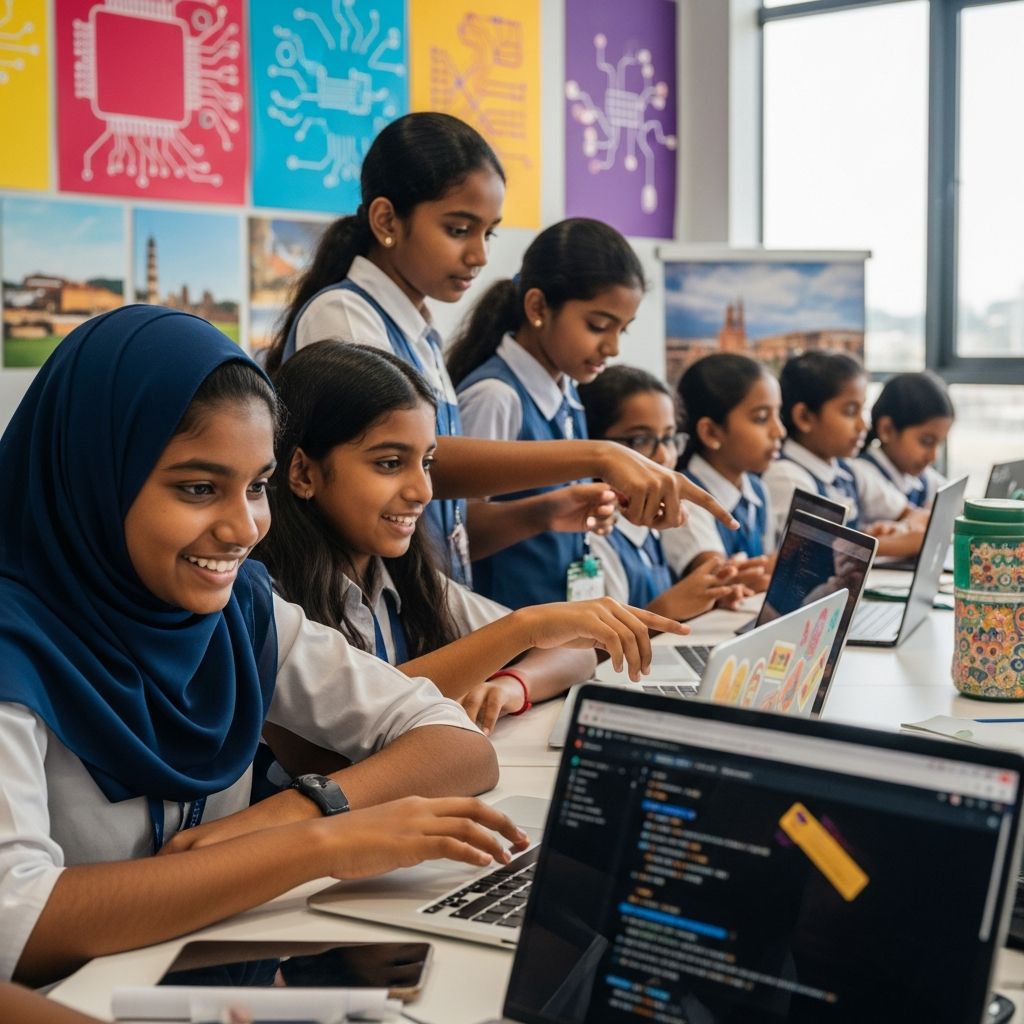
In Sri Lanka, a nation with growing digital ambitions, young women face significant hurdles in entering technology fields. Despite equal school enrollment rates between genders, women remain underrepresented in ICT jobs, often due to cultural biases, lack of early exposure, and limited resources. Community-led efforts are changing this narrative by introducing teenage girls to coding and emerging technologies like the Internet of Things (IoT). These programs not only equip participants with practical skills but also challenge stereotypes, paving the way for greater gender equity in STEM.
The Urgent Need for Gender-Inclusive Tech Education
Sri Lanka’s tech sector is expanding rapidly, driven by global demand for software development and digital solutions. However, statistics reveal a stark gender imbalance. Women, who make up roughly half the population, hold fewer than 30% of tech roles, according to reports from international development organizations. This gap starts early: many girls opt out of ICT subjects at the secondary level, influenced by societal expectations that steer them toward traditional paths like teaching or humanities.
Early intervention is key. By grade 9, students choose advanced subjects for grade 10 and beyond. Programs targeting this pivotal stage introduce coding basics, robotics, and IoT projects, making tech accessible and fun. These initiatives use affordable embedded devices, such as microcontrollers, to build real-world applications like smart sensors or automated systems. The result? Girls gain confidence, problem-solving skills, and a glimpse into lucrative careers.
Key Initiatives Driving Change
Several organizations have launched targeted programs to train hundreds of girls annually. One standout effort aims to reach 800 teenage participants across 40 communities, alongside 80 teachers and 40 university mentors. Workshops focus on hands-on learning: participants assemble IoT kits, program devices for environmental monitoring, and collaborate on team projects. After-school coding clubs extend the learning, encouraging creative experimentation with open-source tools.
Partnerships amplify impact. Local chapters of global tech societies collaborate with foundations and academic groups to deliver training. University students serve as mentors, bridging theory and practice, while teachers receive professional development to integrate coding into curricula. Competitions and school exhibitions showcase student innovations, from irrigation controllers to health trackers, inspiring peers and attracting media attention.
- Targeted Training: 800 girls in coding and IoT fundamentals.
- Teacher Upskilling: 80 educators trained in modern tech pedagogy.
- Mentorship Network: 40 university students guiding projects.
- Community Reach: 40 diverse locations, urban and rural.
Overcoming Barriers in Rural and Urban Settings
Sri Lanka’s geography poses challenges: rural areas lack reliable internet and hardware, while urban schools grapple with overcrowded classes. Programs counter this with mobile workshops and donated kits containing Raspberry Pi-like boards, sensors, and batteries. Training emphasizes low-bandwidth tools and offline coding environments, ensuring inclusivity.
Cultural shifts are equally vital. Parental involvement sessions address myths about tech being ‘unfeminine,’ highlighting success stories of Sri Lankan women in Silicon Valley and local startups. Girls report boosted self-esteem; one participant noted, ‘Coding showed me I can build solutions for my village’s problems.’
| Challenge | Solution | Impact |
|---|---|---|
| Limited Access to Devices | IoT Kits Distribution | Hands-on practice for all |
| Teacher Skill Gaps | Professional Workshops | Sustainable classroom integration |
| Societal Stereotypes | Role Model Sessions | Increased subject selection |
| Rural Connectivity | Offline Tools | Equitable participation |
Building Sustainable Coding Clubs
A hallmark of these programs is the creation of extracurricular coding clubs. These hubs meet weekly, fostering peer learning and innovation. Girls tackle projects like weather stations or community apps, using platforms like Scratch for beginners and Python for advanced users. Clubs culminate in national hackathons, where teams pitch ideas to judges from industry and government.
Sustainability comes from community ownership. Trained teachers lead clubs post-project, while alumni return as mentors. Open educational resources—free tutorials, forums, and standards-based protocols—keep momentum going. This model has led to higher ICT enrollment in participating schools, with some reporting 20-30% increases in girls choosing tech tracks.
Aligning with Global Development Goals
These efforts resonate with United Nations Sustainable Development Goals, particularly SDG 4 (Quality Education) and SDG 5 (Gender Equality). By promoting inclusive tech literacy, they contribute to equitable societies. Locally, they inform policy: project data on barriers informs ministry guidelines for gender-sensitive curricula.
Broader impacts include economic empowerment. Tech skills correlate with higher employability; UNESCO-backed studies show ICT-trained women earn 25% more than peers in non-tech fields. Programs also nurture entrepreneurship, with girls launching apps for local needs like disaster alerts in flood-prone areas.
Empowering one girl with code empowers her family and community for generations.
Success Stories and Measurable Outcomes
Early results are promising. In pilot phases, 90% of participants reported greater interest in STEM, and 70% selected ICT for advanced studies. Competitions yielded winners whose IoT farm monitors now aid smallholders. Teachers, refreshed with skills, have integrated coding into math and science lessons.
Long-term tracking via alumni networks shows graduates entering university tech programs at twice the national rate for girls. These stories ripple outward, motivating siblings and neighbors.
Future Directions and Scalability
To scale nationally, initiatives advocate for government integration: mandatory coding in grade 9, subsidized devices, and teacher incentives. Collaborations with tech giants provide cloud resources and certifications. AI modules are emerging, preparing girls for next-gen roles.
Challenges remain—funding, retention in remote areas—but data-driven refinements ensure progress. By 2030, these efforts could double female tech participation, fueling Sri Lanka’s digital economy.
Frequently Asked Questions
What age group does the program target?
Primarily grade 9 girls (ages 14-15), with extensions for younger siblings and older mentors.
How can schools get involved?
Contact partnering foundations for workshops; provide space for clubs.
Are the resources free?
Yes, kits and training are provided at no cost to participants.
What skills do girls learn?
Coding (block-based to Python), IoT assembly, electronics, and project management.
Has it improved enrollment in ICT?
Yes, participating schools see 20-30% rises in girls choosing tech subjects.
References
- Shilpa Sayura Foundation NextGen Girls in Technology Programme — UNESCO. 2023. https://www.unesco.org/en/articles/how-unesco-laureate-empowering-girls-through-ict-sri-lanka
- #DigiGirlz Sri Lanka Event Report — Microsoft News Center Asia Pacific. 2019-03-08. https://news.microsoft.com/apac/2019/03/08/microsoft-inspires-500-girls-parents-and-teachers-in-sri-lanka-to-embrace-coding-stem-skills-and-makewhatsnext/
- SheDreams Foundation Sri Lanka Initiative — SheDreams Foundation. 2024. https://www.shedreamsfoundation.org/sri-lanka
- Sustainable Development Goals: SDG 4 & 5 Overview — United Nations. 2023-09-18. https://sdgs.un.org/goals
Similar Articles








Read full bio of Sneha Tete