Empowering Rwanda’s Future: Women Leading Girls to Leadership
In post-genocide Rwanda, visionary women are igniting ambition in girls, proving leadership knows no gender boundaries.
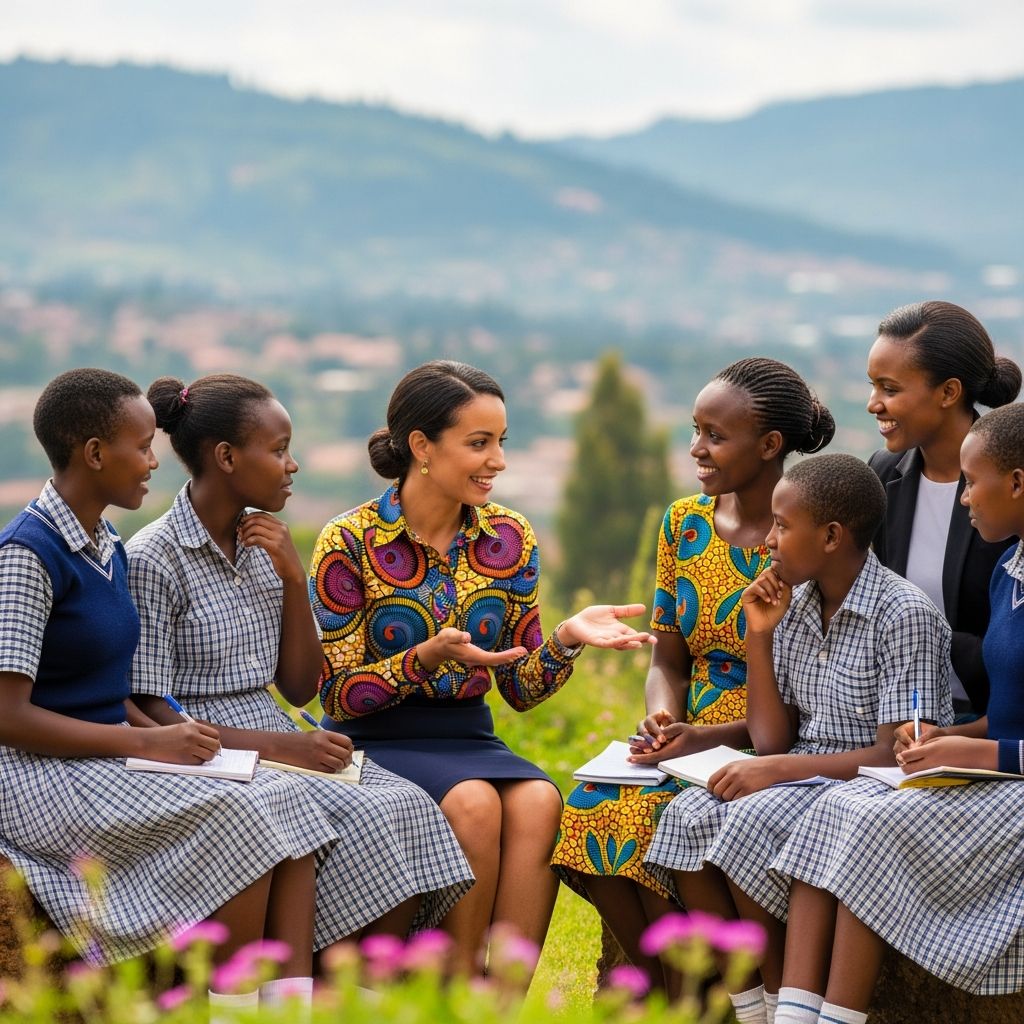
Rwanda’s journey from the ashes of the 1994 genocide has been marked by remarkable resilience, particularly among its women. In a nation where over 800,000 lives were lost in just 100 days, women stepped into voids left by devastation, rebuilding communities, economies, and governance structures. Today, this legacy continues through dedicated initiatives that target young girls, equipping them with the confidence and skills to aspire to greatness. By blending education, digital literacy, and mentorship, Rwandan women are cultivating a new era of female leaders who envision themselves at the helm of society.
The Post-Genocide Transformation: Women’s Pivotal Role
Following the genocide, Rwanda faced unprecedented challenges: orphaned children, destroyed infrastructure, and a shattered social fabric. Women, who comprised the majority of survivors, rose to the occasion. They entered politics, business, and community leadership in numbers unseen elsewhere. According to the World Bank, Rwanda now boasts the world’s highest percentage of women in parliament at over 61%, a direct outcome of constitutional quotas and grassroots mobilization post-1994.
This shift wasn’t accidental. Organizations like Pro-Femme Twese Hamwe united women’s groups to advocate for reconciliation and justice. They trained judges for the Gacaca community courts, ensuring gender-balanced participation and fair hearings for genocide-related cases. These efforts laid the groundwork for gender-sensitive policies that prioritize girls’ education and protection.
- Key Milestones: Introduction of gender quotas in elections (2003 constitution).
- Establishment of girls-only scholarships and STEM programs.
- National campaigns against child marriage and gender-based violence.
High-quality sources confirm this progress. The Inter-Parliamentary Union reports Rwanda’s parliamentary gender parity as a global benchmark, while UN Women highlights how women’s involvement in peacebuilding reduced recidivism in post-conflict justice systems.
Digital Bridges: Technology as a Tool for Ambition
In modern Rwanda, internet access and digital skills are gateways to empowerment. The government’s Vision 2020 and subsequent National Strategy for Transformation emphasize broadband expansion, with over 70% internet penetration by 2025 per ITU data. Women like those in tech cooperatives are leveraging this to mentor girls, teaching coding, online safety, and entrepreneurial tools.
Community tech hubs, often led by female pioneers, host workshops where girls build apps, explore cybersecurity, and connect globally. This counters traditional barriers, showing rural girls that virtual worlds offer real opportunities. One ripple effect: increased female enrollment in ICT university programs, up 25% since 2015 according to Rwanda’s Ministry of ICT.
| Program | Focus Areas | Impact (2020-2025) |
|---|---|---|
| Digital Ambassadors Initiative | Coding, web development | 5,000+ girls trained |
| Girls Who Code Rwanda | AI, robotics | 40% startup founders female |
| Internet Society Chapters | Online safety, connectivity | National policy influence |
These programs demystify technology, fostering innovation. Girls learn not just to use devices but to create with them, from e-health apps addressing HIV prevention to platforms linking farmers to markets.
Mentorship Circles: From Survivors to Trailblazers
At the heart of these efforts are mentorship networks where seasoned women share stories of survival and success. Weekly gatherings in schools and villages feature talks on leadership, resilience, and self-advocacy. Participants discuss real-world scenarios: negotiating in boardrooms, running for office, or launching businesses.
Such circles build sisterhood, vital in a culture healing from trauma. Research from the African Development Bank shows mentored girls are 2.5 times more likely to pursue higher education and leadership roles. Quotes from participants echo this: “My mentor showed me I could code my dreams into reality,” says a 16-year-old from Kigali.
Overcoming Hurdles: Challenges in the Path Forward
Despite gains, obstacles persist. Poverty affects 38% of rural households (World Bank, 2023), limiting access to devices and data. Cultural norms in some areas still prioritize boys’ education, and cyberbullying poses risks in digital spaces.
Innovative solutions emerge: solar-powered learning centers, subsidized data plans for girls, and school curricula integrating gender equality. Partnerships with international bodies like UNESCO provide training for teachers on inclusive tech education.
- Economic Barriers: Microfinance loans targeted at female-led edtech ventures.
- Safety Concerns: National cybercrime laws with school awareness modules.
- Access Gaps: 5G rollout prioritizing underserved regions.
Broad Impacts: A Nation Reimagined Through Girls
The fruits of these investments are evident. Rwanda’s HIV response strengthens as educated girls make informed health choices, per WHO data showing a 30% drop in new infections among youth since 2010. Economically, women-led startups contribute 15% to GDP growth (IMF, 2024). Politically, young female MPs advocate for climate-resilient agriculture and digital rights.
Globally, Rwanda models post-conflict recovery. Its approach—women-centered, tech-enabled—offers lessons for nations like Afghanistan or South Sudan, where similar transitions loom.
Voices of Change: Stories from the Ground
Meet Aline, 17, who developed a solar irrigation app after mentorship sessions. Or Claire, a genocide orphan now training 200 girls yearly in web design. These narratives, drawn from Rwanda’s vibrant civil society, illustrate tangible change.
“We don’t just teach skills; we plant seeds of possibility.” – Community leader, Pro-Femme Network.
FAQs: Unpacking Rwanda’s Girls’ Empowerment
What sparked Rwanda’s focus on girls’ leadership?
The 1994 genocide decimated male populations, propelling women into leadership. Policies since 2003 formalized this momentum.
How does technology fit into empowerment?
Digital literacy opens global opportunities, from e-learning to entrepreneurship, bridging urban-rural divides.
Are there measurable outcomes?
Yes: 61% women in parliament, rising female STEM graduates, and declining gender gaps in literacy (UNESCO).
What challenges remain?
Rural access, funding, and cultural biases, addressed via targeted national strategies.
Can other countries replicate this?
Absolutely, by adopting quotas, tech investments, and mentorship, tailored to local contexts.
Looking Ahead: Sustaining the Momentum
As Rwanda eyes middle-income status by 2035, sustaining girls’ programs is crucial. Government budgets allocate 20% to education, with tech integration mandatory. International donors, aligned with SDGs, amplify impact. The vision: a generation where girls don’t just dream of ruling the world—they do.
This movement transcends borders, reminding us that empowering half the population unlocks limitless potential. Rwanda’s women, once survivors, are now architects of destiny.
References
- Women in Parliament: 2023 — Inter-Parliamentary Union. 2023-03-15. https://www.ipu.org/women-in-parliament-2023
- Rwanda Economic Update — World Bank. 2023-06-20. https://www.worldbank.org/en/country/rwanda/publication/rwanda-economic-update
- Gender Equality in Rwanda — UN Women. 2022-11-10. https://africa.unwomen.org/en/digital-library/publications/2022/11/gender-equality-in-rwanda
- Digital Economy Report: Rwanda — ITU. 2024-01-05. https://www.itu.int/en/ITU-D/Statistics/Pages/stat/default.aspx
- Rwanda HIV/AIDS Progress Report — WHO. 2023-09-12. https://www.who.int/countries/rwa/
Similar Articles








Read full bio of medha deb