Empowering Rural Guatemalan Youth Through Digital Access
How connectivity and education initiatives transform opportunities for underserved communities in Guatemala
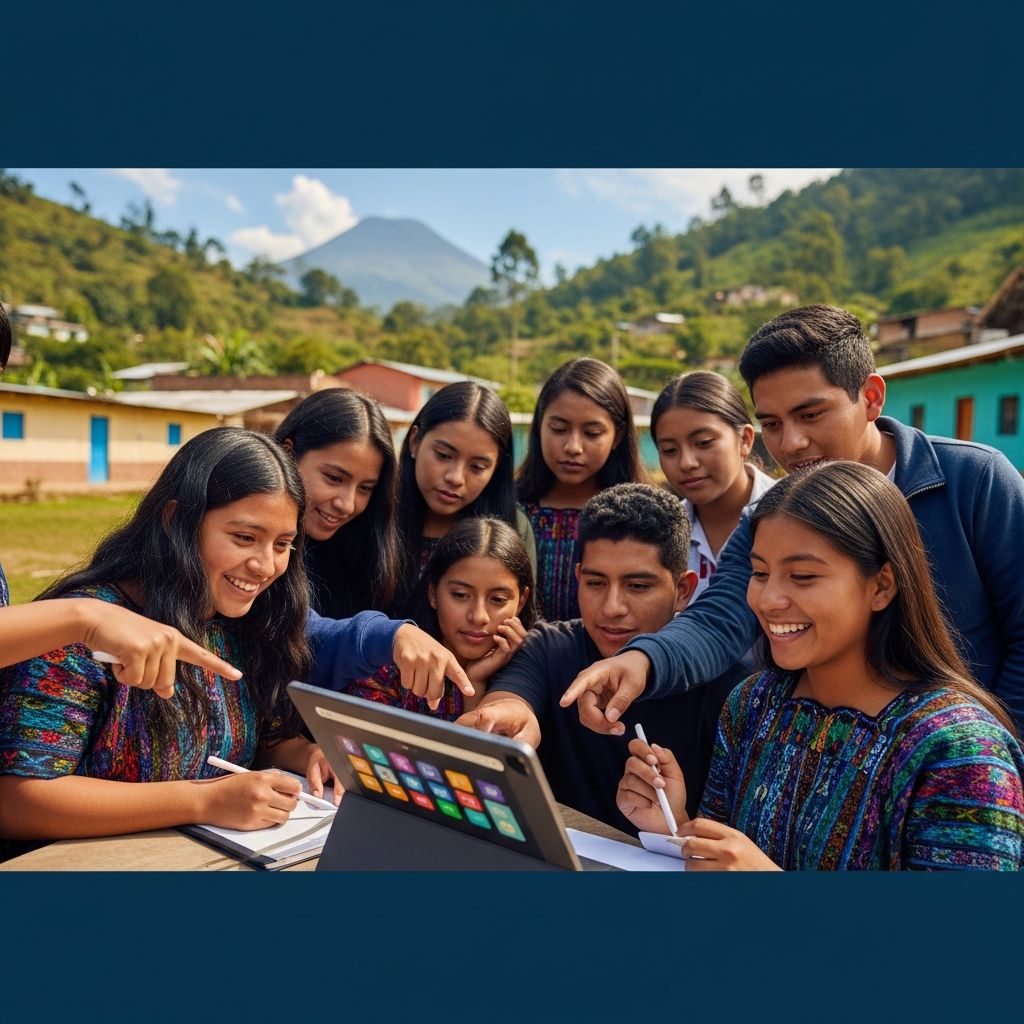
Rural Guatemala faces significant challenges that extend far beyond traditional educational barriers. The intersection of poverty, limited infrastructure, malnutrition, and restricted access to information creates a complex environment where children struggle to envision opportunities beyond their immediate circumstances. However, innovative approaches combining digital connectivity, nutritional interventions, and culturally responsive education are beginning to transform the landscape for vulnerable populations in these communities.
Understanding the Interconnected Challenges Facing Rural Communities
The situation in rural Guatemala demands a comprehensive understanding of how various obstacles compound one another. When families lack reliable internet access, electricity, or transportation to educational facilities, the pathway to advancement becomes exponentially more difficult. Indigenous children, who represent approximately half of Guatemala’s population, face disproportionate challenges compared to their non-indigenous peers. Research indicates that approximately 58 percent of indigenous children experience stunting—a physical manifestation of chronic malnutrition—compared to 34 percent of non-indigenous children.
The educational statistics reveal an even starker reality. According to multiple studies, around 90 percent of children in rural Guatemala living in poverty fail to complete high school. This creates a self-perpetuating cycle where limited educational attainment restricts economic mobility, forcing subsequent generations into similar circumstances. For indigenous girls, the barriers prove particularly formidable, with approximately 95 percent never finishing primary school, completing on average just 1.2 years of formal education.
The Nutritional Foundation for Learning and Development
Before children can effectively engage with educational content, whether delivered through traditional classrooms or digital platforms, their fundamental physical needs must be addressed. Malnutrition represents one of the most pressing yet often overlooked impediments to learning in rural Guatemala. According to UNICEF research, five in ten children under five experience chronic malnutrition, resulting in a permanent loss of approximately 30 percent of brain capacity throughout their lives.
The cognitive consequences of malnutrition extend far beyond immediate health concerns. Chronically malnourished children demonstrate reduced capacity for academic engagement, lower productivity levels, increased susceptibility to illness, and measurable reductions in intelligence quotient scores. These effects prove irreversible, creating lifelong disadvantages that no amount of subsequent educational intervention can fully remedy. Among indigenous populations in Guatemala, malnutrition affects eight in ten children, highlighting the stark disparities embedded within the nation’s socioeconomic structure.
Organizations operating in rural Guatemala have increasingly recognized that educational advancement and nutritional improvement must proceed simultaneously. Programs designed around a comprehensive, family-centered approach address both dimensions concurrently. These initiatives integrate early childhood development programming with practical nutrition education, ensuring families understand not only what to eat but how to produce, prepare, and preserve nutritious foods within their economic constraints.
Building Digital Infrastructure as a Pathway to Opportunity
Digital connectivity represents a transformative opportunity for rural communities historically excluded from information networks and economic participation. Internet access can democratize educational resources, allowing students in remote regions to access content previously available only in urban centers. However, building this infrastructure requires sustained investment, appropriate technological solutions designed for limited power availability, and training programs that enable community members to utilize these tools effectively.
The challenge extends beyond simple wire-laying or tower construction. Rural Guatemalan communities require integrated approaches that account for terrain, weather patterns, economic capacity, and existing community structures. Solutions must prioritize durability, sustainability, and integration with local governance systems. Organizations working in these regions have discovered that technology adoption succeeds only when communities understand its practical benefits for their specific circumstances—whether improved market access, better health information, or enhanced educational opportunities for their children.
Educational Approaches Grounded in Cultural Relevance
Traditional education systems designed for urban populations often fail to resonate with rural, indigenous communities. When curriculum focuses on urban job markets, abstract theoretical knowledge, or subjects disconnected from local economic opportunities, families reasonably question the value of investing time in schooling. This cultural disconnect has historically reinforced indigenous perspectives that formal education represents a “waste of time,” particularly when children’s immediate labor contributions to family survival appear more valuable than uncertain future returns from education.
Innovative programs operating successfully in rural Guatemala have deliberately restructured educational content to align with community contexts. These initiatives incorporate local languages, preserve and celebrate indigenous cultural knowledge, and provide practical vocational training applicable within regional economies. By teaching sustainable tourism, leadership development, handicraft production, and community organizing alongside academic subjects, these programs demonstrate concrete pathways through which education generates wealth and opportunity.
Furthermore, successful educational initiatives ensure that indigenous languages remain central to learning rather than treated as obstacles to overcome. When children learn in their native language while acquiring Spanish proficiency, cognitive development proceeds more effectively than when education occurs entirely in a non-native language. Cultural preservation becomes integrated with skill development, strengthening community identity while building practical capacity.
The Particular Importance of Girls’ Educational Access
Gender represents a critical variable in educational access throughout rural Guatemala. While boys face substantial barriers to completing schooling, cultural and economic pressures disproportionately affect girls. Early marriage, early pregnancy, and domestic responsibilities remove girls from educational settings at higher rates than boys. Supporting girls’ advancement requires engaging community leaders, indigenous spiritual guides, and visible role models who can help families understand the long-term benefits of girls’ education.
Research demonstrates consistently that girls’ education produces substantial economic and social returns. Educated mothers provide better nutrition and healthcare to their children, make more informed family planning decisions, and contribute more substantially to household income. Despite this evidence, cultural attitudes and economic pressures continue limiting girls’ access. Programs that combine girls’ education with support for their families—including income generation, nutrition assistance, and community engagement—prove more successful than education initiatives operating in isolation.
Comprehensive, Family-Centered Programming Models
The most effective interventions currently operating in rural Guatemala employ what practitioners call “two-generation” or “whole family” approaches. These models recognize that children’s development and educational progress cannot be effectively promoted in isolation from their caregivers’ circumstances. When parents lack employment, struggle with food insecurity, or experience psychological trauma from violence or displacement, their capacity to support children’s learning diminishes significantly.
Comprehensive programs therefore integrate early childhood development initiatives with livelihood training, psychosocial support, and poverty reduction assistance for caregiver populations. Many focus specifically on female-headed households and adolescent parents, recognizing that these groups face compounded vulnerabilities. By addressing malnutrition, mental health, economic capacity, and educational opportunity simultaneously, these programs create conditions where families can genuinely prioritize children’s learning.
Evidence-Based Interventions at Scale
Several evidence-based programming models originally developed in other contexts have been successfully adapted and implemented in rural Guatemala. These adaptations required careful modification of curricula, materials, and delivery mechanisms to align with local contexts while maintaining the core elements generating documented success. Visual illustrations replaced text-heavy guidelines, locally familiar objects replaced mass-produced toys, indigenous musical traditions were incorporated into activities, and training adapted for facilitators with varying literacy levels.
The adaptation process itself provides valuable insights. When external interventions are modified thoughtfully to respect local culture and constraints, effectiveness improves substantially. Programs that simply replicate models developed elsewhere typically underperform, while those that invest in genuine localization demonstrate stronger outcomes. This principle applies whether programs address nutrition, parenting skills, early childhood development, or educational engagement.
Addressing Structural Inequities in Access
While individual programs serve important functions, broader structural inequities require policy-level attention. Transportation barriers, inadequate school facilities, teacher shortages, and limited resources for indigenous-language instruction reflect systemic neglect rather than individual failings. Sustainable improvement in rural Guatemalan children’s futures depends on governmental commitment to equitable resource distribution and infrastructure investment.
Research indicates that approximately 12 years of educational attainment proves necessary for indigenous Guatemalans to permanently exit poverty. This benchmark suggests that interventions must be substantial and sustained, not temporary or superficial. Scholarship programs, particularly those supporting girls’ education, play demonstrable roles in expanding access and improving conditions. However, scholarships alone cannot overcome systemic barriers—they must accompany facility improvements, teacher training, and curriculum reforms.
Building Sustainable Community Leadership
Long-term transformation in rural Guatemala requires developing local leadership capacity rather than creating dependency on external organizations. Successful programs train community health workers, parenting facilitators, and educational leaders from within communities. This approach builds sustainable capacity, ensures cultural appropriateness, and creates local employment opportunities. When communities develop their own solutions with technical support rather than receiving imported programs, ownership and sustainability improve dramatically.
Indigenous community leaders and spiritual guides possess valuable knowledge about child development, family dynamics, and effective communication within their specific contexts. Integrating this knowledge with evidence-based practices creates hybrid approaches stronger than either tradition or evidence alone. Programs that genuinely partner with rather than work upon communities generate more meaningful and durable results.
Looking Forward: Integrated Investment Strategies
The path forward for rural Guatemalan children requires integrated investment across multiple dimensions simultaneously. Digital infrastructure development must accompany nutritional programs, educational reform, and economic opportunity creation. Programs must address malnutrition’s cognitive impacts while improving educational quality and relevance. They must support girls’ advancement while strengthening entire family systems. Most critically, local communities must participate in designing and implementing these initiatives rather than receiving them passively.
The young people of rural Guatemala possess remarkable potential. With adequate nutrition, culturally responsive education, access to information, and supportive community environments, they can break cycles of poverty and build prosperous, stable futures. The question is not whether transformation is possible, but whether governments, international organizations, and civil society will commit the sustained resources and genuine partnership such transformation requires.
References
- Pilot to Improve the Development and Nutrition of Young Children in Poor Rural Areas in Guatemala — World Bank. 2018. https://documents.worldbank.org/en/publication/documents-reports/documentdetail/157721518817639171
- Reducing inequities in maternal and child health in rural Guatemala through comprehensive, evidence-based interventions — National Center for Biotechnology Information (NCBI). 2023. https://pmc.ncbi.nlm.nih.gov/articles/PMC9973244/
- Field Report: Early Child Development in Rural Guatemala — World Association for Infant Mental Health Perspectives. 2016. https://perspectives.waimh.org/2016/06/15/field-report-early-child-development-rural-guatemala/
- Community-Based Solutions for Young Children in Guatemala — Infant Studies Center. 2023. https://infantstudies.org/voices-from-the-field-community-based-solutions-for-young-children-in-guatemala/
- Seeds for a Future: Food Security Challenges in Guatemala — Seeds for a Future Organization. 2024. https://seedsforafuture.org/food-security-challenges-in-guatemala/
- Guatemala Rural Child Health and Nutrition Program — Stanford University Shorenstein Asia-Pacific Research Center. 2024. https://fsi.stanford.edu/research/guatemala-children-crisis
- Students: The Future of Guatemala — Cooperative for Education. 2024. https://coeduc.org/blog/students-the-future-of-guatemala/
Similar Articles






Read full bio of Sneha Tete