Empowering Judges: Internet Society & UNESCO Training
Explore how Internet Society and UNESCO are equipping judicial professionals in Latin America with vital digital rights knowledge through innovative online programs.
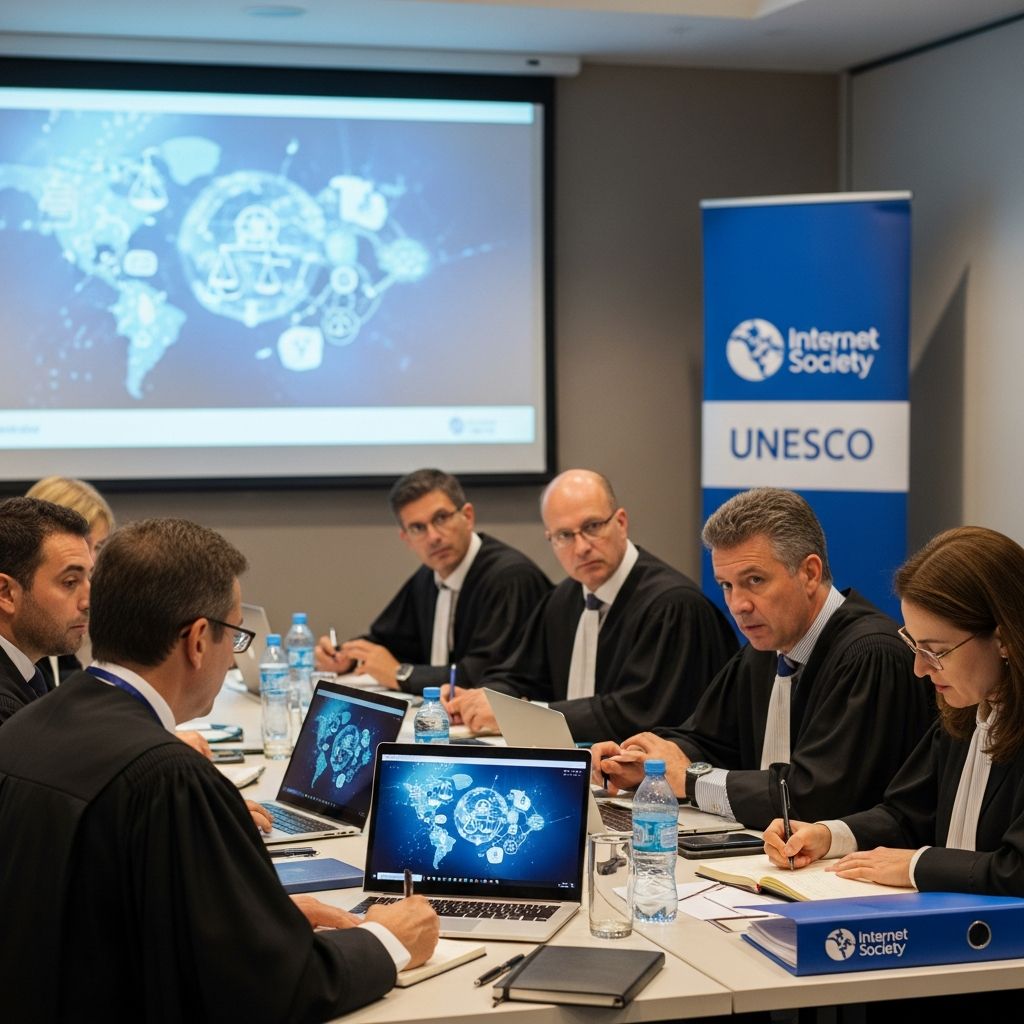
The rapid evolution of the Internet has transformed societies, economies, and legal landscapes worldwide. As digital technologies become integral to daily life, judicial systems must adapt to address emerging challenges like data privacy breaches, online censorship, and cyber threats. Recognizing this need, the Internet Society and UNESCO have joined forces to launch a pioneering capacity-building initiative targeted at legal professionals in Latin America and the Caribbean. This program aims to bridge the knowledge gap between traditional legal frameworks and the dynamic world of Internet governance, ensuring that judges, prosecutors, and defenders can make informed decisions that uphold human rights in the digital realm.
The Imperative for Judicial Digital Literacy
In an era where billions access information instantaneously, courts increasingly encounter cases involving digital elements. Disputes over encrypted communications, social media content moderation, and access to public data demand a nuanced understanding of technical and policy underpinnings. Without adequate training, judicial actors risk rulings that stifle innovation or fail to protect fundamental rights. This program addresses these gaps by providing structured education on core Internet principles, fostering a judiciary capable of navigating complex digital terrains.
Historically, judicial training has focused on conventional law, but the digital shift necessitates a paradigm change. For instance, concepts like net neutrality, domain name disputes, and blockchain implications are now courtroom staples. By equipping legal minds with these insights, the initiative promotes equitable Internet policies that benefit entire communities.
Program Overview and Structure
Designed to accommodate 1,000 participants, the program unfolds in two progressive phases, blending self-paced learning with interactive expert sessions. The initial phase introduces foundational knowledge, covering the technical architecture of the Internet, governance models, and key stakeholders. Participants explore how protocols like TCP/IP enable global connectivity and delve into multistakeholder forums such as ICANN and the Internet Governance Forum (IGF).
The advanced second phase shifts to applied discussions on pressing issues. Topics include safeguarding privacy amid surveillance concerns, balancing freedom of expression with content regulation, and the role of encryption in secure communications. Expert-led webinars facilitate real-world case analyses, allowing participants to dissect landmark judgments from regional courts.
- Phase 1: Foundations – Internet ecosystem basics, governance structures, community actors.
- Phase 2: Advanced Topics – Privacy, expression freedoms, encryption, public information access.
This modular approach ensures accessibility for busy professionals, with flexible timelines and multilingual resources tailored to Latin American contexts.
Strategic Partnership Between Internet Society and UNESCO
The collaboration leverages each organization’s strengths. The Internet Society, a global advocate for an open Internet since 1992, brings technical expertise and policy advocacy. UNESCO contributes its mandate on information societies, drawing from initiatives like the Judges’ Initiative launched in 2013, which has trained over 35,000 judicial actors worldwide on freedom of expression and journalist safety.1
Together, they align with international standards, including the UN’s Sustainable Development Goals, particularly Goal 16 on just institutions. This partnership exemplifies how public-private synergies can amplify impact in underserved regions.
Key Learning Modules and Outcomes
Participants engage with diverse modules blending theory and practice. Core areas include:
| Module | Focus Areas | Expected Outcomes |
|---|---|---|
| Internet Fundamentals | Protocols, infrastructure, scalability | Grasp technical feasibility in legal contexts |
| Governance Ecosystem | Multistakeholder models, IGF processes | Navigate policy debates effectively |
| Privacy & Data Protection | GDPR influences, regional laws | Apply protections in rulings |
| Freedom of Expression | Article 19 UDHR, online platforms | Balance rights with public order |
| Encryption & Security | End-to-end tech, backdoor debates | Evaluate evidence admissibility |
Upon completion, graduates receive certificates, enhancing professional credentials and institutional capacities. Long-term, this fosters consistent jurisprudence across jurisdictions.
Regional Relevance in Latin America and the Caribbean
The region faces unique digital challenges: high mobile penetration contrasts with uneven broadband access, fueling debates on spectrum allocation and digital divides. Political tensions over online dissent and cybercrimes underscore the need for impartial judicial oversight. This program responds directly, incorporating case studies from Brazil’s data protection laws, Argentina’s expression rulings, and Caribbean encryption disputes.
By prioritizing Spanish and Portuguese materials, it ensures cultural resonance, empowering local courts to lead on global standards.
Application Process and Eligibility
Open to judges, prosecutors, public defenders, and related operators, selection prioritizes commitment to digital rights. A straightforward online form assesses experience and motivation. The 2019 cohort filled rapidly, with notifications and start dates promptly communicated, setting a model for scalability.
Broader Impacts and Future Prospects
Beyond individual growth, the program catalyzes systemic change. Trained professionals influence peers through train-the-trainer models, amplifying reach. It aligns with UNESCO’s decade-long efforts, including 10+ MOOCs and partnerships with 11 human rights courts.2 Future expansions may target Africa and Asia, integrating AI ethics and deepfake regulations.
Stakeholder feedback highlights transformative effects: participants report heightened confidence in digital cases, leading to fairer outcomes. This initiative underscores education’s role in resilient justice systems.
Challenges and Mitigation Strategies
Barriers like Internet access and time constraints persist. Solutions include offline modules, mobile optimization, and mentorship pairings. Continuous evaluation refines content, ensuring relevance amid tech advances.
Common Questions Answered
Frequently Asked Questions
Who can participate in this program?
Judges, prosecutors, public defenders, and judicial operators from Latin America and the Caribbean with relevant experience.
How long does each phase take?
Phase 1 is self-paced over weeks; Phase 2 involves scheduled expert sessions spanning a month.
Is there a cost to join?
No, the program is fully funded by Internet Society and UNESCO.
What certification is provided?
Successful completers earn a joint certificate from both organizations.
Will future sessions be available?
Yes, annual cohorts are planned with expanded global reach.
In conclusion, this capacity-building effort represents a vital investment in digital justice. By empowering judicial actors, it safeguards an open Internet, protecting rights for generations.
References
- 10 years of UNESCO’s Judges’ Initiative — UNESCO. 2023-05-03. https://www.unesco.org/en/articles/10-years-unescos-judges-initiative
- AI and the Rule of Law: Capacity Building for Judicial Systems — UNESCO. 2024-01-15. https://www.unesco.org/en/artificial-intelligence/rule-law/mooc-judges
- Judges’ Initiative Report — UNESCO. 2023-10-01. https://unesco.se/wp-content/uploads/2023/10/Report-MDP-judges.pdf
- Digital Policy and Capacities — UNESCO. 2023-11-20. https://www.unesco.org/en/digital-policy-capacities-inclusion/building-capacities
- Internet Society Chapters in Latin America and the Caribbean — Internet Society. 2022-06-10. https://www.internetsociety.org/chapters/lac/
Similar Articles








Read full bio of medha deb