Empowering Indigenous Women Through Community Internet
How a remote Honduran village harnessed internet to amplify Lenca women's voices and bridge the digital divide.
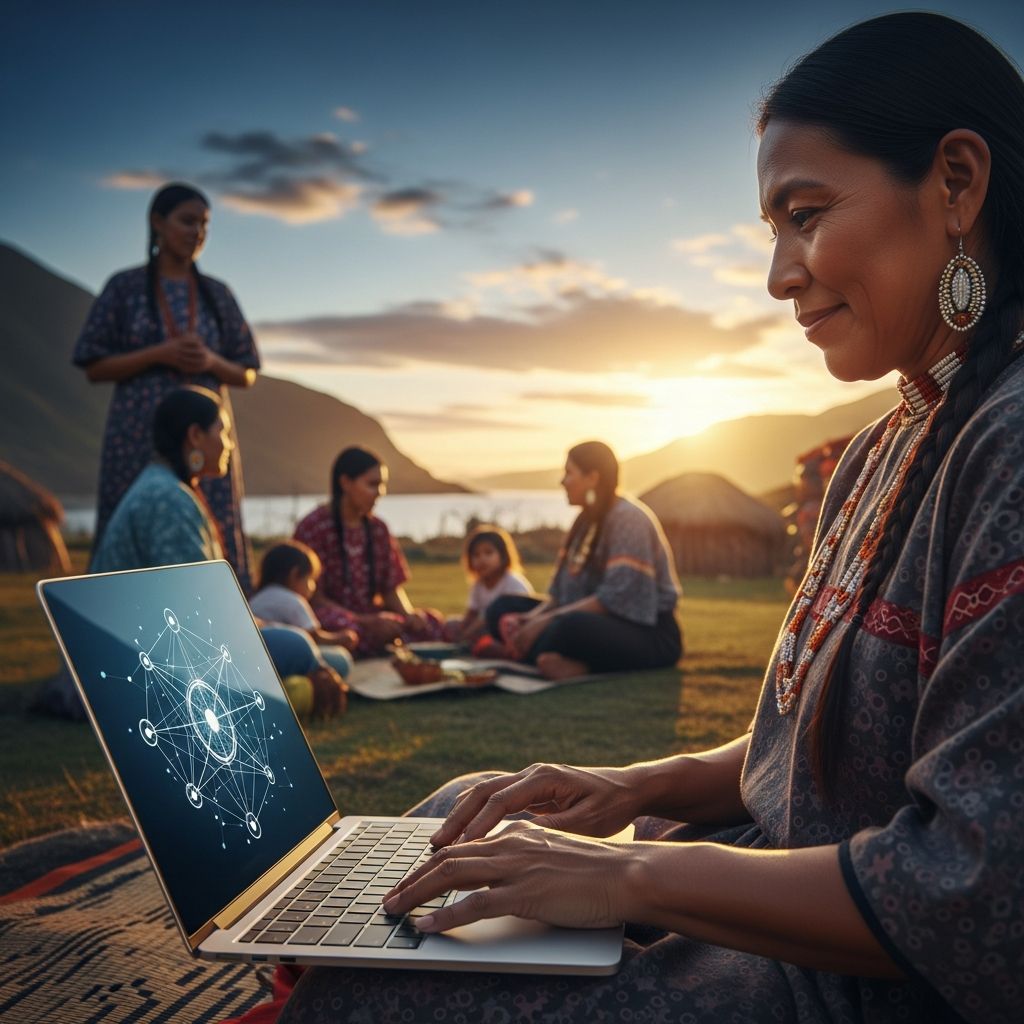
In the rugged mountains of western Honduras, a quiet revolution is underway. Nestled in the Intibucá department, the Lenca indigenous community of Azacualpa has long faced isolation, poverty, and limited access to essential services. Yet, a group of determined women known as Las Marías has sparked profound change by pioneering community-driven internet initiatives. This story highlights how grassroots efforts, supported by local and international partnerships, have equipped over 1,200 residents with digital connectivity, fostering leadership, cultural preservation, and economic opportunities.
The Roots of Change in a Remote Village
Azacualpa, a village of about 300 families, exemplifies the challenges of rural indigenous life in Honduras. With scarce infrastructure, residents historically relied on word-of-mouth for news and agriculture updates. Electricity was intermittent, and roads often impassable during rainy seasons. Women, in particular, bore the brunt, managing households while marginalized from decision-making.
The turning point came through the vision of Las Marías—a collective of local women committed to empowerment. Starting with a community radio station in the early 2010s, they broadcasted vital information on health, farming techniques, and women’s rights. This initiative not only informed the community but also built leadership skills among participants. By 2018, their ambitions expanded to internet access, recognizing its potential to connect Azacualpa to the wider world.
- Key Challenges Overcome: Geographic isolation, low literacy rates, and gender disparities.
- Initial Success: Radio station reached thousands, establishing trust and technical know-how.
- Vision Expansion: From analog broadcasts to digital networks for broader impact.
Building the Digital Backbone: Community Networks
The “Smart Communities” project emerged as the cornerstone of this digital leap. Collaborating with the Internet Society’s Honduras Chapter and Red de Desarrollo Sostenible Honduras (RDS-Honduras), locals installed four Wi-Fi towers. These structures provide coverage to the village and nearby areas, serving smartphones and a new telecentre equipped with five computers.
This wasn’t a top-down handout; community members actively participated in planning, construction, and maintenance. Technicians trained locals in tower installation, signal optimization, and basic troubleshooting, ensuring sustainability. Today, over 70 households own smartphones, enabling real-time access to markets, education, and health resources.
| Project Milestone | Date Achieved | Impact |
|---|---|---|
| Radio Station Launch | 2013 | Empowered 20+ women leaders |
| Wi-Fi Towers Deployed | 2018 | Coverage for 1,200+ residents |
| Telecentre Operational | 2018 | Digital literacy for 100+ users |
| Smartphone Adoption | Ongoing | 70+ devices in use |
Such community networks address the digital divide by prioritizing local needs, contrasting with commercial providers who often overlook remote areas.
Amplifying Women’s Voices in the Digital Age
Las Marías’ radio, “Radio Azacualpa – The Voice of Women,” transitioned seamlessly into the internet era. Online streaming now extends their reach beyond local frequencies, allowing global audiences to hear Lenca stories, traditional songs, and advocacy for indigenous rights. Women use platforms to share farming tips resilient to climate change, maternal health advice, and calls for gender equality.
Digital tools have democratized participation. Younger women upload videos of cultural dances, while elders document oral histories. This blend of tradition and technology preserves Lenca heritage amid globalization pressures. Moreover, internet access facilitates remote learning; community members access online courses in agriculture and business, boosting incomes through better crop yields and market linkages.
“The internet isn’t just connection—it’s a megaphone for our silenced stories.” – Inspired by Las Marías collective ethos.
Cultural Preservation Meets Modern Connectivity
For the Lenca people, whose history spans millennia, internet serves as a double-edged sword. While it risks cultural erosion, strategic use turns it into a preservation tool. Azacualpa’s initiatives include digitizing folklore, weaving tutorials, and medicinal plant databases. The telecentre hosts workshops where youth learn ancestral crafts alongside coding basics.
Projects like these align with global efforts to safeguard indigenous knowledge. By uploading content to open platforms, Las Marías ensures Lenca narratives endure, countering historical marginalization.
- Digital Archives: Recording elders’ testimonies for future generations.
- Virtual Markets: Selling handicrafts online to urban buyers.
- E-Learning Hubs: Free courses on sustainable farming via platforms like Coursera.
Overcoming Hurdles: Sustainability and Challenges
Success hasn’t come without obstacles. Power outages, equipment theft, and funding shortages tested resilience. Las Marías countered by forming cooperatives for shared maintenance costs and solar-powered backups. Gender norms initially resisted women’s tech roles, but radio successes shifted attitudes, with men now supporting female-led trainings.
Broader issues persist: Honduras’s digital divide remains stark, with rural internet penetration below 30% per World Bank data. Yet, Azacualpa’s model offers a blueprint, replicable in similar communities across Latin America.
Economic Ripples and Future Prospects
Internet has catalyzed economic growth. Women access real-time commodity prices, reducing middlemen exploitation. E-commerce experiments sell coffee and textiles, increasing household incomes by 20-30%. Telemedicine consultations cut travel costs to cities, vital for chronic illness management.
Looking ahead, expansions include drone-based monitoring for agriculture and 5G pilots. Partnerships with NGOs aim to scale to neighboring villages, potentially connecting 5,000 more indigenous residents.
Lessons for Global Digital Equity
Azacualpa demonstrates that community-led internet isn’t charity—it’s empowerment. Key takeaways include local ownership, gender-inclusive training, and hybrid analog-digital strategies. Policymakers worldwide can draw from this to prioritize underserved areas, aligning with UN Sustainable Development Goals on gender equality and innovation.
Frequently Asked Questions (FAQs)
What is the Smart Communities project?
A grassroots initiative providing Wi-Fi via towers and a telecentre to bridge the digital gap in Azacualpa.
How has internet changed women’s roles there?
It amplified their radio station online, built leadership, and opened economic opportunities.
Is the project sustainable long-term?
Yes, through local training, cooperatives, and renewable energy solutions.
Can other communities replicate this?
Absolutely; the model emphasizes affordable tech and community involvement.
What cultural benefits have emerged?
Digital archiving of Lenca traditions ensures heritage survival.
References
- Global Information Society Watch: Honduras Country Report — Association for Progressive Communications. 2018-10-15. https://www.giswatch.org/en/country-report/infrastructure/honduras
- World Bank Digital Development Report: Honduras — World Bank Group. 2023-06-01. https://www.worldbank.org/en/country/honduras/publication/honduras-digital-economy-country-diagnostic
- Internet Society: Honduras Chapter Initiatives — Internet Society. 2018-11-20. https://www.internetsociety.org/blog/2018/11/honduras-chapter-smart-communities-to-preserve-memory/
- UN Women: Digital Inclusion in Latin America — United Nations Entity for Gender Equality. 2022-03-10. https://www.unwomen.org/en/digital-library/publications/2022/03/digital-inclusion-in-latin-america
- ITU Facts and Figures: Rural Connectivity — International Telecommunication Union. 2024-01-15. https://www.itu.int/en/ITU-D/Statistics/Pages/facts/default.aspx
Similar Articles







Read full bio of Sneha Tete