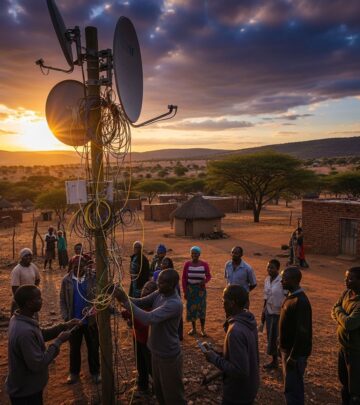
Empowering Communities: Early Career Fellowship Drives Affordable Internet
Discover how the Internet Society's Early Career Fellowship equips young leaders to build sustainable, low-cost internet networks for underserved areas worldwide.

In an increasingly connected world, access to reliable and affordable internet remains a distant dream for millions in rural and underserved regions. The digital divide not only limits economic opportunities but also hinders education, healthcare, and social participation. Addressing this challenge requires innovative solutions led by passionate, skilled individuals. The Internet Society’s Early Career Fellowship stands at the forefront of this effort, providing young professionals with the tools, knowledge, and networks to create lasting change. Through hands-on projects focused on community-owned infrastructure, fellows are pioneering ways to deliver high-quality connectivity at minimal cost.
The Digital Divide: A Global Challenge Demanding Local Solutions
Globally, over 2.6 billion people lack internet access, with the majority residing in developing regions. According to the International Telecommunication Union (ITU), rural areas suffer the most, where commercial providers deem deployment unprofitable. This gap exacerbates inequalities, as those without connectivity miss out on essential services. Traditional top-down approaches often fail due to high infrastructure costs and regulatory hurdles. Instead, grassroots initiatives like community networks offer a viable path forward. These locally managed systems leverage shared resources and volunteer expertise to extend broadband where it’s needed most.
Community networks thrive on collective ownership, where residents contribute labor, equipment, and ideas. Unlike corporate models, they prioritize accessibility over profit, resulting in drastically reduced subscription fees. For instance, in remote villages, monthly costs can drop to a fraction of standard rates, making internet viable for households earning modest incomes. Moreover, these networks build resilience, as communities gain the skills to maintain and expand them independently.
Unpacking Community Networks: Foundations of Inclusive Connectivity
At their core, community networks are grassroots telecommunications setups owned and operated by the very people they serve. They function as shared commons, bypassing reliance on distant corporations or governments. Key components include wireless towers, routers, and fiber backhauls, often sourced affordably through bulk purchases or donations. Open-source software ensures flexibility and low maintenance costs.
- Cost Efficiency: By eliminating middlemen and profit margins, networks achieve up to 80% savings on connectivity fees.
- Customization: Tailored to local needs, such as supporting agriculture apps or e-learning platforms.
- Skill Building: Participants learn technical and managerial skills, fostering long-term self-reliance.
- Sustainability: Revenue from minimal fees funds expansions and upgrades.
Implementation begins with community buy-in. Organizers conduct surveys to map needs, then design topologies suited to terrain—think mesh networks for hilly areas or point-to-multipoint for flatlands. Training workshops empower locals to install antennas and configure devices, ensuring the network’s longevity.
Inside the Early Career Fellowship: Training Tomorrow’s Internet Leaders
The Early Career Fellowship, offered annually by the Internet Society, targets professionals with under ten years of experience in internet-related fields. Selected from a global pool, the 15 fellows embark on a six-month journey blending virtual seminars, expert mentorship, and project development. No participation fees apply; the program covers coursework and sessions, with potential stipends for connectivity improvements.
Eligibility emphasizes innovation: applicants must propose projects that strengthen internet infrastructure, backed by at least three years of relevant experience or a degree. Fellows engage with luminaries from institutions like American University and the Oxford Internet Institute, gaining insights into policy, advocacy, and technical deployment. The curriculum spans project management, diplomatic engagement, and ethical considerations, culminating in a public symposium where projects are showcased.
| Program Phase | Duration | Key Activities |
|---|---|---|
| Orientation & Training | Months 1-2 | Seminars on policy, tech, and leadership |
| Project Development | Months 3-4 | Mentoring sessions and peer collaboration |
| Implementation Planning | Months 5-6 | Final refinements and symposium prep |
Real-World Impact: From Vision to Viable Networks
Fellows translate learning into action by executing projects in their home communities. One standout example involves establishing a wireless grid in a Nigerian suburb, where high data prices sidelined most residents. The fellow rallied locals to crowdfund initial hardware, then trained a core team on operations. Today, over 200 households enjoy gigabit speeds at $2 monthly— a game-changer for students accessing online classes and farmers monitoring crop prices.
Success metrics extend beyond connections: increased digital literacy, new e-services like telemedicine, and policy advocacy for spectrum access. Challenges persist, such as securing upstream links or navigating regulations, but fellowship training equips fellows to advocate effectively. Post-program, many alumni scale efforts, forming cooperatives or partnering with NGOs.
Overcoming Hurdles: Strategies for Network Success
Building community networks isn’t without obstacles. Funding shortages, technical glitches, and regulatory barriers loom large. Fellows mitigate these through strategic planning:
- Partnerships: Collaborate with universities or ISPs for backhaul discounts.
- Capacity Building: Host ongoing workshops to retain expertise.
- Policy Engagement: Lobby for favorable laws on unlicensed spectrum.
- Monitoring Tools: Deploy open-source dashboards for real-time performance tracking.
Scalability demands adaptive governance. Some networks adopt co-op models with elected boards, ensuring democratic decision-making. Metrics like uptime (aim for 99%) and user growth guide iterations.
Why the Fellowship Matters: Cultivating a Global Ecosystem
Beyond individual projects, the fellowship nurtures a network of advocates. Alumni join Internet Society chapters, influencing regional policies and mentoring newcomers. This ripple effect amplifies impact, as seen in Latin America and Africa, where fellow-led initiatives have connected thousands. By investing in diverse voices—especially from the Global South—the program ensures solutions resonate locally while advancing universal internet principles: openness, security, and trustworthiness.
Looking ahead, as 5G and satellite tech evolve, community networks will integrate these for hybrid models, further slashing costs. The fellowship positions participants to lead this convergence.
Steps to Launch Your Own Community Network
Aspiring builders can follow this roadmap:
- Assess community needs via town halls.
- Secure seed funding through grants or crowdfunding.
- Acquire gear: prioritize licensed hardware for reliability.
- Train 10-20 volunteers on basics.
- Launch pilot, iterate based on feedback.
- Scale with user governance.
Frequently Asked Questions
What is the Early Career Fellowship?
A six-month program by Internet Society for early professionals to develop internet-strengthening projects with expert guidance.
Who can apply?
Those with <10 years experience, a relevant degree or 3+ years work, and an innovative project idea.
Are costs covered?
Yes, program elements are free; bring your own device and internet.
How do community networks ensure affordability?
Collective ownership cuts overheads, enabling low fees while covering operations.
What outcomes do fellows achieve?
Deployed networks, policy wins, and a global advocate network.
Future Horizons: Scaling Connectivity Worldwide
As digital demands grow—with AI, remote work, and IoT—the need for inclusive access intensifies. The Early Career Fellowship exemplifies how targeted empowerment yields exponential gains. By 2030, community networks could connect millions more, provided programs like this continue. Emerging leaders, armed with fellowship insights, are poised to close the divide, one network at a time.
References
- Measuring digital development: Facts and figures 2023 — International Telecommunication Union (ITU). 2023-12-07. https://www.itu.int/itu-d/reports/statistics/2023/10/10/ff23-internet-access/
- Early Career Fellowship — Internet Society. 2026-02-17 (application deadline). https://www.internetsociety.org/fellowships/early-career/
- Community Networks: Building the Internet from the Grassroots Up — Internet Society. 2021-11-01. https://www.internetsociety.org/issues/community-networks/
- Dynamic Coalition on Community Networks — Internet Governance Forum (IGF), United Nations. 2024-09-01. https://www.intgovforum.org/en/dynamic-coalitions/community-networks
- State of Broadband 2023 — ITU and UNESCO. 2023-10-31. https://www.itu.int/net4/wsis/forum/2023/Media/Files/SoB23_Full_EN.pdf
Similar Articles








Read full bio of Sneha Tete