Empowering Communities: Build Your Own Internet
Discover practical steps to create local internet networks, overcome connectivity barriers, and foster digital inclusion in underserved areas worldwide.
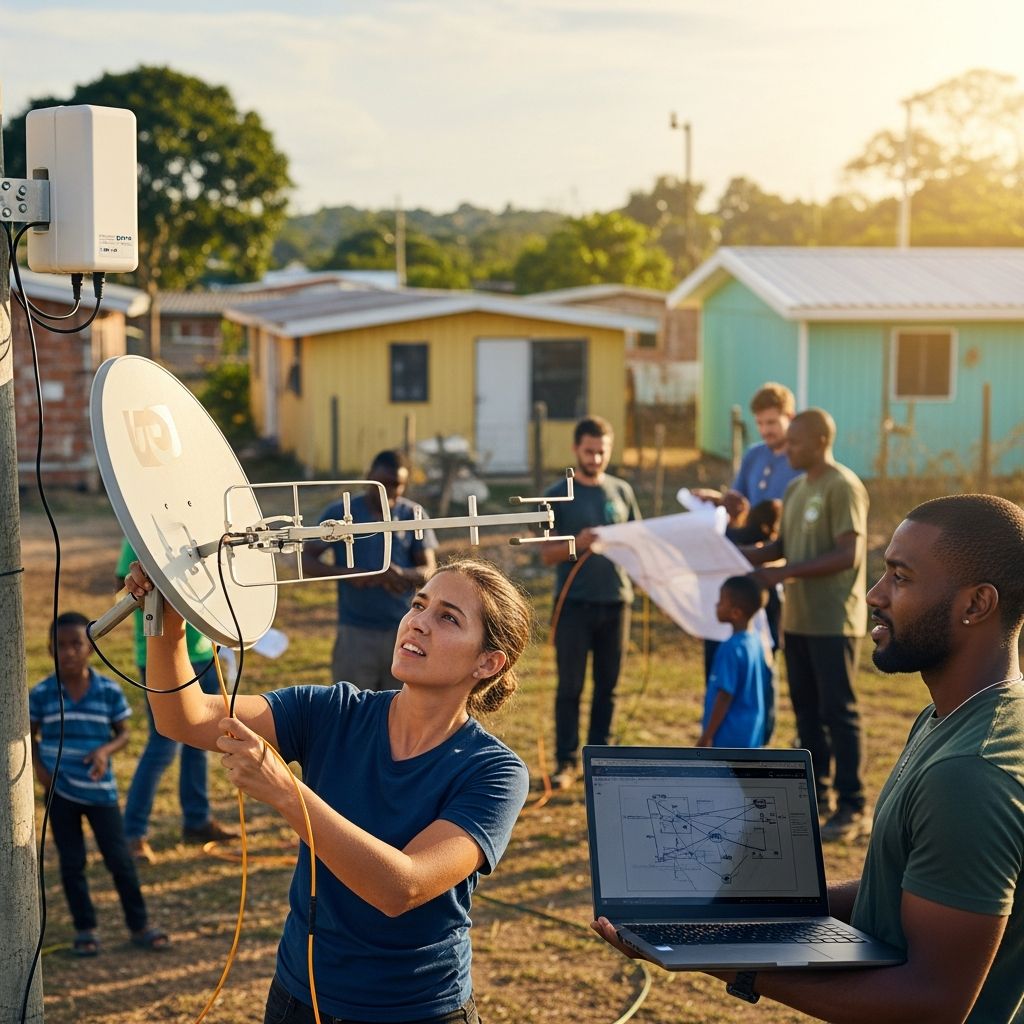
In an increasingly connected world, access to the internet remains a luxury for many. Rural villages, urban slums, and remote islands often lack reliable broadband, hindering education, healthcare, and economic growth. But change is possible through grassroots efforts. Ordinary individuals and groups are taking matters into their own hands, constructing local networks that deliver high-speed internet where commercial providers fall short. This guide demystifies the process, offering actionable insights into launching your community’s digital lifeline.
The Digital Divide: Why Local Action Matters
The gap between connected and unconnected populations persists despite global tech advancements. According to the International Telecommunication Union (ITU), over 2.6 billion people—roughly one-third of the world’s population—lacked internet access as of 2023.1 Traditional telecom companies prioritize profitable urban areas, leaving margins underserved.
Community networks flip this model. These initiatives, powered by locals, use affordable hardware and open-source software to create resilient, self-sustaining systems. From Bolivia’s Guifi.net to India’s Gram Power, real-world examples show how such projects boost local economies by 20-30% through improved online services, per World Bank studies.2
- Economic Impact: Enables e-commerce, remote work, and digital payments.
- Social Benefits: Supports telemedicine, online learning, and social connectivity.
- Resilience: Networks withstand natural disasters better than centralized infrastructure.
Assessing Your Community’s Needs
Before diving in, evaluate your area’s readiness. Start with a survey to gauge demand: How many households lack service? What speeds are needed? Tools like free online questionnaires or door-to-door canvassing work well.
| Factor | Questions to Ask | Ideal Outcome |
|---|---|---|
| Population Density | How many potential users? | 50+ households for viability |
| Geography | Flat terrain or hilly? | Line-of-sight for wireless links |
| Current Access | Any partial coverage? | Identify extension points |
| Budget | Available funds? | $500-$5000 startup |
Engage stakeholders early—residents, schools, businesses—to build buy-in. A core team of 5-10 motivated volunteers can kickstart momentum.
Core Technologies for Local Networks
Modern community networks rely on accessible tech stacks. Wireless mesh systems, using routers like Ubiquiti or TP-Link, form the backbone, extending signals up to 10km with directional antennas.
- Wireless Fidelity (Wi-Fi) Meshes: Nodes relay data peer-to-peer, ideal for dense areas.
- Point-to-Point Links: Bridge distant sites with microwave radios.
- Fiber Optics (if feasible): For high-capacity urban setups, using low-cost single-mode cables.
- Software Defined Radios (SDR): Experiment with TV white spaces for long-range coverage.
Open-source platforms like OpenWRT or LibreMesh simplify configuration, turning commodity hardware into enterprise-grade gear. Power over Ethernet (PoE) ensures reliable outdoor deployment.
Step-by-Step Deployment Guide
Launch your network in phases for manageability.
Phase 1: Planning and Prototyping
Map coverage using tools like Google Earth. Prototype on a small scale—connect two buildings 500m apart. Budget: $200 for routers and cables.
Phase 2: Infrastructure Build
Install towers or mount antennas on rooftops/water towers. Secure permissions from landowners. Use weatherproof enclosures for longevity.
Phase 3: Backhaul Connection
Link to the wider internet via satellite (Starlink), fixed wireless, or national backbone. Negotiate bulk bandwidth deals—aim for 100Mbps shared.
Phase 4: User Onboarding
Distribute access points and train users on captive portals for authentication. Offer tiered plans: free basic vs. paid premium.
Governance and Sustainability Models
Success hinges on strong organization. Form a cooperative or non-profit to handle finances, disputes, and upgrades.
- Revenue Streams: Monthly fees ($5-15/user), grants from USAID or local telcos, crowdfunding.
- Legal Structures: Register as a community interest company (CIC) in the UK or equivalent.
- Maintenance: Train local tech stewards; allocate 10% of fees for repairs.
In Detroit’s Detroit Community Technology Project, a volunteer-run model sustains 500+ users with zero debt, proving scalability.3
Navigating Regulations and Policy Advocacy
Governments can enable or block progress. Spectrum licenses for unlicensed bands (2.4/5GHz) are often free, but advocate for more.
Join coalitions like the Internet Society’s chapters to lobby for reforms. In Africa, policy wins unlocked 700MHz spectrum for communities, per ITU reports.1
- Contact regulators early for approvals.
- Highlight public benefits in proposals.
- Partner with ISPs for peering agreements.
Learning Resources and Global Support
You don’t build alone. Platforms abound:
- Internet Society Online Courses: Free modules on wireless networking.
- Wireless Community Wizards: Tutorials for mesh setups.
- Reddit r/CommunityNetworking: Peer advice forums.
- Local Hackerspaces: Hands-on workshops.
Annual events like Wireless Community Weekend foster idea-sharing.
Case Studies: Success Stories Worldwide
Spain’s Guifi.net: World’s largest, with 35,000+ nodes, crowdfunded by users. It demonstrates how reciprocity models scale.4
Indonesia’s Bali Wireless: Connected 50 villages post-tsunami using VoIP for emergency comms.
South Africa’s Zenzeleni: Voice-over-Wi-Fi nets serve 1,000+ at 10x lower cost than mobiles.
Challenges and Solutions
Expect hurdles:
| Challenge | Solution |
|---|---|
| Vandalism/Theft | Lockable enclosures, community watch |
| Interference | Channel scanners, directional antennas |
| Skill Gaps | Online certifications (e.g., CWNA) |
| Funding | GSMA grants, micro-loans |
Future Trends in Community Connectivity
5G small cells and AI-optimized routing promise efficiency gains. Satellite backhaul like OneWeb lowers latency. Blockchain for decentralized billing emerges.
By 2030, ITU projects 90% global coverage, but communities will drive the last mile.1
Frequently Asked Questions (FAQs)
Is technical expertise required?
No—start with basic IT skills. Free resources build proficiency quickly.
How much does it cost to start?
$1,000-10,000 for 100 users, scalable with reuse.
Can this work in cities?
Yes, for pockets like apartment blocks or campuses.
What if no backhaul exists?
Use off-grid apps (email via sneakernet) or satellite.
Ready to connect? Rally your neighbors, grab some routers, and transform your community. The internet isn’t just for the privileged—it’s for everyone.
References
- Measuring digital development: Facts and figures 2023 — International Telecommunication Union (ITU). 2023-12-07. https://www.itu.int/itu-d/reports/statistics/2023/10/10/ff23-the-digital-divide/
- Broadband for All: A World Bank Group Strategy for Action — World Bank. 2022-05-15. https://www.worldbank.org/en/topic/digitaldevelopment/publication/broadband-for-all
- Detroit Community Technology Project Annual Report — Detroit Community Technology Project. 2024-01-20. https://detroitcommunitytech.org/annual-report-2023
- Guifi.net: A Crowdsourced Network Infrastructure — Guifi.net Foundation. 2023-11-01. https://guifi.net/en/node/564
Similar Articles








Read full bio of Sneha Tete