Empowering Armenia’s Visually Impaired
Discover how tech training and advocacy are transforming lives for visually impaired individuals in Armenia, fostering independence and opportunity.
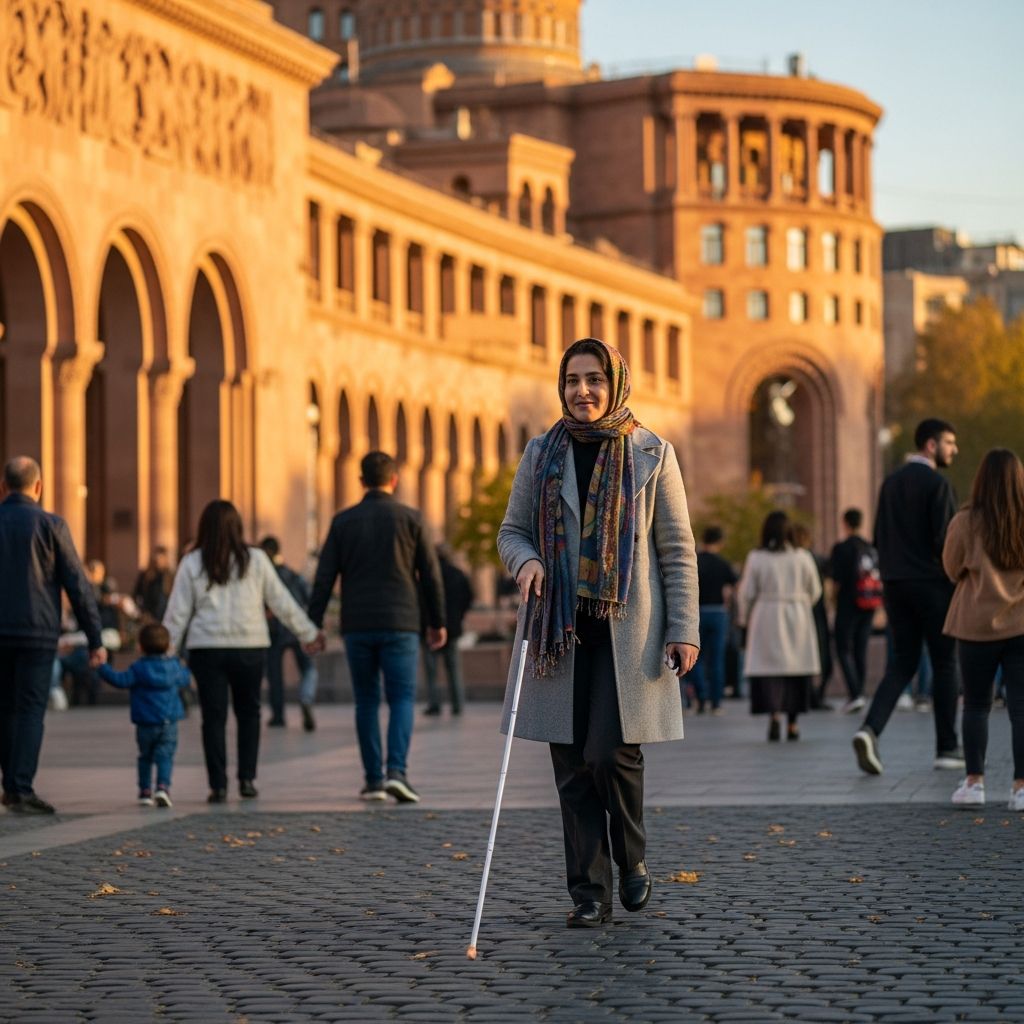
Empowering Armenia’s Visually Impaired: Technology as a Pathway to Independence
In Armenia, where over 6,000 people live with visual impairments, including around 500 children, the journey toward full societal participation has been marked by significant hurdles.1 Yet, a wave of innovative programs and grassroots activism is reshaping this landscape. Computer literacy training, specialized eye care projects, and pushes for organizational reform are equipping individuals with the tools to navigate daily life, access education, and enter the workforce. This article delves into these transformative efforts, highlighting personal stories, statistical insights, and ongoing challenges.
The Scale of Visual Impairment in Armenia
Visual disabilities affect a notable portion of Armenia’s population. Official estimates indicate more than 6,000 individuals grapple with severe sight loss, creating barriers in education, employment, and social integration.1 Employment rates among this group hover around just 14%, far below national averages, underscoring systemic issues like inaccessible infrastructure and limited vocational training.2
Children face unique struggles. Specialized schools, such as School No. 14, provide essential support, but broader access to inclusive education remains uneven. Rural areas exacerbate these problems, with inadequate transportation and services isolating many families.
| Statistic | Value | Source |
|---|---|---|
| Total visually impaired | >6,000 | Armenpress1 |
| Children affected | 500 | Armenpress1 |
| Employment rate | 14% | OC Media2 |
Pioneering Computer Training Initiatives
At the forefront of change is the Armenian EyeCare Project’s Computer Training Program (CTP), the nation’s first dedicated vocational effort for visually impaired adults. Launched to bridge digital divides, this two-month course teaches screen readers, data processing, internet navigation, and basic programming. Delivered by expert instructors from specialized schools, it empowers participants to handle everyday tasks independently.
“This training boosts self-esteem and opens doors to future jobs by building essential digital skills,” notes a program leader.3
Participants like those featured in project videos report profound shifts. One individual, once confined by darkness, now surfs the web, emails family, and explores online resources—activities once unimaginable. These skills extend to leisure, such as accessing audiobooks or social media, enriching personal lives.
Advocacy and Organizational Reform
Activism has amplified these gains. Post-2018 Velvet Revolution, disability rights groups occupied the Armenian Association for the Blind, exposing corruption and demanding transparent leadership. This led to new elections and a fresh focus on member needs, including better resource allocation.4
The Armenian Blind Union has emerged as a key player, advocating for policy changes and partnering with international bodies like the European Blind Union. Recent efforts include accessible transport initiatives, with UNDP and UNICEF donating adapted minivans to reach remote areas.5
- Key Advocacy Wins: Transparent elections in major blind associations.
- Transport Improvements: Seven specialized vehicles for service NGOs.
- Policy Pushes: Inclusive design in new projects and legislation.
Technological Tools Transforming Lives
Assistive technologies are game-changers. Screen-reading software like JAWS or NVDA, combined with Braille displays, allows real-time text conversion to speech or touch. In Armenia, CTP integrates these, teaching users to format documents, manage spreadsheets, and browse securely.
Eye care advancements play a role too. Projects restore partial sight for some, like Vladimir, whose regained vision fueled his tech enthusiasm.6 Startups like Armbionics innovate in prosthetics, signaling a broader tech inclusion trend.7
Employment Barriers and Breakthroughs
Despite progress, unemployment persists due to prejudice and skill gaps. Only 14% of visually impaired Armenians work, often in low-skill roles.2 Training programs counter this by targeting high-demand fields like data entry and customer support.
Success stories abound: Graduates secure remote jobs, contributing economically while defying stereotypes. Government incentives, like quotas, are proposed, but enforcement lags.
Education for the Next Generation
Braille literacy remains vital, enabling tactile reading in a digital age. Specialized schools blend traditional methods with tech, preparing children for modern challenges. Deinstitutionalization research advocates family-based support over orphanages, promoting better outcomes.8
Future Directions and Persistent Challenges
Upcoming public health insurance will cover disability care fully, promising better access.7 Yet, inaccessible public spaces and attitudes hinder progress. NGOs like Disability Rights Agenda push for legal reforms and awareness campaigns.
International partnerships are crucial. UNDP’s mobility projects exemplify scalable solutions, while global standards inspire local innovation.
FAQs
How many visually impaired people are in Armenia?
Over 6,000, including 500 children.1
What is the Computer Training Program?
A two-month course by Armenian EyeCare Project teaching digital skills to visually impaired adults.3
Has activism improved conditions?
Yes, leading to reforms in blind associations and better services.4
What tech tools help most?
Screen readers, Braille displays, and internet training.
What employment challenges remain?
Low rates (14%) due to biases and limited opportunities.2
References
- More than 6000 visually impaired people live in Armenia — Armenpress. 2019-01-15. https://armenpress.am/en/article/867660
- Armenia’s blind struggle to find a livelihood — OC Media. 2023-05-09. https://oc-media.org/armenia-s-blind-struggle-to-find-a-livelihood/
- They Call Me Batman – Computer Training Program — Armenian EyeCare Project. 2023. https://eyecareproject.com/video/they-call-me-batman/
- After the revolution, Armenia’s people with disabilities seek to make their mark — Eurasianet. 2018-06-20. https://eurasianet.org/after-the-revolution-armenias-people-with-disabilities-seek-to-make-their-mark
- Accessibility is not an option, it is a right — UNDP Armenia. 2023-10-12. https://www.undp.org/armenia/news/accessibility-not-option-it-right
- Vladimir’s Story — Armenian EyeCare Project. 2023. https://eyecareproject.com/video/vladimirs-story/
- Disability in Armenia: Between Progress and Persistent Challenges — Armenia Peace. 2024-02-14. https://armeniapeace.org/disability-in-armenia-between-progress-and-persistent-challenges/
- Research in Armenia regarding deinstitutionalization — Perkins School for the Blind. 2022-11-01. https://www.perkins.org/armenia-deinstitutionalization-research-findings/
Similar Articles








Read full bio of medha deb