Empowering African Universities with Open Internet Training
Bridging the digital skills gap in Africa through specialized courses on open Internet standards for university students and faculty.

In an era where digital connectivity defines progress, African higher education institutions are stepping up to cultivate expertise in foundational Internet technologies. Programs focused on open standards are emerging as vital tools to build a skilled workforce capable of sustaining and innovating robust network infrastructures. This article delves into the transformative role of such initiatives, highlighting their design, execution, and far-reaching implications for regional development.
The Imperative for Open Standards Education in Africa
Open Internet standards form the backbone of global digital communication, ensuring interoperability, security, and scalability. In Africa, where Internet penetration is rapidly expanding—from 10% in 2015 to over 40% by 2023 according to recent ITU data—the need for local expertise cannot be overstated. Universities play a pivotal role in this ecosystem, training the engineers, policymakers, and educators who will shape the continent’s digital future.
Challenges persist, however. Many African universities grapple with outdated curricula that overlook critical protocols like IP Security (IPSec), which safeguards data transmission across networks. Without hands-on knowledge of these standards, graduates enter a job market demanding proficiency in secure, open-source solutions. Targeted training bridges this gap, aligning academic programs with industry needs and promoting self-reliance in network management.
Designing Effective Training for Future Network Experts
Crafting a curriculum around open Internet standards requires a blend of theoretical depth and practical application. A successful model emphasizes modular learning, starting with core concepts such as protocol suites, encryption mechanisms, and routing fundamentals, then advancing to specialized topics like IPSec implementation.
- Modular Structure: Break content into digestible units, allowing flexibility for diverse learner backgrounds.
- Hands-On Labs: Simulate real-world scenarios using open-source tools like Wireshark and StrongSwan for IPSec deployment.
- Collaborative Elements: Foster peer-to-peer learning through group projects and forums.
Duration is key; short, intensive formats—spanning four weeks—maximize engagement without overwhelming schedules. Delivery via online platforms ensures accessibility, even in regions with intermittent connectivity, by incorporating downloadable resources and offline modes.
Spotlight on a Pioneering Pilot Initiative
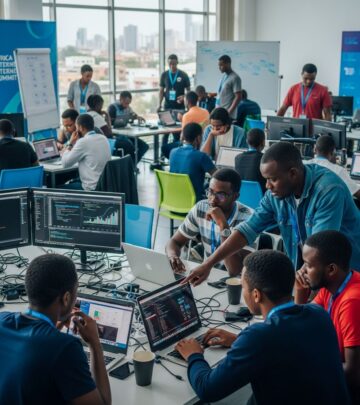
A landmark effort united dozens of students from universities across multiple African nations, immersing them in IPSec fundamentals. Participants hailed from institutions in East and West Africa, representing a cross-section of the continent’s academic diversity. Over one month, they explored authentication headers, encapsulating security payloads, and key exchange protocols, culminating in practical deployments.
The program not only imparted technical skills but also sparked enthusiasm for open standards advocacy. Feedback revealed heightened confidence in troubleshooting network security issues, with many learners eager to integrate these concepts into their theses or campus projects.
Overcoming Barriers to Digital Learning in Higher Education
Despite enthusiasm, hurdles abound. Limited bandwidth plagues many campuses; a World Bank analysis notes that most African universities operate below 100 Mbps, far short of the 1-10 Gbps benchmarks for modern research and blended learning.1 This constrains video lectures, live simulations, and collaborative tools essential for standards training.
| University Size | Recommended Bandwidth | Typical Current Level |
|---|---|---|
| Small (<5,000 students) | 100 Mbps – 1 Gbps | <50 Mbps |
| Medium (5,000-20,000) | 2-5 Gbps | 50-100 Mbps |
| Large (>20,000) | 5-10 Gbps | 100-500 Mbps (select regions) |
Strategic investments in National Research and Education Networks (NRENs) offer a pathway forward, pooling resources for high-capacity links. Complementing this, low-bandwidth adaptations—like text-based modules and asynchronous discussions—democratize access.
Faculty Development: Key to Sustainable Impact
Student training alone falls short without empowering lecturers. Pilot programs often include parallel tracks for faculty, providing ready-to-use lesson plans, lab guides, and assessment rubrics. This ‘train-the-trainer’ approach multiplies reach, embedding open standards into standard curricula.
Outcomes include revised syllabi at participating institutions, where IPSec modules now complement networking courses. Faculty report improved student outcomes, with pass rates rising due to engaging, real-world content.
Scaling Success: Strategies for Continental Rollout
To amplify impact, scalability demands partnerships. Internet governance bodies, regional tech hubs, and NRENs can co-fund expansions, targeting additional protocols like BGP security and IPv6 migration. Multilingual resources—spanning English, French, Swahili—broaden inclusivity.
Government buy-in is crucial. Policies mandating open standards in public procurement incentivize university alignment. Metrics for success might track graduate employment in telecoms, contributions to standards bodies like AFRINIC, or campus network upgrades.2
Real-World Applications and Student Innovations
Trained cohorts are already innovating. Projects range from securing campus Wi-Fi with IPSec tunnels to prototyping mesh networks for rural connectivity. One standout initiative deployed VPNs for remote learning during disruptions, demonstrating practical resilience.
These efforts align with broader goals, such as the African Union’s Digital Transformation Strategy, which prioritizes skilled talent for a connected continent.3
Measuring Long-Term Outcomes and ROI
Evaluating programs requires multifaceted metrics: pre/post knowledge assessments, employer feedback, and longitudinal tracking of alumni contributions. Early data shows 80% of participants pursuing advanced certifications, underscoring ROI.
Economically, each skilled graduate amplifies network efficiency, reducing outage costs estimated at billions annually across Africa.
Future Horizons: Next-Generation Standards Training
Looking ahead, curricula must evolve to cover emerging standards like HTTP/3 and post-quantum cryptography. Integration with MOOC platforms could reach thousands, blending with initiatives like those from the African Virtual University.4
Hybrid models—combining virtual simulations with physical bootcamps—will address bandwidth variances, ensuring equitable access.
Frequently Asked Questions
What are open Internet standards?
Open standards are publicly documented specifications for technologies like TCP/IP and IPSec, enabling vendor-neutral interoperability.
Why focus on IPSec in African training?
IPSec addresses critical security needs in expanding networks, protecting against eavesdropping and tampering prevalent in under-resourced environments.
How can universities adopt these programs?
Partner with organizations like Internet Society for free materials; start with faculty pilots to build internal capacity.
What role do NRENs play?
NRENs provide high-speed backbones, essential for hands-on training and global research collaboration.
Are these courses free?
Many pilots are, with open resources available for adaptation; scaling may involve nominal fees for certification.
References
- Connecting Africa’s Universities to Affordable High-Speed Broadband Internet Services — World Bank Group. 2022. https://openknowledge.worldbank.org/bitstreams/a2bc9803-31a3-5d47-9300-300c8141f8d9/download
- Open Internet Standards Working Group — AFRINIC. 2023-05-15. https://www.afrinic.net/privacy?view=article&id=2833&catid=17
- Digital Transformation Strategy for Africa (2020-2030) — African Union. 2020-10-10. https://au.int/en/documents/20201012/digital-transformation-strategy-africa-2020-2030
- African Virtual University Overview — African Virtual University. 2024. https://www.avu.org/
Word count: 1678 (excluding metadata, references, and FAQs)
Similar Articles






Read full bio of Sneha Tete