Domain Privacy Explained
Discover how domain privacy shields your personal data from public exposure and why it's essential for online security in today's digital landscape.
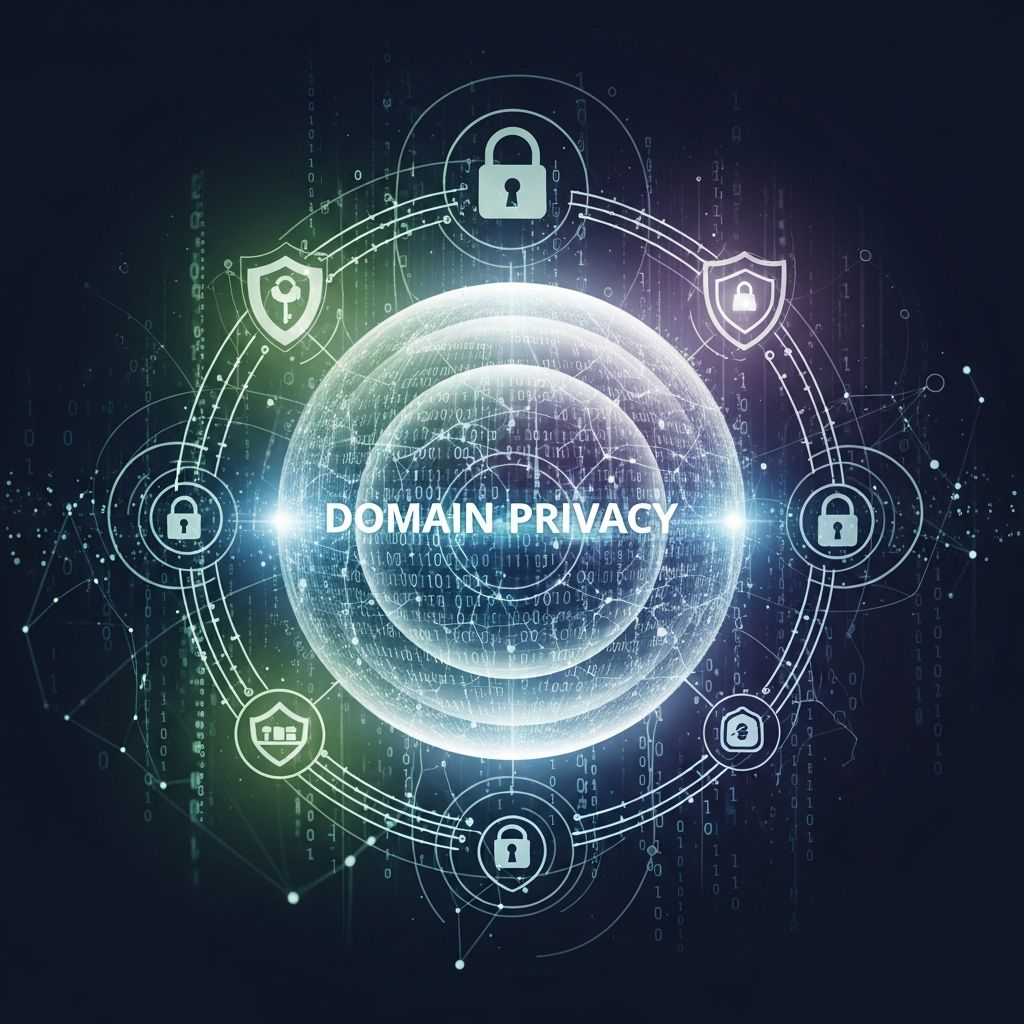
In the vast ecosystem of the internet, owning a domain name is like claiming a piece of digital real estate. However, this ownership comes with a catch: your personal information becomes publicly accessible through WHOIS databases. This exposure can lead to unwanted solicitations, phishing attempts, and even more severe privacy breaches. Domain privacy emerges as a critical safeguard, allowing individuals and businesses to register domains without broadcasting sensitive details like names, addresses, and phone numbers to the world.
The Foundations of Domain Ownership and Public Records
Every domain registration requires submitting accurate contact information to the registrar. This data populates the WHOIS database, a global directory maintained under the oversight of ICANN, the Internet Corporation for Assigned Names and Numbers. Historically designed for transparency and troubleshooting, WHOIS now poses risks in an era of rampant data harvesting.
Without protective measures, anyone can query a domain’s WHOIS record and retrieve the registrant’s full details. This visibility fuels spam campaigns, where bots scrape emails for mass marketing, and enables stalkers or scammers to target individuals directly. Understanding this baseline is key to appreciating why privacy services have become indispensable.
Core Mechanisms Behind Domain Privacy Services
Domain privacy operates by substituting the registrant’s true information with proxy details provided by the service. When a WHOIS query is performed, the public view displays anonymized data—often a generic email, address, and name linked to the privacy provider—while the actual owner remains shielded.
Modern implementations adhere to evolving regulations. For instance, ICANN’s policies mandate that certain fields, such as country and state, remain partially visible to ensure accountability. Privacy providers act as intermediaries, forwarding legitimate inquiries (like legal notices or domain disputes) to the real owner without revealing identities.
- Proxy Substitution: Replaces personal data with service-provided info.
- Message Forwarding: Routes communications securely to the registrant.
- Compliance Filtering: Balances privacy with regulatory requirements.
Advanced protocols like RDAP (Registration Data Access Protocol) are gradually supplanting traditional WHOIS, offering enhanced security features such as access controls and internationalized data support. These upgrades promise a more privacy-friendly future for domain queries.
Key Advantages of Implementing Domain Privacy
Adopting domain privacy yields multifaceted benefits, extending beyond mere concealment to proactive risk mitigation.
| Benefit | Description |
|---|---|
| Spam Reduction | Blocks automated harvesters from collecting emails, slashing unsolicited messages by up to 90% according to industry reports. |
| Identity Protection | Prevents doxxing and harassment by obscuring home addresses and phone numbers. |
| Scam Deterrence | Thwarts phishing schemes that exploit WHOIS data for targeted attacks. |
| Professional Image | Maintains a clean, corporate facade for business domains. |
Businesses particularly benefit, as exposed owner details can undermine brand trust. For personal blogs or side projects, it preserves work-life boundaries, ensuring online activities don’t spill into offline vulnerabilities.
Navigating the Landscape of Privacy Providers
Not all domain privacy services are created equal. Some registrars bundle it for free, while others charge annual fees ranging from $5 to $20 per domain. Evaluate based on reliability, forwarding efficiency, and compliance track record.
Leading providers like Cloudflare Registrar offer complimentary redaction for eligible domains, automatically activating upon registration. This no-cost model democratizes access, removing barriers for small site owners. In contrast, legacy services might impose markups, padding renewal costs unnecessarily.
- Free vs. Paid: Prioritize cost-free options from reputable registrars.
- Registry Support: Confirm compatibility with your top-level domain (TLD).
- Customer Support: Ensure reliable abuse handling and query resolution.
Regulatory Framework and Legal Considerations
ICANN governs domain privacy through its Registration Data Policy, updated in 2018 and refined via Temporary Policy extensions through 2021. These rules require redaction of personal data by default but permit access for verified purposes like law enforcement or trademark disputes.
Registrars must implement abuse contact forms, allowing third parties to reach owners anonymously. This strikes a balance between privacy rights and public interest, aligning with GDPR in Europe and similar data protection laws worldwide.
ICANN’s guidelines ensure that while privacy is prioritized, essential transparency for domain management persists.— ICANN Registration Data Policy
Potential Drawbacks and Realistic Expectations
Domain privacy isn’t foolproof. Savvy adversaries might bypass it via reverse WHOIS searches or registry-level queries. Partial visibility of location data (e.g., country code) can still provide clues. Moreover, during domain transfers, privacy must be re-enabled to avoid temporary exposure.
Users should complement privacy with holistic security: strong passwords, two-factor authentication, and domain locks. It’s a layer, not a panacea.
Step-by-Step Guide to Enabling Domain Privacy
- Select a Compatible Registrar: Choose one offering free or affordable privacy, like those supporting .com, .net, and .org.
- Register or Transfer Domain: Input details during signup; privacy activates automatically where available.
- Verify Activation: Perform a WHOIS lookup (e.g., via rdap.cloudflare.com) to confirm redaction.
- Monitor and Maintain: Update contact info internally and watch for renewal reminders.
- Handle Inquiries: Respond promptly to forwarded messages to avoid escalation.
For existing domains elsewhere, initiate a transfer to a privacy-enabled registrar. Tools like ICANN’s lookup service help assess current exposure.
Domain Privacy in Enterprise Contexts
Large organizations demand more than basic redaction. Enterprise-grade solutions incorporate out-of-band verification for changes, multi-factor approvals, and registry locks to foil hijacking. These prevent attackers from seizing control, which could redirect traffic, spoof emails, or tarnish reputations.
Such protections are vital for high-value assets, where domain compromise equates to millions in potential losses. Pairing privacy with DNSSEC and monitoring elevates defenses further.
Future Trends Shaping Domain Privacy
As privacy regulations tighten—think CCPA in California and evolving EU standards—expect deeper redaction and automated consent mechanisms. RDAP’s rollout will standardize secure queries, reducing reliance on vulnerable WHOIS ports.
Blockchain-based domains and decentralized registrars hint at privacy-native alternatives, though adoption lags. Staying informed via ICANN updates ensures proactive adaptation.
Frequently Asked Questions
Is domain privacy completely free?
Many modern registrars provide it at no extra cost, especially for popular TLDs. Always check terms during registration.
Does privacy affect domain SEO or email?
No, it solely impacts WHOIS visibility. Search rankings and MX records remain unaffected.
Can I still receive important notices?
Yes, providers forward legal and administrative communications reliably.
What if my TLD doesn’t support privacy?
Country-code TLDs (ccTLDs) vary; some registries prohibit redaction. Research beforehand.
How do I check if privacy is active?
Use public WHOIS/RDAP tools; redacted fields display as “REDACTED FOR PRIVACY” or similar.
Conclusion: Prioritize Your Digital Shield
Domain privacy isn’t a luxury—it’s a necessity in an age of pervasive surveillance. By redacting personal data, you reclaim control over your online footprint, fostering a safer internet experience. Whether launching a personal site or managing enterprise assets, integrate privacy from day one. Empower yourself with knowledge and tools to navigate the WHOIS landscape securely.
References
- Registration Data Policy — ICANN. 2021-11-30. https://www.icann.org/resources/pages/rdap-2018-10-25-en
- WHOIS Redaction — Cloudflare Developers. 2024-05-01. https://developers.cloudflare.com/registrar/account-options/whois-redaction/
- Registrar Domain Protection Services — Cloudflare. 2025-01-15. https://www.cloudflare.com/application-services/solutions/domain-protection-services/
- Cloudflare Registrar — Cloudflare Products. 2026-03-20. https://www.cloudflare.com/products/registrar/
- WHOIS Protocol Specification — IETF RFC 3912. 2004-10 (authoritative standard). https://datatracker.ietf.org/doc/html/rfc3912
Similar Articles







Read full bio of medha deb