Digital Security Threats in Africa: Emerging Challenges
Examining Africa's vulnerability to global cyberattacks and pathways to resilience
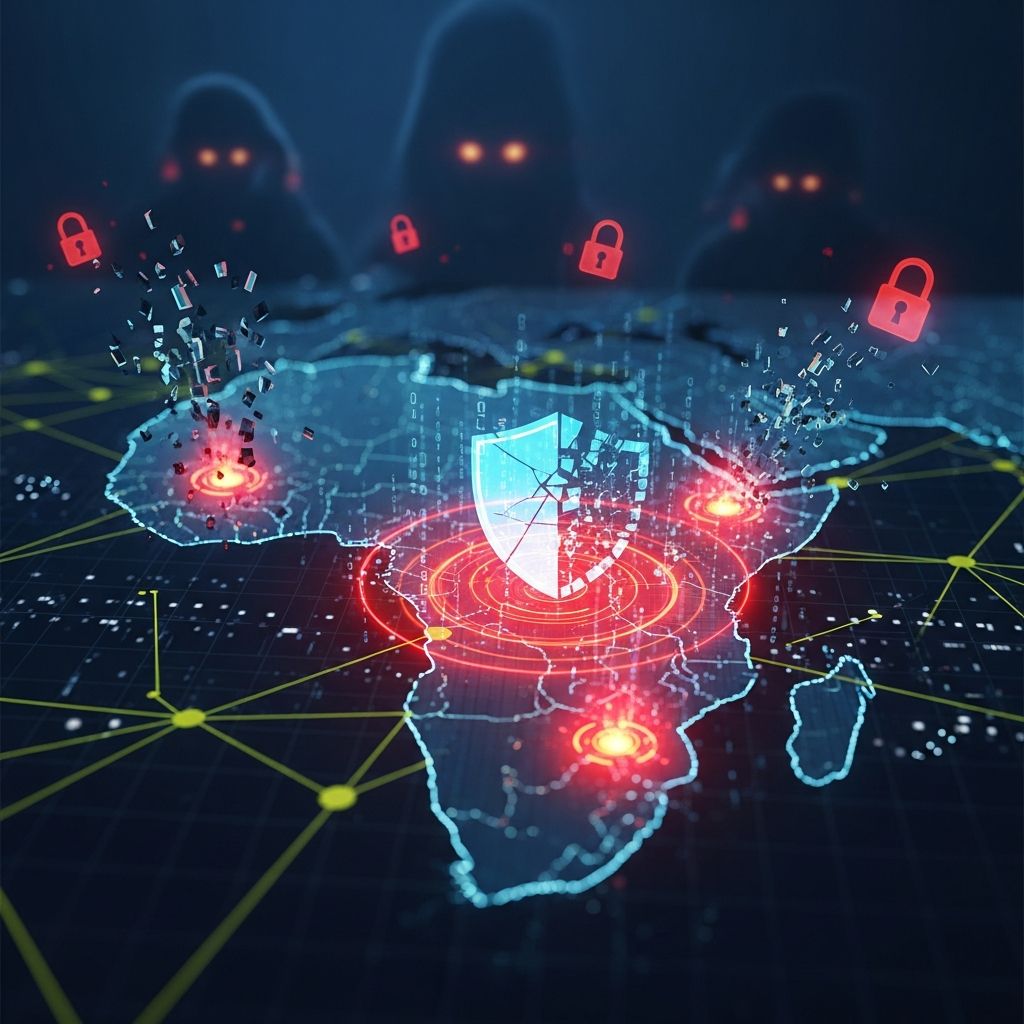
Digital Security Threats in Africa: Examining the Continent’s Cybersecurity Landscape
The global digital infrastructure faces increasingly sophisticated threats that spare no geographic region. When major malware incidents occur, they often reveal underlying vulnerabilities within nations and organizations that lack adequate preparedness measures. Africa, despite being home to some of the world’s most innovative technology sectors and rapidly expanding digital adoption, faces unique challenges in defending its infrastructure against organized cyberattacks. Understanding these vulnerabilities and developing comprehensive responses has become essential for protecting the continent’s economic and social stability.
Understanding Modern Ransomware Threats
Ransomware represents one of the most disruptive categories of malicious software currently deployed in cyberattacks. Unlike conventional viruses or worms that simply corrupt or steal data, ransomware operates through a business model that demands payment. The software encrypts critical files and systems, rendering them inaccessible to legitimate users and organizations. The attackers then demand compensation, typically in cryptocurrency, in exchange for decryption keys. This extortion model has proven remarkably effective at generating revenue for cybercriminals while causing severe disruption to hospitals, government agencies, financial institutions, and industrial operations.
The 2017 global incident that impacted over 200,000 computers across more than 150 countries demonstrated the catastrophic reach of modern ransomware campaigns. Beyond the immediate financial costs—estimated at hundreds of millions to billions of dollars—such incidents disrupt essential services including healthcare delivery, transportation networks, and telecommunications infrastructure. The incident specifically targeted systems running outdated operating systems and highlighted how organizations worldwide had failed to implement basic security practices such as timely software updates.
Africa’s Exposure to International Cyber Incidents
Multiple African nations reported significant impacts from the 2017 ransomware campaign that swept across continents. South Africa, Nigeria, Angola, Egypt, Mozambique, Tanzania, Niger, Morocco, and Tunisia all documented infections within their institutional and commercial infrastructure. This widespread continental exposure raised critical questions about the readiness of African organizations and governments to detect, respond to, and recover from sophisticated cyberattacks.
The geographic distribution of affected African nations revealed that the continent’s digital infrastructure, despite varying levels of technological development across regions, remained vulnerable to indiscriminate global attack campaigns. Public sector institutions including hospitals, educational facilities, and government administrative systems experienced disruptions. Private enterprises spanning financial services, telecommunications, manufacturing, and retail sectors also suffered compromised operations. The incident exposed that African organizations faced similar technical vulnerabilities as their international counterparts, yet often lacked equivalent resources for incident response and recovery.
Structural Vulnerabilities in African Infrastructure
Several systemic factors contributed to Africa’s particular susceptibility to major ransomware campaigns. These vulnerabilities extend beyond individual organizational failures to encompass continent-wide challenges:
- Technological Legacy Systems: Many African organizations, particularly in public administration and critical infrastructure, operate aging computer systems and software that vendors no longer actively support with security updates. These deprecated platforms contain unpatched vulnerabilities that attackers actively exploit.
- Insufficient Technical Expertise: The continent faces a pronounced shortage of cybersecurity professionals capable of implementing robust defense mechanisms, conducting threat assessments, or managing incident response operations. Educational institutions have not yet produced sufficient trained personnel to meet organizational demands.
- Limited Financial Resources: Compared to developed nations, African organizations typically allocate smaller budgets toward cybersecurity infrastructure and personnel. This constraint prevents investment in advanced detection systems, threat intelligence platforms, and comprehensive employee training programs.
- Inadequate Regulatory Frameworks: Many African governments lack comprehensive cybersecurity legislation, enforcement mechanisms, and guidance for organizations regarding security standards and incident reporting obligations.
- Awareness Deficits: Populations across Africa demonstrate limited understanding of cybersecurity risks, phishing techniques, social engineering attacks, and basic security hygiene practices such as password management and system updates.
Critical Infrastructure Sectors at Risk
Certain economic sectors operating across Africa face heightened exposure to ransomware and similar threats due to their dependence on continuous digital operations and their importance to public welfare. Healthcare systems represent particularly critical infrastructure, as disruptions can directly impact patient care delivery and mortality outcomes. Financial institutions face threats to transaction processing, account security, and regulatory compliance. Transportation networks including railway operations, airport management systems, and logistics coordination depend on continuous digital functionality. Telecommunications infrastructure underpins connectivity for all other sectors. When ransomware campaigns target these sectors, the cascading effects extend far beyond the directly affected organizations to impact entire populations and economies.
The Knowledge and Skills Gap
One of the most significant obstacles to strengthening African cybersecurity lies in the continent-wide shortage of qualified cybersecurity professionals. Organizations struggle to recruit staff with expertise in areas such as:
- Network architecture and segmentation for threat isolation
- Incident response and forensic investigation
- Threat intelligence analysis and attribution
- Security compliance and audit procedures
- Penetration testing and vulnerability assessment
- Digital forensics and evidence preservation
The educational institutions training computer science graduates across Africa have not yet aligned curricula comprehensively with cybersecurity specialization. Furthermore, experienced professionals tend to migrate to higher-wage opportunities in developed nations, creating a continuous brain drain that depletes the continent’s technical capacity. Private sector organizations, particularly multinational corporations operating in African markets, attract limited cybersecurity talent because compensation and advancement opportunities remain constrained compared to counterparts in North America and Europe.
Regulatory and Governance Challenges
Effective cybersecurity requires supportive legal and regulatory frameworks that establish minimum security standards, mandate incident reporting, and provide enforcement mechanisms. Many African nations lack comprehensive cybersecurity legislation that addresses:
- Mandatory security standards for critical infrastructure operators
- Requirements for organizations to report security breaches and ransomware incidents
- Guidance on data protection and encryption standards
- Procedures for law enforcement agencies to investigate cyber crimes
- International cooperation mechanisms for cross-border incident response
- Penalties and enforcement provisions for non-compliance
Without such regulatory structures, organizations operate without clear expectations regarding security investments or incident handling procedures. Governments struggle to coordinate response efforts during widespread attacks because no established protocols or communication channels exist. This regulatory vacuum creates conditions where organizations minimize security spending, underreport incidents to avoid potential penalties or public embarrassment, and lack standardized approaches to defensive measures.
Public Awareness and Organizational Readiness
Cybersecurity awareness represents both an organizational and population-level challenge across Africa. Many employees lack basic understanding of how ransomware spreads, making them susceptible to phishing emails and malicious email attachments that serve as initial infection vectors. Organizations fail to implement fundamental practices such as regular employee training on security risks, strong password policies, and procedures for reporting suspicious activities. End-users continue operating systems without updates despite available security patches. Network administrators fail to restrict unnecessary system services or implement basic network segmentation that could contain malware spread.
This awareness deficit extends to organizational leadership, where decision-makers sometimes underestimate cybersecurity risks and therefore fail to allocate adequate budgetary resources. Boards and senior management may view cybersecurity spending as a cost center offering limited return on investment rather than recognizing it as essential risk management. This perspective conflicts with evidence demonstrating that organizations investing in fundamental security measures experience significantly fewer successful attacks and suffer reduced damage when incidents occur.
International Dimensions and Attribution Challenges
Major ransomware campaigns often originate from sophisticated threat actors operating across international borders, including nation-state-affiliated groups, organized criminal enterprises, and hybrid entities blending state and criminal motivations. Attribution—determining with certainty who conducted an attack—proves extraordinarily difficult due to deliberate obfuscation tactics, use of compromised infrastructure spanning multiple countries, and employment of cryptocurrency for ransom payments that obscures financial trails.
For African nations and organizations, this international dimension complicates response efforts. Cybersecurity incidents may require coordination with law enforcement agencies in multiple countries, extradition proceedings across jurisdictions with varying legal frameworks, and international sanctions or diplomatic pressure. Many African nations lack established relationships with international cybersecurity organizations, intelligence agencies in developed nations, and mutual legal assistance treaties that facilitate investigation of transnational cybercrimes. This isolation reduces African organizations’ ability to access threat intelligence, participate in information sharing about emerging attack methods, and coordinate collective defenses against coordinated campaigns.
Pathways Toward Enhanced Cybersecurity Resilience
Addressing Africa’s cybersecurity challenges requires multifaceted approaches operating across technological, organizational, educational, and governmental domains:
Technological Modernization and Basic Hygiene
Organizations must prioritize updating legacy systems, implementing security patches promptly, and deploying basic protective measures including firewalls, network segmentation, and access controls. Cloud-based security services can provide organizations lacking local expertise access to advanced threat detection and response capabilities. Automated backup systems enable recovery without paying ransoms. Configuration management tools can ensure consistent security settings across organizational infrastructure.
Educational and Professional Development
African universities and technical institutions should expand cybersecurity curricula and offer specialized certifications in network defense, incident response, and security architecture. Professional development programs for practicing technologists can update their capabilities with current threat landscape knowledge. Regional centers of excellence in cybersecurity can serve multiple nations, sharing expertise and resources while reducing individual country burdens.
Regulatory Development and International Cooperation
African governments should develop comprehensive cybersecurity legislation establishing minimum standards for critical infrastructure, mandatory breach reporting, and enforcement provisions. Regional organizations can facilitate cooperation on shared threats and coordinated response procedures. Integration with international cybersecurity frameworks and standards organizations enables African nations to participate in global threat intelligence sharing and adopt proven defensive practices.
Organizational Readiness and Investment
Organizations must establish governance structures with board-level oversight of cybersecurity risk, allocate adequate budgets for defensive measures, and implement formal incident response plans before attacks occur. Regular security assessments, penetration testing, and tabletop exercises prepare organizations to detect and respond effectively when incidents arise. Business continuity planning ensures critical functions can continue during disruptions.
The Collective African Role
Africa’s digital future depends on collaborative efforts spanning multiple stakeholders. Technology companies operating across the continent must provide affordable security solutions tailored to African organizational contexts and economic constraints. Educational institutions must expand cybersecurity training capacity. Governments must enact supportive regulatory frameworks while investing in law enforcement cybercrime capabilities. International partners should facilitate knowledge transfer, provide technical assistance, and support capacity building initiatives. Civil society organizations can promote public awareness campaigns advancing security-conscious behaviors across populations.
The incidents that exposed African vulnerabilities in recent years can catalyze constructive responses that strengthen the continent’s defensive capabilities. By developing homegrown cybersecurity expertise, establishing appropriate governance structures, and fostering regional cooperation, African nations can reduce susceptibility to future campaigns while building indigenous technological capacity. The challenge is substantial, but the alternative—remaining perpetually vulnerable to global threats—carries far greater long-term costs to economic development, public welfare, and societal trust in digital systems.
References
- Bolstering Government Cybersecurity: Lessons Learned from WannaCry — National Institute of Standards and Technology (NIST). 2017. https://www.nist.gov/speech-testimony/bolstering-government-cybersecurity-lessons-learned-wannacry
- What was the WannaCry Ransomware Attack? — Cloudflare Learning Center. 2024. https://www.cloudflare.com/learning/security/ransomware/wannacry-ransomware/
- Lessons Learned from WannaCry: Are We Ready for Another Global Attack — Mitiga. 2022. https://www.mitiga.io/blog/lessons-learned-wannacry-ready-global-attack
- Comprehensive Guide to WannaCry Ransomware Attacks — Tata Communications. 2023. https://www.tatacommunications.com/knowledge-base/mdr/wannacry-ransomware-guide
- WannaCry, Ransomware, and The Emerging Threat to Corporations — Villanova University Law Review. 2017. https://digitalcommons.law.villanova.edu/facpubs/226/
Similar Articles








Read full bio of medha deb