Digital Panchayat Revolution
How digital tools are transforming rural India by empowering local governance and bridging the urban-rural divide through innovative technology.
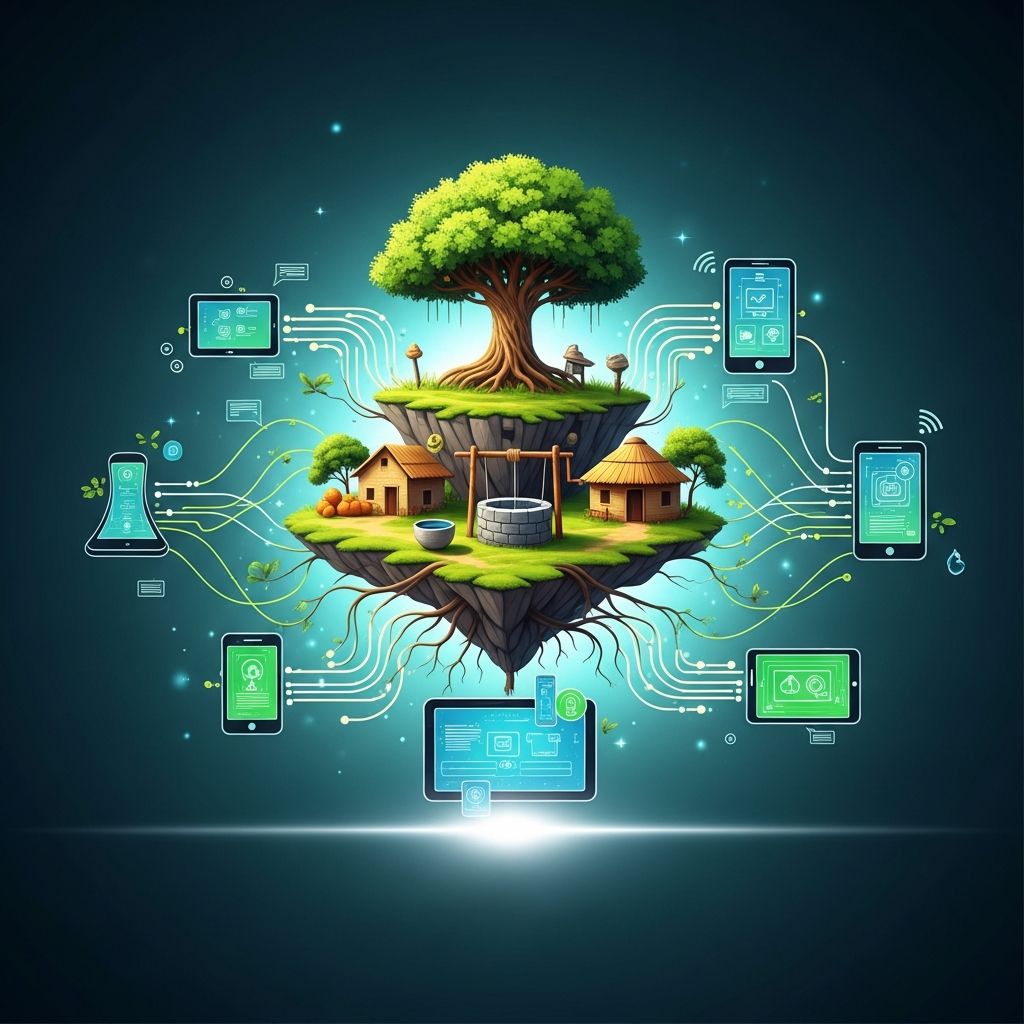
Digital Panchayat Revolution: Empowering Rural India Through Technology
In the heart of India’s vast rural landscape, where over 65% of the population resides, local governance has long been the cornerstone of community development. Gram Panchayats, the grassroots units of self-government, manage everything from water supply to dispute resolution for millions. However, traditional methods often grappled with inefficiencies, limited transparency, and barriers to citizen involvement. The advent of digital technologies has sparked a profound transformation, turning these village councils into modern hubs of accountable administration. This revolution, fueled by government-led initiatives, leverages internet connectivity, mobile apps, and AI to foster inclusive decision-making and service delivery.
The Foundations of Rural Digital Infrastructure
At the core of this shift lies robust digital infrastructure. BharatNet, launched in 2011 by the Ministry of Communications, stands as a monumental effort to connect all 2.5 lakh Gram Panchayats with high-speed broadband. By 2026, the project has laid over 6 lakh kilometers of optical fiber, enabling not just internet access but also Wi-Fi hotspots and Fiber-to-the-Home services in remote areas. This backbone supports everything from online payments to virtual meetings, drastically reducing the digital divide.
Complementing BharatNet is the SVAMITVA scheme, a ₹566 crore initiative by the Ministry of Panchayati Raj in partnership with Survey of India. Using drone technology, it has mapped over 1.5 lakh villages, providing property cards to 1.5 crore landowners. This digital land record system minimizes disputes and unlocks economic potential by enabling collateral for loans.
Key Platforms Driving Panchayat Digitization
Several integrated platforms have emerged as game-changers:
- eGramSwaraj: Launched in 2020, this comprehensive web portal unifies planning, budgeting, accounting, and work monitoring for 2.7 lakh Panchayats across 28 states and 6 UTs. It facilitates online payments and real-time progress tracking, ensuring funds are utilized efficiently.
- Meri Panchayat App: A citizen-centric mobile application linked to eGramSwaraj, it empowers 95 crore rural residents and 25 lakh elected representatives. Users can access scheme details, lodge complaints, and monitor local projects, promoting direct democracy.
- SabhaSaar: This AI-powered tool transcribes and summarizes Gram Sabha meetings, making proceedings accessible in multiple languages and reducing paperwork burdens.
- Gram Manchitra: A geo-spatial platform for village-level planning, it integrates maps with development data to prioritize infrastructure like roads and schools.
These tools collectively form the e-Panchayat Mission Mode Project under Digital India, aiming to make Panchayats effective units of local self-government.
Boosting Transparency and Accountability
Digitalization has instilled unprecedented transparency. Before these platforms, financial mismanagement and opaque decision-making plagued many Panchayats. Now, eGramSwaraj’s public dashboards display expenditure details, work sanctions, and asset inventories. Citizens can verify if allocated funds for a handpump reached the ground, curbing corruption.
A 2024 PIB report highlights how these reforms have increased audit compliance by 40% and reduced pending works by 25%. Real-time tracking via Meri Panchayat app allows villagers to flag discrepancies, ensuring elected representatives remain answerable.
| Metric | Pre-Digital (2019) | Post-Digital (2025) | Improvement |
|---|---|---|---|
| Audit Compliance Rate | 55% | 95% | +40% |
| Online Payments Processed | 10% | 85% | +75% |
| Citizen Complaints Resolved | 45 days avg. | 7 days avg. | -86% |
| Gram Sabha Participation | 20% | 65% | +225% |
Citizen Engagement in the Digital Era
Technology has democratized participation. The Meri Panchayat app’s grievance module has resolved over 50 lakh complaints since inception, with features like geo-tagging for precise issue reporting. Panchayat NIRNAY enables virtual meetings, crucial during pandemics or monsoons, allowing Sarpanchs to conduct polls and decisions digitally.
In states like Karnataka and Rajasthan, pilot projects show women self-help groups using apps to access subsidies directly, bypassing middlemen. This inclusivity aligns with SDGs, particularly Goal 16 on participatory governance.
Challenges and Pathways Forward
Despite successes, hurdles persist. Digital literacy remains low in 30% of villages, with only 45% smartphone penetration per NSSO 2023 data. Infrastructure gaps in hilly terrains delay BharatNet rollout. Cybersecurity threats and data privacy concerns also loom.
Solutions include localized training via Common Service Centers (CSCs), which have onboarded 5 lakh Panchayat functionaries. AI chatbots in regional languages and offline modes address literacy barriers. Future expansions under Digital Bharat Nidhi promise 100 Gbps connectivity and 5G integration.
Case Studies: Success Stories from the Ground
- Hiware Bazar, Maharashtra: Using eGramSwaraj, this model village digitized water management, increasing per capita income from ₹832 to ₹30,000 annually.
- Palampur, Himachal Pradesh: Gram Manchitra aided flood-resilient planning, reducing disaster losses by 60%.
- Angul, Odisha: Meri Panchayat app boosted MGNREGA wage payments, achieving 98% DBT compliance.
These examples illustrate scalable impacts, replicable nationwide.
FAQs: Digital Panchayat Essentials
- What is eGramSwaraj?
- A unified portal for Panchayat planning, accounting, and monitoring, accessible at egramswaraj.gov.in.
- How does BharatNet benefit villages?
- It provides broadband to Gram Panchayats, enabling digital services, education, and telemedicine.
- Can citizens track Panchayat works?
- Yes, via Meri Panchayat app’s dashboards showing real-time progress and budgets.
- Is training available for Panchayat staff?
- Yes, through iGOT Karmayogi and CSC-led programs covering 2 lakh+ officials.
- What about data security?
- Platforms use NIC-hosted servers with encryption and comply with DPDP Act 2023.
The digital panchayat revolution is not merely technological—it’s a renaissance of rural democracy. By 2030, as India eyes Viksit Bharat, these tools will ensure no village is left behind, weaving technology into the fabric of grassroots governance.
References
- Driving Digital Transformation in Gram Panchayats — Press Information Bureau, Government of India. 2024-10-15. https://www.pib.gov.in/PressReleseDetailm.aspx?PRID=2170980
- eGramSwaraj Portal — Ministry of Panchayati Raj, Government of India. 2025-01-10. https://egramswaraj.gov.in
- BharatNet Project Overview — Bharat Broadband Network Limited (Official). 2025-03-20. https://bharatnet.gov.in
- SVAMITVA Scheme Details — Ministry of Panchayati Raj. 2024-11-05. https://svamitva.nic.in
- Digital India Programme Report — Ministry of Electronics and Information Technology. 2024-07-01. https://www.digitalindia.gov.in
Similar Articles






Read full bio of Sneha Tete